Modi-Luxon talks in Auckland elevate India-New Zealand ties to Strategic Partnership
Synopsis
For the first time in 40 years, an Indian Prime Minister set foot in New Zealand — and Modi used the moment to lock in a Strategic Partnership with PM Luxon, accelerate FTA talks, and signal a shared Indo-Pacific agenda. The visit resets a relationship that had long punched below its potential.
Key Takeaways
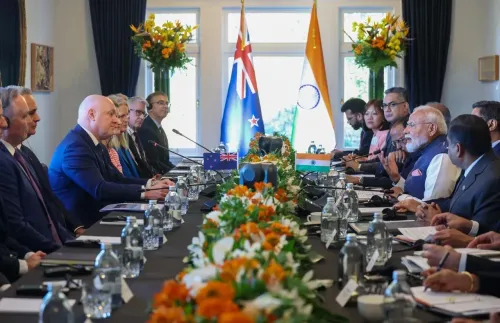
PM Narendra Modi held bilateral talks with New Zealand PM Christopher Luxon in Auckland on 11 July .
The two nations agreed to elevate ties to a Strategic Partnership , a formal diplomatic upgrade.
Modi became the first Indian Prime Minister to officially visit New Zealand in 40 years .
Both leaders witnessed the signing of several MoUs covering multiple sectors of cooperation.
Progress on the India-New Zealand Free Trade Agreement (FTA) was highlighted as a key outcome.
The partnership was framed within a broader Indo-Pacific stability agenda, with both nations described as maritime democracies.
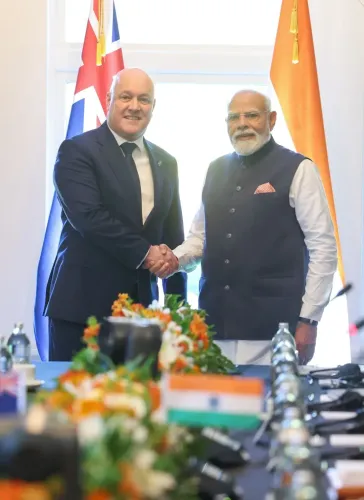
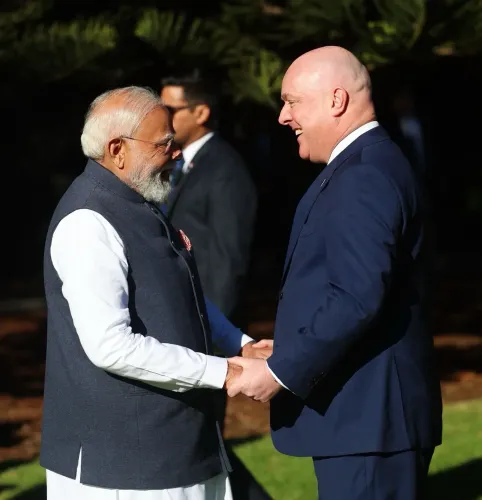
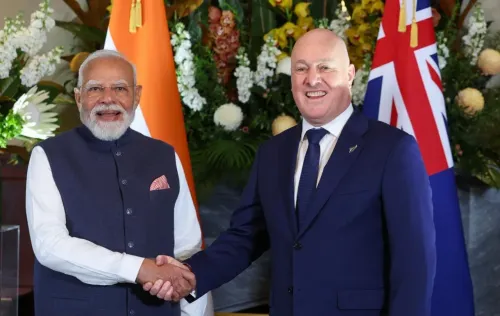
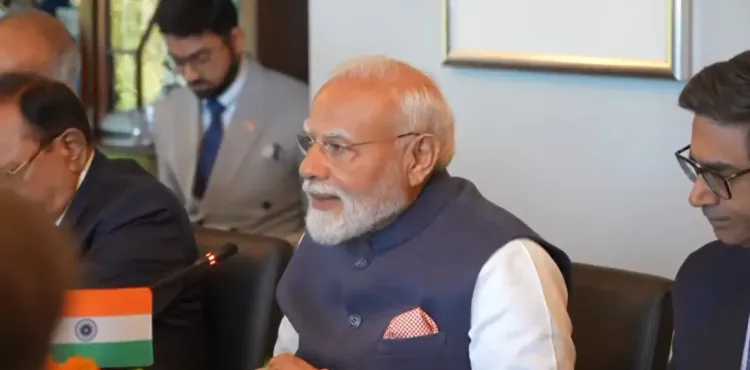
Prime Minister Narendra Modi on Saturday, 11 July held bilateral talks with New Zealand Prime Minister Christopher Luxon in Auckland, with the two leaders agreeing to elevate India-New Zealand relations to a Strategic Partnership. Modi described the two nations as 'natural partners' that are 'made for each other', calling the visit a historic turning point for bilateral ties.
A Historic First in Four Decades
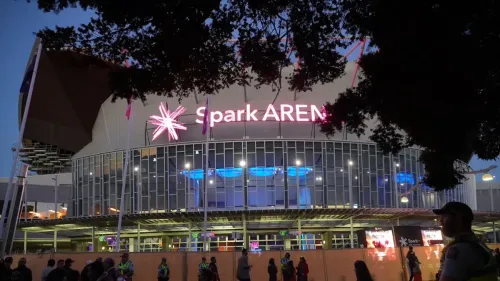
The summit marked a landmark moment: Modi became the first Indian Prime Minister to make an official visit to New Zealand in 40 years. The visit, which forms the final leg of a three-nation tour, was hosted in Auckland — New Zealand's economic capital — lending added significance to the diplomatic engagement.
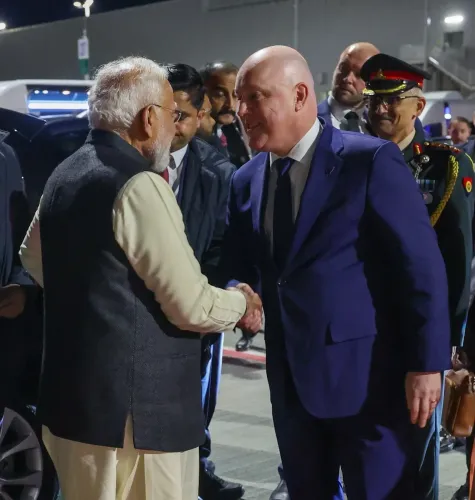
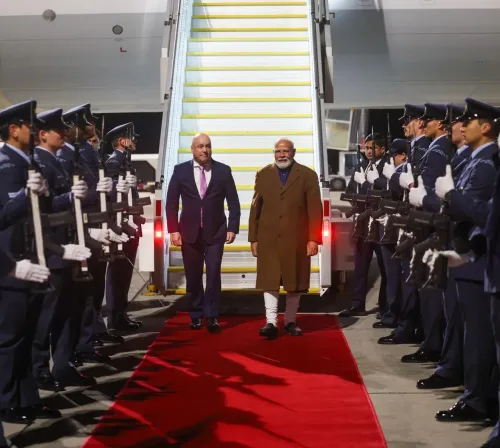
Modi opened the talks by thanking Luxon for personally receiving him at the airport on Friday evening, calling it 'a very special gesture' that reflected the warmth between the two nations. 'Your ministers were with me throughout, and I truly appreciate it,' he said.
Strategic Partnership and Key Agreements
The centrepiece of the talks was the decision to elevate bilateral ties to a Strategic Partnership — a formal upgrade that signals deeper cooperation across defence, trade, and diplomacy. Following the summit, the two leaders witnessed the exchange of several Memoranda of Understanding (MoUs) spanning multiple sectors, though the full list of agreements was not immediately detailed.
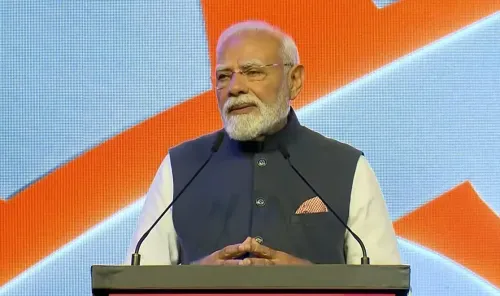
'I am delighted that we are going to take our relationship forward through a Strategic Partnership. This milestone will motivate us to move ahead with greater energy, confidence and determination,' Modi said.
Free Trade Agreement Gains Momentum
Modi highlighted rapid progress on the Free Trade Agreement (FTA) between the two countries, crediting Luxon's earlier visit to India as the catalyst. 'When you visited India, we initiated discussions on the Free Trade Agreement, and in a very short span of time, you have brought the FTA process onto the ground,' he said. This comes amid India's broader push to diversify its trade partnerships across the Indo-Pacific region.
Notably, Luxon had visited India during the Holi festival last year, a visit Modi recalled as one that 'filled our relationship with new colours.' The reference underscored the personal rapport that has developed between the two leaders.
Indo-Pacific and Global Peace Framework
Both leaders framed the upgraded partnership within the broader context of Indo-Pacific stability. Modi said that as two maritime democracies, India and New Zealand could contribute meaningfully to regional security. 'As two maritime nations, we can contribute to giving the Indo-Pacific greater strength, and our partnership can inject new energy into efforts aimed at global peace,' he said.
Modi also spoke of the emotional resonance of the visit, citing the warmth shown by New Zealand's Indian diaspora community. 'Coming here and witnessing the love that the people of New Zealand have for India can make anyone emotional. It is truly heart-touching,' he said.
With the Strategic Partnership now formalised and FTA talks accelerating, the two nations are expected to deepen engagement across trade, defence, and people-to-people ties in the months ahead.
Point of View
But the real test lies in execution — particularly on the FTA, where 'momentum' has historically outpaced finalisation in India's trade negotiations. The 40-year gap in prime ministerial visits is itself a measure of how underinvested this relationship has been, despite a substantial Indian diaspora in New Zealand. The Indo-Pacific framing is deliberate: India is systematically building bilateral anchors across the region, and New Zealand — a Five Eyes member with Pacific influence — is a strategically useful one. Whether the MoUs signed in Auckland translate into measurable outcomes, or join a long queue of well-intentioned agreements, will define whether this reset holds.
NationPress
10 Oct 2026
Frequently Asked Questions
What was agreed during PM Modi's talks with New Zealand PM Luxon in Auckland?
The two leaders agreed to elevate India-New Zealand relations to a Strategic Partnership and witnessed the exchange of several MoUs across multiple sectors. Progress on a bilateral Free Trade Agreement was also highlighted as a key outcome of the talks.
Why is PM Modi's New Zealand visit historically significant?
Modi became the first Indian Prime Minister to make an official visit to New Zealand in 40 years. The visit, held in Auckland on 11 July, marks a significant reset in bilateral ties that had seen limited high-level engagement for decades.
What is the India-New Zealand Strategic Partnership?
It is a formal diplomatic upgrade of bilateral relations announced during Modi and Luxon's summit in Auckland on 11 July. The Strategic Partnership framework is intended to deepen cooperation across trade, defence, and Indo-Pacific security.
How far along is the India-New Zealand Free Trade Agreement?
Modi credited Luxon's earlier visit to India as the starting point for FTA discussions, saying the process had moved 'onto the ground' in a short span of time. A finalised timeline for the agreement has not yet been announced.
How does the India-New Zealand partnership fit into the Indo-Pacific strategy?
Both leaders framed the upgraded partnership within a shared Indo-Pacific agenda, describing India and New Zealand as maritime democracies with a common interest in regional stability. Modi said the partnership could 'inject new energy into efforts aimed at global peace'.