CM Sai Reaffirms Chhattisgarh's Pledge on Culture and Heritage
Synopsis
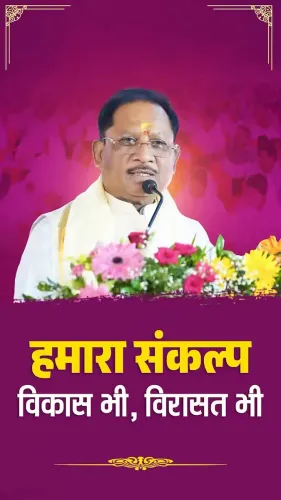
Chhattisgarh Chief Minister Vishnu Deo Sai on 18 June 2026 highlighted five state schemes — from subsidised pilgrimages to a modern tribal museum — as proof of his government's resolve to preserve Sanatan traditions and indigenous heritage under the BJP's 'Vikas Bhi Virasat Bhi' framework.
Key Takeaways
CM Vishnu Deo Sai posted on 18 June 2026 reaffirming the Chhattisgarh government's commitment to cultural and religious heritage preservation.
Five schemes were cited: Shri Ram Lalla Darshan Yojana , Mukhya Mantri Tirtha Darshan Yojana , Shaktipith Project , Rajim Kumbh Kalp , and a Modern Tribal Museum .
The post was anchored to the hashtag #12YearsOfVikasBhiVirasatBhi , marking twelve years of the BJP's development-plus-heritage political narrative.
Primary beneficiaries include pilgrims accessing subsidised tours and tribal communities whose heritage is being documented and promoted.
The initiatives mirror the BJP 's earlier 2003–2018 governance priorities in Chhattisgarh , revived after the party returned to power in December 2023 .
Rollout progress of the Shaktipith Project and state budget allocations for these schemes remain key metrics to watch.
Chhattisgarh Chief Minister Vishnu Deo Sai on Thursday, 18 June 2026, reaffirmed his government's commitment to preserving the state's religious, cultural, and tribal heritage, citing a cluster of active schemes ranging from subsidised pilgrimage tours to a modern tribal museum.
Context
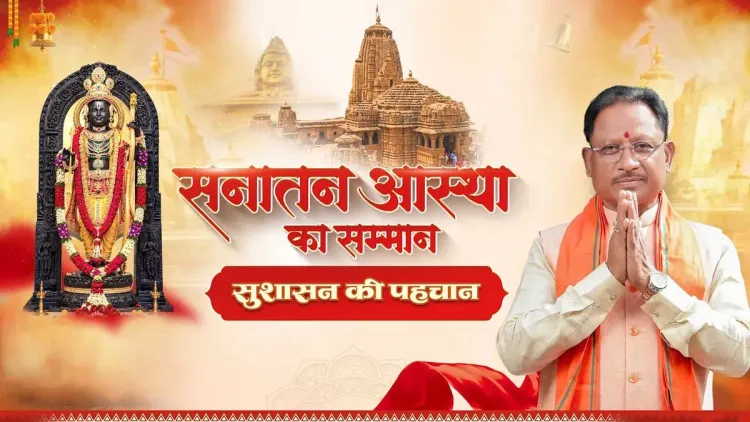
Posting under the hashtag #12YearsOfVikasBhiVirasatBhi, CM Sai wrote that his government is 'sांस्कृतिक विरासत, आध्यात्मिक चेतना और सनातन परंपराओं के संरक्षण एवं संवर्धन के लिए निरंतर कार्य कर रही है' — 'continuously working for the preservation and promotion of cultural heritage, spiritual consciousness, and Sanatan traditions.' The post listed five specific initiatives as evidence of this resolve. The hashtag marks twelve years of the BJP's 'Vikas Bhi Virasat Bhi' (Development as well as Heritage) political narrative, which the party has promoted nationally since 2014.
Policy Backdrop
The five schemes named by CM Sai span both religious and indigenous cultural domains. The Shri Ram Lalla Darshan Yojana facilitates pilgrimages linked to Ram Lalla, while the Mukhya Mantri Tirtha Darshan Yojana offers subsidised tours to religious sites across the country for Chhattisgarh residents. The Shaktipith Project focuses on developing Shakti Peeth temples in the state to boost spiritual tourism. On the cultural side, Rajim Kumbh Kalp — a major annual religious fair at Rajim often described as Chhattisgarh's regional Kumbh Mela — and a Modern Tribal Museum showcasing tribal art and heritage with contemporary infrastructure round out the government's stated portfolio.
The BJP pursued similar religious-tourism and tribal-heritage priorities during its earlier 2003–2018 tenure in the state and revived these priorities after returning to power in December 2023. These state-level efforts broadly parallel the central government's PRASAD scheme for pilgrimage site development.
Stakeholders and Impact
The primary beneficiaries of these schemes are Chhattisgarh's pilgrims and its substantial tribal communities, who together constitute a significant share of the state's population. Subsidised pilgrimage programmes under the Mukhya Mantri Tirtha Darshan Yojana directly reduce travel costs for economically weaker households seeking access to religious sites. The Modern Tribal Museum and Rajim Kumbh Kalp also carry implications for local tourism revenue and cultural documentation of indigenous traditions.
Critics of such heritage-linked governance frameworks have argued that the emphasis on religious identity can overshadow secular development indices; supporters counter that cultural pride and economic development are complementary goals under the 'Vikas Bhi Virasat Bhi' framework.
What's Next
Attention will now turn to the rollout progress of the Shaktipith Project and visitor figures from upcoming editions of Rajim Kumbh Kalp, as well as state budget allocations earmarked for these schemes in the current fiscal year. As the BJP's twelve-year cultural-heritage narrative matures, CM Sai's government faces the task of converting policy announcements into measurable outcomes — pilgrim footfall, museum attendance, and tribal community participation — that can substantiate the 'new identity and new energy' the Chief Minister has promised.
Point of View
The messaging attempts to stitch together two distinct voter constituencies: Hindu devotees and Scheduled Tribe communities, both electorally significant in Chhattisgarh. The move fits a broader pattern visible across BJP-governed central Indian states, where religious tourism infrastructure is positioned as both development and identity politics. The real test will be whether scheme-level outcomes — visitor numbers, budget utilisation, community participation — can substantiate the narrative before the next electoral cycle.
NationPress
17 Sept 2026
Frequently Asked Questions
What is the Mukhya Mantri Tirtha Darshan Yojana in Chhattisgarh?
The Mukhya Mantri Tirtha Darshan Yojana is a Chhattisgarh state government scheme that offers subsidised pilgrimage tours to religious sites across India for residents of the state, reducing travel costs for economically weaker households.
What is the Shaktipith Project in Chhattisgarh?
The Shaktipith Project is a Chhattisgarh government initiative aimed at developing and promoting Shakti Peeth temples within the state to boost spiritual tourism and preserve religious heritage.
What is Rajim Kumbh Kalp?
Rajim Kumbh Kalp is a major annual religious fair held at Rajim in Chhattisgarh, often described as the state's regional equivalent of the Kumbh Mela, drawing large numbers of pilgrims and devotees.
What does 'Vikas Bhi Virasat Bhi' mean?
'Vikas Bhi Virasat Bhi' translates to 'Development as well as Heritage' and is a BJP political narrative promoted since 2014 that frames cultural and religious preservation as integral to the party's governance and development agenda.
What is the Shri Ram Lalla Darshan Yojana?
The Shri Ram Lalla Darshan Yojana is a Chhattisgarh government scheme that facilitates visits and darshan related to Ram Lalla, aligned with the state's broader push to promote Hindu pilgrimage destinations for its residents.