CM Sai Reaffirms Viksit Chhattisgarh Vision, Cites Cultural Roots
Synopsis
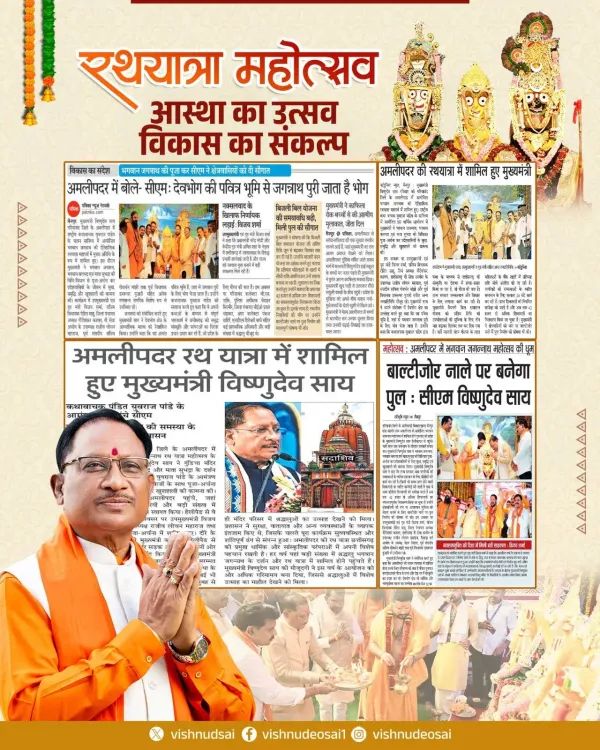
Chhattisgarh Chief Minister Vishnu Deo Sai on 24 July 2026 reaffirmed his government's dual commitment to preserving Sanatan culture and folk traditions while driving all-round state development through good governance, citing public trust as the administration's greatest strength under the Viksit Chhattisgarh vision.
Key Takeaways
CM Vishnu Deo Sai posted on 24 July 2026 reiterating that preservation of Sanatan culture and folk traditions is the government's highest priority alongside state development.
The post invokes the 'Viksit Chhattisgarh' vision, the BJP government's overarching development framework launched after the December 2023 election victory.
The Chief Minister framed public trust ( जनविश्वास ) as the government's greatest strength and good governance as its primary instrument.
Chhattisgarh's large tribal and rural populations are the key stakeholders in policies linking cultural preservation with welfare delivery.
The messaging continues a pattern seen across BJP-ruled states of treating cultural continuity as integral to, rather than separate from, development policy.
Upcoming state assembly sessions and budget presentations will be watched for concrete funding and policy measures that operationalise these stated priorities.
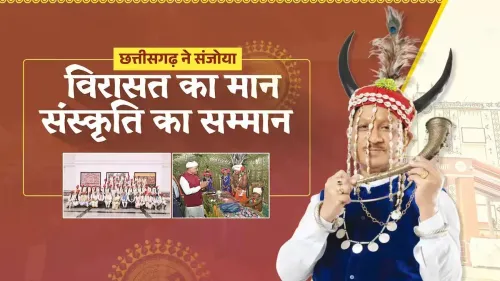
Chhattisgarh Chief Minister Vishnu Deo Sai on Friday, 24 July 2026, reaffirmed that preserving Sanatan culture, folk traditions, and public faith alongside all-round state development remains his government's foremost priority, sharing the commitment on social media platform X.
In his post, the Chief Minister wrote: 'सनातन संस्कृति, लोक परंपराओं और जनआस्था के संरक्षण के साथ प्रदेश के सर्वांगीण विकास को नई दिशा देना हमारी सर्वोच्च प्राथमिकता है।' ('Giving new direction to the all-round development of the state along with the preservation of Sanatan culture, folk traditions, and public faith is our highest priority.') He added that treating public trust as the government's greatest strength, the administration is continuously realising the resolve of a 'Viksit Chhattisgarh' — a developed Chhattisgarh — through good governance.
Context
Vishnu Deo Sai was sworn in as Chief Minister of Chhattisgarh in December 2023 after the Bharatiya Janata Party won the state assembly elections. His government has since consistently articulated a dual mandate: administrative efficiency paired with the protection of the state's deep cultural heritage. The post on 24 July 2026 is the latest in a series of public reiterations of that agenda.
Chhattisgarh, carved out as a separate state in 2000, carries constitutional safeguards for tribal customs and local traditions. The state's large tribal and rural populations have historically been central to its cultural identity, making heritage preservation a politically and socially significant plank.
Policy Backdrop
The BJP government in Chhattisgarh launched the 'Viksit Chhattisgarh' vision after assuming office, explicitly linking governance reforms with the preservation of Sanatan and folk practices. This framing — treating cultural continuity not as separate from development but as its foundation — mirrors the broader approach adopted by BJP-led state governments across India.
The 2023 electoral platform on which CM Sai campaigned stressed both heritage protection and administrative efficiency, and the current messaging reflects continuity with those commitments. References to 'सुशासन' (good governance) and 'जनविश्वास' (public trust) in the post signal that the government intends to anchor its development narrative in accountability to citizens.
Stakeholders and Impact
The communities most directly addressed by this policy posture are Chhattisgarh's tribal populations, rural residents, and practitioners of folk arts and traditions. For these groups, state-level recognition of cultural practices carries tangible implications — from funding for heritage sites to the integration of local customs into welfare delivery frameworks.
Cultural practitioners and community organisations that have long sought formal recognition of folk traditions stand to benefit if the stated priorities translate into budgetary allocations or dedicated policy instruments. At the same time, the framing of development through a cultural lens shapes how infrastructure and welfare programmes are communicated and implemented at the grassroots level.
What's Next
Observers will watch the upcoming state assembly session and budget presentations for concrete announcements — including potential funding for heritage site conservation, governance reform measures, and schemes that operationalise the 'Viksit Chhattisgarh' vision. CM Sai's repeated public emphasis on the cultural-development nexus suggests that any forthcoming policy announcements are likely to be framed within this dual mandate, reinforcing the BJP's identity-linked development model ahead of future electoral cycles.
Point of View
A message calibrated for both the state's tribal heartland and its urban middle class. The invocation of 'public trust' as the government's greatest strength is notable: it implicitly positions the administration's legitimacy as resting on popular consent rather than institutional authority alone. This dual framing — Sanatan heritage plus good governance — has become a template across BJP-ruled states, and Chhattisgarh's iteration of it sets the rhetorical stage for any major policy or budget announcements expected in the coming assembly session. The consistency of the messaging, now nearly three years into the Sai government's term, suggests it is a long-term brand strategy rather than a short-term electoral tactic.
NationPress
22 Oct 2026
Frequently Asked Questions
Who is Vishnu Deo Sai and why is he in the news?
Vishnu Deo Sai is the Chief Minister of Chhattisgarh and a senior BJP leader who was sworn into office in December 2023 . He is in the news after reaffirming on 24 July 2026 that preserving Sanatan culture and folk traditions alongside all-round state development is his government's top priority.
What is the Viksit Chhattisgarh vision?
Viksit Chhattisgarh is the BJP state government's overarching development framework launched after its 2023 election victory, linking governance reforms, welfare delivery, and administrative efficiency with the preservation of the state's Sanatan and folk cultural heritage.
What did CM Sai say in his 24 July 2026 post?
CM Sai stated that giving new direction to the all-round development of Chhattisgarh while preserving Sanatan culture, folk traditions, and public faith is the government's highest priority, and that treating public trust as its greatest strength, the administration is continuously realising the Viksit Chhattisgarh resolve through good governance.
How does Chhattisgarh's cultural preservation policy affect tribal communities?
Chhattisgarh's large tribal and rural populations stand to benefit most directly, as state-level recognition of folk traditions and Sanatan practices can translate into funding for heritage sites, integration of local customs into welfare schemes, and formal policy protection for community cultural practitioners.
What should we watch for next from the Chhattisgarh government?
The upcoming state assembly session and budget presentations are the key events to watch, where concrete announcements on heritage site funding, governance reforms, and schemes operationalising the Viksit Chhattisgarh vision are expected to be made.