CM Sai Reaffirms Chhattisgarh's Transparent Development Push
Synopsis
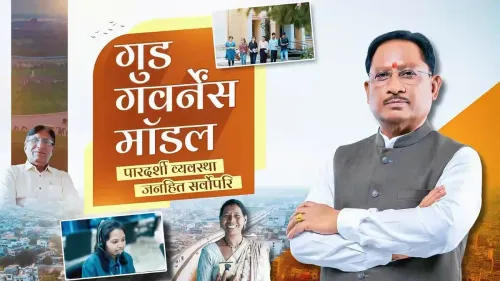
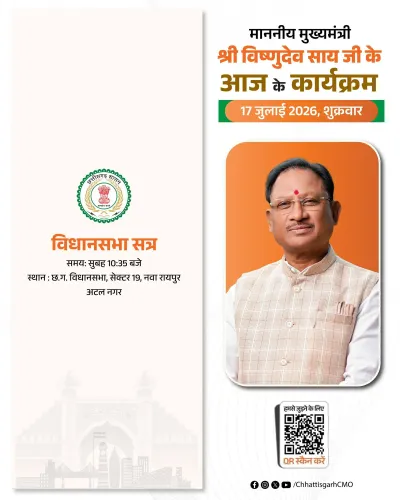
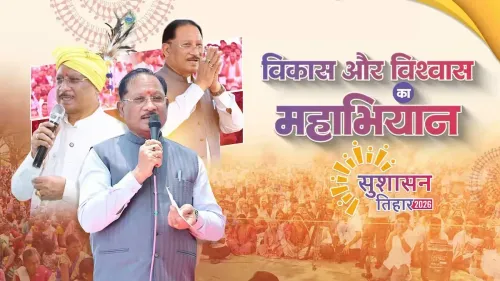
Chhattisgarh Chief Minister Vishnu Deo Sai on 18 June 2026 reaffirmed his government's commitment to transparent, time-bound, and result-oriented welfare scheme delivery, invoking the BJP's SuShasan and Antyodaya principles to ensure development reaches the last person in society.
Key Takeaways
CM Vishnu Deo Sai posted on 18 June 2026 reaffirming the Chhattisgarh government's development agenda.
The government's stated goal is transparent, time-bound, and result-oriented implementation of welfare schemes.
The post invokes the BJP's SuShasan (good governance) and Antyodaya principles, prioritising the welfare of the poorest citizen.
Sai has been Chief Minister of Chhattisgarh since December 2023 , following the BJP's assembly election victory.
Chhattisgarh's large rural and tribal population makes last-mile delivery a critical governance challenge the post directly addresses.
Upcoming state budget sessions and scheme-monitoring guidelines will be key indicators of whether these commitments translate into measurable outcomes.
Chhattisgarh Chief Minister Vishnu Deo Sai on Thursday, 18 June 2026, reaffirmed his government's commitment to transparent, time-bound, and result-oriented implementation of welfare schemes, stating that the state's development journey is aimed at ensuring prosperity and opportunity for every last person in society.
Context
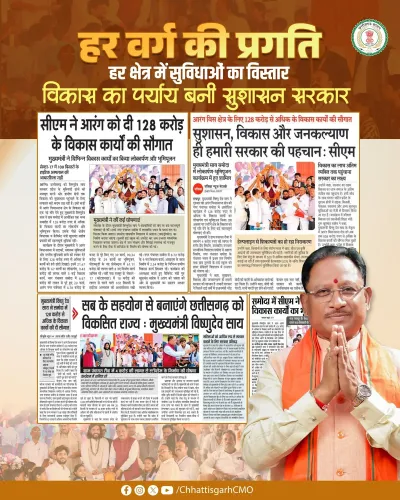
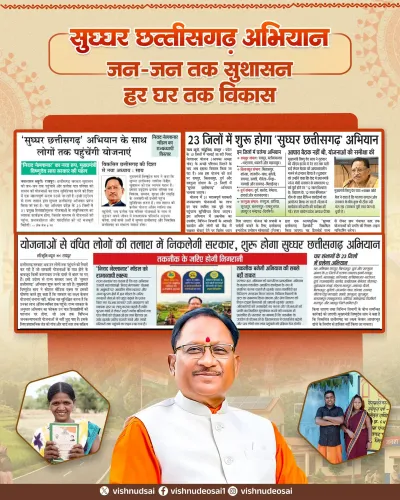
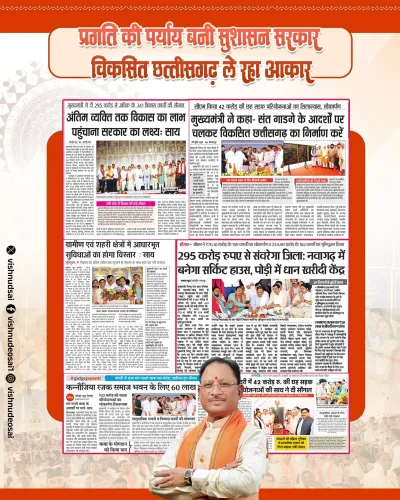
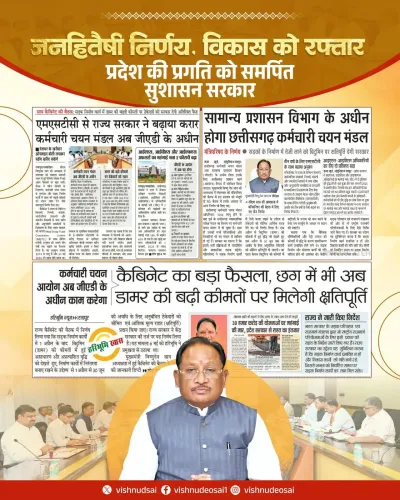
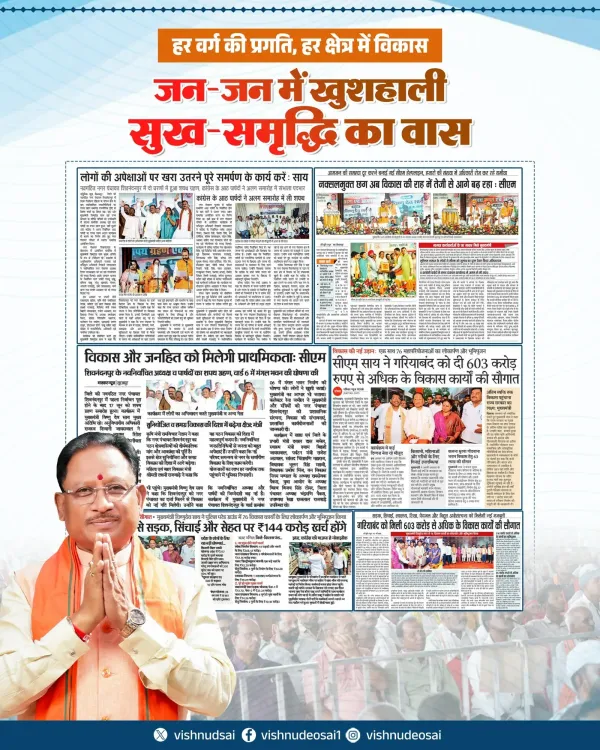
Posting in Hindi on X, CM Sai wrote: 'छत्तीसगढ़ आज विकास के पथ पर निरंतर आगे बढ़ रहा है' ['Chhattisgarh is today continuously moving forward on the path of development']. He described the goal of his government as ensuring 'पारदर्शी, समयबद्ध और परिणामोन्मुखी क्रियान्वयन' — transparent, time-bound, and result-oriented execution of schemes. The post concluded with a pledge that the government works with the commitment of progress for every section of society and development in every sector.
The statement comes from a Chief Minister who assumed office in December 2023 following the BJP's decisive victory in the Chhattisgarh assembly elections, ending a five-year Congress tenure in the state.
Policy Backdrop
The language of the post directly invokes the BJP's SuShasan (good governance) framework and the Antyodaya principle — the idea that government policy must prioritise the welfare of the poorest and most marginalised citizen. These twin concepts have been central to the party's governance messaging across states it rules, and they mirror national priorities around direct benefit transfers and digital monitoring of welfare delivery.
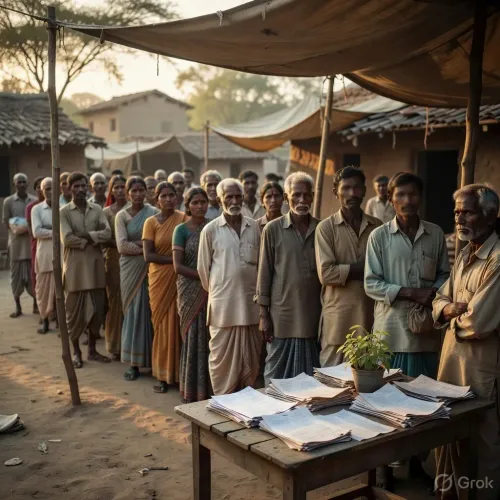
Chhattisgarh, a state with a significant tribal and rural population, has historically faced challenges in last-mile delivery of central and state welfare programmes. Since taking charge, the Sai government has positioned scheme implementation transparency as a defining metric of its administration's performance.
Stakeholders and Impact
The primary beneficiaries of this governance thrust are Chhattisgarh's estimated 3.3 crore citizens, particularly those in rural, tribal, and economically weaker sections who depend on state-administered welfare schemes for food security, housing, health, and livelihood support. The emphasis on 'every section' and 'every sector' signals an intent to avoid siloed delivery and instead pursue integrated development outcomes.
For the state's administrative machinery, the messaging sets an expectation of accountability — transparent and time-bound implementation implies measurable targets and, by extension, greater scrutiny of district-level execution. Scheme beneficiaries, civil society groups, and local governance bodies are all directly implicated in this model.
What's Next
Observers will look to upcoming state budget presentations and any new guidelines on scheme monitoring or third-party audits in the next assembly session as concrete tests of this stated commitment. The Sai government's ability to translate the SuShasan narrative into verifiable delivery outcomes — particularly in remote and tribal districts — will determine whether this governance vision moves beyond messaging into measurable public impact.
Point of View
The statement pre-empts opposition critiques of scheme leakage or delays that have historically dogged welfare delivery in Chhattisgarh. The emphasis on 'every section' and 'every sector' is also a political signal of breadth, countering any narrative that BJP governance in the state favours particular communities or geographies. Whether this messaging translates into auditable outcomes will be the real test as the government approaches the midpoint of its term.
NationPress
18 Sept 2026
Frequently Asked Questions
Who is Vishnu Deo Sai and what is his role in Chhattisgarh?
Vishnu Deo Sai is the Chief Minister of Chhattisgarh and a senior BJP leader. He assumed office in December 2023 after the BJP won the state assembly elections.
What is SuShasan and why does the BJP emphasise it in Chhattisgarh?
SuShasan means 'good governance' and refers to the BJP's model of transparent, accountable, and result-oriented administration. The party uses it as a central governance framework in states it rules, including Chhattisgarh.
What did CM Vishnu Deo Sai say about development in Chhattisgarh?
CM Sai stated that Chhattisgarh is continuously moving forward on the path of development and that his government is committed to transparent, time-bound, and result-oriented implementation of welfare schemes to reach every last person in society.
What is the Antyodaya principle mentioned in relation to Chhattisgarh governance?
Antyodaya is the principle that government policy should prioritise the welfare of the poorest and most marginalised citizen. It is a guiding philosophy within the BJP's governance approach and informs last-mile welfare delivery efforts in Chhattisgarh.
What should we watch for next regarding Chhattisgarh's development agenda?
Key indicators will include upcoming state budget presentations, new scheme-monitoring guidelines, and any third-party audit frameworks introduced in the next assembly session to verify on-ground delivery of welfare programmes.