Gujarat mandates school counsellors, suicide prevention teams for Classes 9-12
Synopsis
Gujarat has made it compulsory for every secondary and higher secondary school to form a mental health team — and for schools with 100-plus students to hire a qualified counsellor — under new regulations that also ban academic humiliation and mandate twice-yearly staff training. The move is one of India's most detailed state-level responses to a Supreme Court directive on student suicide prevention.
Key Takeaways
Gujarat has notified new mental health regulations for Classes 9 to 12 under affiliated GSHSEB schools, effective 2 November 2026 .
Every school must form a School Wellness Team (SWT) ; schools with 100 or more students must appoint at least one qualified counsellor, psychologist or social worker.
Student peer leaders called 'Mano-Mitra' will provide initial emotional support and guide classmates toward professional help.
All teaching and non-teaching staff must undergo mental health training at least twice a year .
Schools are barred from publicly humiliating students or segregating them by academic performance.
A District-Level Monitoring Committee chaired by the District Magistrate will oversee compliance; schools that fail to act on known risks face disciplinary or legal action.
All secondary and higher secondary schools in Gujarat must now constitute dedicated mental health teams and, where enrolment crosses 100 students, appoint at least one qualified counsellor — under sweeping new regulations notified by the state government on 2 November 2026. The rules apply to institutions affiliated with the Gujarat Secondary and Higher Secondary Education Board (GSHSEB) and cover students of Classes 9 to 12.
What the New Regulations Require
The Education Department has inserted Regulation 16(A) into the Gujarat Secondary and Higher Secondary Education Regulations, 1974, and added detailed provisions in Appendix 8 addressing mental health, student welfare and suicide prevention. Every eligible school must form a School Wellness Team (SWT) at the start of each academic year, with the principal leading it and a trained counsellor or designated teacher serving as coordinator.
The team must include one teacher each from the secondary and higher secondary sections, a School Management Committee representative, a non-teaching staff member, and two student peer leaders — called 'Mano-Mitra' — one each from Classes 9-10 and 11-12. The Mano-Mitra representatives will offer initial emotional support to classmates and channel those in need toward professional help.
Schools with fewer than 100 students must forge formal referral arrangements with external mental health professionals, nearby Community Health Centres, Primary Health Centres, the District Mental Health Programme, and Tele-MANAS services.
The Legal and Policy Backdrop
The move follows a Supreme Court judgment that laid down 15 binding guidelines and four directives on student mental health and suicide prevention in educational institutions. The Union Ministry of Law and Justice subsequently directed states to implement those directions. Gujarat has also adopted the UMMEED guidelines — developed by the National Council of Educational Research and Training (NCERT) — as a reference framework. UMMEED stands for Understand, Motivate, Manage, Empathise, Empower and Develop.
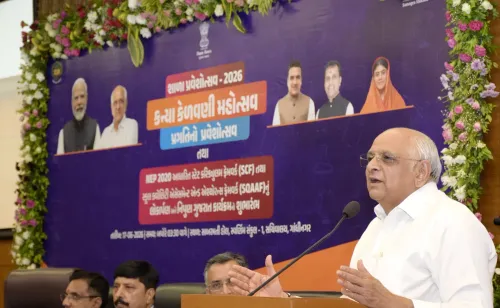
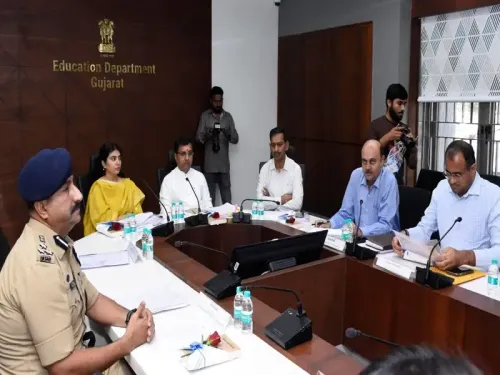
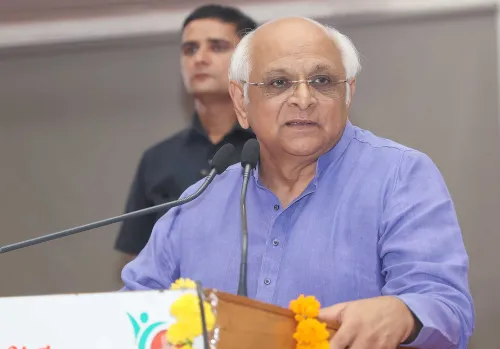
According to officials, the decision was taken under the guidance of Chief Minister Bhupendra Patel, Education Minister Pradyuman Vaja, and Minister of State for Education Rivaba Jadeja.
Protections Against Academic Pressure and Humiliation
The regulations explicitly prohibit schools from segregating students on the basis of academic performance, examination results or marks — whether inside or outside classrooms. Students must not be publicly humiliated, compared with peers, or stigmatised over grades. Practices that create anxiety, fear, an inferiority complex or emotional insecurity are barred outright.
Special mentoring arrangements are required during high-stress transitions: board examinations, result announcements, and the shifts from Class 8 to 9 and Class 10 to 11. Dedicated mentors or counsellors must be assigned to small groups during these periods. Schools must also regularly organise co-curricular activities — yoga, meditation, art, music, gardening, dance and sports — and make programmes such as Khel Mahakumbh, Pariksha Pe Charcha, NSS, NCC, Scouts and Guides, and community service part of their wellness calendar.
Confidentiality, Accountability and Crisis Response
Mental health training for all teaching and non-teaching staff is mandatory at least twice a year, to be conducted by certified professionals covering psychological first aid, warning-sign identification, self-harm response and referral protocols. Student counselling records must be kept strictly confidential and shared only with persons directly involved in a student's safety or treatment.
In the event of a suicide, schools must activate a postvention process — providing psychological support to students, staff and affected families. Only the principal or an authorised officer may speak to the media, and details about the method, location, photographs or sensitive personal information must not be disclosed. Schools that fail to act despite awareness of a risk situation — and where that failure is found to have contributed to serious harm — face disciplinary or legal action under applicable laws.
Oversight rests with a District-Level Monitoring Committee chaired by the District Magistrate or District Collector, which will review compliance, coordinate guidance and recommend corrective measures across all institutions in its jurisdiction.
What Comes Next
The regulations set an ambitious compliance architecture that will test Gujarat's school infrastructure, particularly in smaller or rural institutions that must now establish external referral networks. How swiftly the GSHSEB conducts the first round of mandatory staff training — and whether the District-Level Monitoring Committees are adequately resourced — will determine whether the framework delivers on its intent.
Point of View
And Gujarat is no exception. Smaller schools in rural districts, pushed toward Tele-MANAS and external referrals, will find that pathway credible only if those services are adequately staffed. The accountability clause — allowing disciplinary action against schools that fail to act on known risks — is unusually strong for an education regulation and signals a shift toward institutional liability. Whether District Collectors, already stretched, can meaningfully chair oversight committees will be the implementation test that mainstream coverage is likely to skip.
NationPress
2 Nov 2026
Frequently Asked Questions
What do Gujarat's new school mental health regulations require?
The regulations require every secondary and higher secondary school affiliated with the GSHSEB to constitute a School Wellness Team and, if it has 100 or more students, appoint at least one qualified counsellor, psychologist or social worker. Schools must also train all staff on mental health at least twice a year and adopt the NCERT's UMMEED framework.
Why has Gujarat introduced these rules?
The regulations follow a Supreme Court judgment that issued 15 binding guidelines and 4 directives on student mental health and suicide prevention in educational institutions. The Union Ministry of Law and Justice directed all states to implement those directions, and Gujarat has responded with Regulation 16(A) and Appendix 8 inserted into its 1974 education rules.
Who are the 'Mano-Mitra' peer leaders mentioned in the regulations?
Mano-Mitra — meaning 'mind friend' — are student representatives, one each from Classes 9-10 and 11-12, who form part of the School Wellness Team. They provide initial emotional support to classmates, guide students who need help toward appropriate resources, and foster a supportive peer culture within the school.
What happens to schools with fewer than 100 students?
Schools with fewer than 100 students are not required to hire a full-time counsellor but must establish formal referral arrangements with external mental health professionals, nearby Community Health Centres, Primary Health Centres, the District Mental Health Programme, and Tele-MANAS services.
What are the accountability provisions if a school fails to act?
If a school fails to take timely action despite being aware of a risk situation, and that failure is found to have significantly contributed to serious harm, self-harm or a student suicide, disciplinary or legal action may be initiated against the school or responsible officials under applicable laws. A District-Level Monitoring Committee chaired by the District Magistrate will oversee compliance across all institutions.