White House Claims Trump Delivered Historic Wins for US Fishermen

Synopsis
The White House credits President Trump with 'historic wins' for US fishermen — pointing to Executive Order 13921, regulatory rollbacks under NOAA, and a broader America First industrial strategy for the fisheries sector. Specific growth figures remain unverified.
Key Takeaways
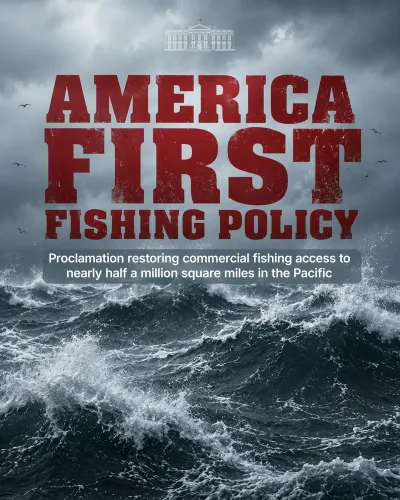
The White House posted on November 2, 2026 , crediting President Trump with delivering historic wins for America's fishing industry.
Trump signed Executive Order 13921 in May 2020 to streamline permitting and expand domestic aquaculture and wild-capture opportunities.
Policy action has centred on reducing friction in NOAA permitting processes and revisiting Magnuson-Stevens Act implementation rules.
The administration's approach mirrors its deregulatory strategy in energy, agriculture, and manufacturing sectors.
Claims of 'billions of dollars in economic growth' are asserted by the White House but cannot be independently verified from current public data.
Congressional reauthorisation of the Magnuson-Stevens Act and new offshore aquaculture leasing decisions are key near-term policy watchpoints.
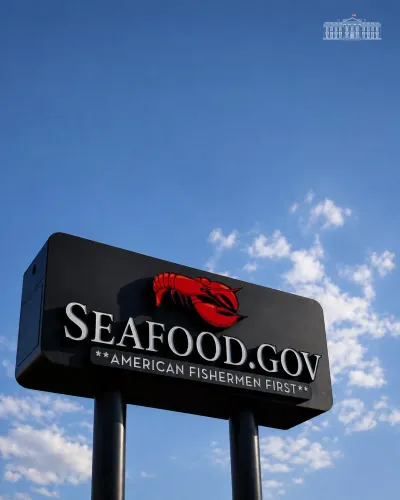
America's fishing docks are at the centre of a fresh White House victory lap. The White House posted on X on Monday, November 2, 2026, crediting President Donald Trump with delivering what it called 'historic wins' for the country's fishing industry — unlocking billions in economic growth, revitalising the sector, and providing sweeping regulatory relief.
What the White House is claiming — and what it rests on
The post frames Trump's fisheries push as a deliberate 'America First' industrial strategy. The policy lineage traces back to May 2020, when Trump signed Executive Order 13921 — 'Promoting American Seafood Competitiveness and Economic Growth' — which moved to streamline federal permitting, reduce bureaucratic friction for commercial operators, and expand opportunities for both domestic aquaculture and wild-capture fishing.
That order targeted a sector the administration had long argued was throttled by regulatory overlap between federal agencies, particularly around NOAA permitting processes and the implementation rules flowing from the Magnuson-Stevens Fishery Conservation and Management Act, the foundational US law governing ocean fisheries. The White House has consistently positioned rollbacks in this space as economic relief for working coastal communities, not just industry interests.
The Magnuson-Stevens thread running through US fisheries policy
The Magnuson-Stevens Act is the spine of US fisheries management — setting catch limits, allocating fishing rights, and governing how NOAA's regional councils operate. Successive administrations have fought over how tightly it should be applied, with industry groups often pushing for more flexibility on annual catch limits and permitting timelines.
Trump's approach — across both terms — has followed a consistent pattern of reducing compliance burdens for extractive and harvesting industries, a playbook applied in parallel to energy, agriculture, and manufacturing. For fishing, that has translated into pressure on NOAA to accelerate permits, expand offshore aquaculture leasing, and revisit rules that industry argued limited fleet operations unnecessarily.
Why the 'billions in growth' claim needs a closer look
The specific claim of 'billions of dollars in economic growth' cannot be independently verified from publicly available data at this time. What is documented is the directional policy push and the intent behind it. The US commercial and recreational fisheries sector is a substantial contributor to GDP — encompassing harvesting, processing, export supply chains, and coastal tourism — so even incremental regulatory changes can carry meaningful downstream value. But quantifying that precisely remains contested terrain.
Congressional action on the Magnuson-Stevens Act reauthorisation and any new executive orders expanding offshore aquaculture leasing will be the next concrete tests of how far this policy agenda actually advances.
For American fishermen watching Washington, the question is no longer whether the White House is in their corner — it is whether the regulatory machinery can keep pace with the promises made from it.
Point of View
Coastal American workers. The fisheries sector has rarely featured prominently in national political messaging, making this an interesting signal of which voter blocs the administration is actively cultivating ahead of any political cycle. The Magnuson-Stevens reauthorisation debate, largely invisible to most voters, could become a genuine legislative battleground where the administration's stated commitments face a real test. How much of the claimed economic uplift translates into verifiable, community-level gains will determine whether this narrative holds.
NationPress
2 Nov 2026
Frequently Asked Questions
What did Trump do for the US fishing industry?
President Trump signed Executive Order 13921 in May 2020 to promote American seafood competitiveness by streamlining federal permitting, reducing regulatory burdens on commercial operators, and expanding domestic aquaculture and wild-capture fishing opportunities.
What is the Magnuson-Stevens Act and why does it matter?
The Magnuson-Stevens Fishery Conservation and Management Act is the primary US law governing ocean fisheries — setting catch limits, allocating fishing rights, and governing how federal regional councils manage fish stocks. It is central to any major US fisheries policy debate.
Did Trump actually unlock billions in economic growth for fishermen?
The White House claims billions in economic growth, but these specific figures cannot be independently verified from current public data. The directional policy push — regulatory relief and permitting reform — is documented, but quantifying the exact economic impact remains contested.
What is Executive Order 13921?
Executive Order 13921 , signed by President Trump in May 2020 , was titled 'Promoting American Seafood Competitiveness and Economic Growth.' It directed federal agencies to reduce permitting delays and expand opportunities for domestic seafood production, including aquaculture.
What comes next for US fisheries policy under Trump?
Key watchpoints include Congressional reauthorisation or amendment of the Magnuson-Stevens Act and any new executive actions expanding offshore aquaculture leasing — both of which will test how far the administration's fisheries commitments actually advance in practice.