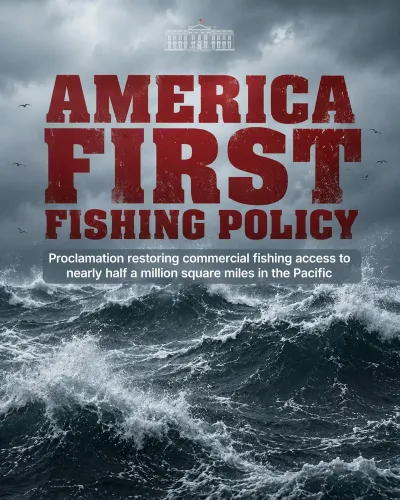
Trump Moves to Restore US Pacific Commercial Fishing
Synopsis
The White House announced on June 11, 2026 that President Trump is restoring American commercial fishing in the Pacific, aiming to grow domestic seafood output, create jobs, lower consumer prices, and advance national security interests in the region.
Key Takeaways
The White House announced on June 11, 2026 that President Trump is restoring American commercial fishing in the Pacific Ocean .
The stated goals are boosting domestic seafood production, supporting American jobs, strengthening national security, and lowering seafood prices.
The move builds on a 2020 Trump executive order that directed agencies to cut regulatory barriers to US seafood and aquaculture production.
US commercial fisheries are governed by the Magnuson-Stevens Act of 1976 ; any new measures must work within or amend that framework via NOAA Fisheries .
The United States imports an estimated 70–80 per cent of its seafood, a dependency the administration frames as both an economic and national security concern.
Specific regulatory instruments have not yet been detailed; follow-on action is expected through federal agencies and regional fishery management councils.
The White House announced on Thursday, June 11, 2026 that President Donald J. Trump is taking steps to restore American commercial fishing in the Pacific Ocean, with stated goals of boosting domestic seafood production, supporting American jobs, strengthening national security, and lowering seafood prices for consumers.
Context
The announcement frames the Pacific fishing push around four pillars: economic output, employment, national security, and consumer affordability. The White House described the move as helping 'hardworking families' access lower-priced seafood — a domestic cost-of-living argument that has featured prominently in the Trump administration's economic messaging.
The Pacific Ocean hosts some of the most productive commercial fisheries under US jurisdiction, including Alaskan pollock, crab, and salmon stocks managed through federal frameworks. These fisheries are among the largest by volume in the world and are central to both coastal employment and the broader American seafood supply chain.
Policy Backdrop
The current initiative builds on a policy lineage that stretches back to Trump's first term. In 2020, President Trump signed an executive order directing federal agencies to reduce regulatory barriers and expand opportunities for American seafood production and aquaculture — one of the earliest formal efforts to link deregulation directly to fisheries output.
US commercial fishing is governed primarily by the Magnuson-Stevens Fishery Conservation and Management Act of 1976, which established regional fishery management councils and set binding requirements to end overfishing in federal waters. Any new Pacific fishing measures would need to operate within — or seek to amend — that statutory framework. The federal agency responsible for implementation is NOAA Fisheries, a body within the Department of Commerce that sets annual catch limits and manages permitting.
The broader pattern of executive action on fisheries reflects a recurring tension in US policy between maximising short-term harvest for economic benefit and maintaining sustainable stock levels over the long term. The Trump administration has historically leaned toward deregulation and expanded access as its preferred instrument.
Stakeholders and Impact
The most immediate beneficiaries identified in the announcement are American commercial fishermen operating in the Pacific, who have faced years of quota restrictions, permitting costs, and competition from imported seafood. The United States imports roughly 70 to 80 per cent of the seafood it consumes, a dependency that both economic nationalists and defence analysts have flagged as a strategic vulnerability.
For American consumers, the administration's argument is straightforward: expanding domestic supply should put downward pressure on retail seafood prices. Coastal fishing communities in Alaska, Washington, Oregon, California, and Hawaii stand to see the most direct employment effects if access to Pacific stocks is widened.
The national security dimension — less conventional in fisheries policy — points to US strategic interests in maintaining a visible and active presence in Pacific waters, particularly as geopolitical competition in the region has intensified in recent years.
What's Next
The specific regulatory or executive instruments underlying this announcement were not detailed in the White House post. Follow-on action is expected to flow through NOAA Fisheries and the relevant regional fishery management councils, which would need to translate any presidential directive into concrete changes to Pacific catch quotas, permitting rules, or aquaculture policy.
Observers will watch closely for whether the administration pursues changes through executive order, agency rulemaking, or legislative proposals — each pathway carrying different timelines and legal durability. Any significant loosening of Pacific fishing quotas would also draw scrutiny from environmental groups and sustainability advocates who monitor stock health under the Magnuson-Stevens Act.
Point of View
With a national security overlay that broadens its political coalition. By linking Pacific fisheries to both jobs and strategic positioning, the White House is simultaneously targeting coastal working-class voters and defence hawks. The move continues a pattern of using executive action to signal deregulatory intent before detailed rulemaking follows — meaning the real policy test will come when NOAA and the fishery councils are asked to translate the directive into binding quota or permitting changes. Whether the initiative produces durable gains in domestic production or runs into the hard ceilings of sustainable stock management remains the central open question.
NationPress
21 Sept 2026
Frequently Asked Questions
What is Trump doing about Pacific commercial fishing in 2026?
The White House announced on June 11, 2026 that President Trump is taking steps to restore American commercial fishing in the Pacific Ocean, with goals of increasing domestic seafood production, supporting jobs, and lowering consumer prices. Specific regulatory details had not been publicly released at the time of the announcement.
How does Pacific fishing affect US national security?
The Trump administration has framed expanded Pacific fishing as a national security issue because the United States currently imports an estimated 70–80 per cent of the seafood it consumes, creating supply-chain dependence. Maintaining an active US fishing presence in Pacific waters also relates to broader strategic interests in the region.
What law governs US commercial fishing in the Pacific?
The Magnuson-Stevens Fishery Conservation and Management Act of 1976 is the primary federal law governing US commercial fisheries. It established regional fishery management councils and requires federal agencies, principally NOAA Fisheries, to set catch limits that prevent overfishing.
Did Trump take action on fisheries during his first term?
Yes. In 2020, during his first term, President Trump signed an executive order directing federal agencies to reduce regulatory barriers and expand opportunities for American seafood production and aquaculture, making the 2026 announcement a continuation of that earlier policy direction.
Will Trump's Pacific fishing move lower seafood prices in the US?
The White House has argued that expanding domestic seafood production should put downward pressure on retail prices for consumers. However, the actual price impact will depend on the scale of any new catch access, market conditions, and how quickly domestic supply can substitute for imports.