Trump Cuts Vehicle Repair Rules, Eases Costs for US Families
Synopsis
The White House announced President Trump is rolling back vehicle repair regulations, framing it as a cost-relief measure for American families and a restoration of consumer rights to repair their own cars. The move targets manufacturer restrictions that have long limited independent mechanics and raised household maintenance costs.
Key Takeaways
Trump is rolling back federal regulations restricting vehicle self-repair and independent repair shop access.
The White House framed the action as directly lowering costs for American families .
The move revives the long-contested 'right to repair' debate in the United States .
Independent auto repair shops and aftermarket parts suppliers are the primary beneficiaries.
Specific regulatory instruments being revoked had not been publicly named at the time of the announcement.
The action is consistent with the Trump administration's broader deregulatory agenda since January 2025 .
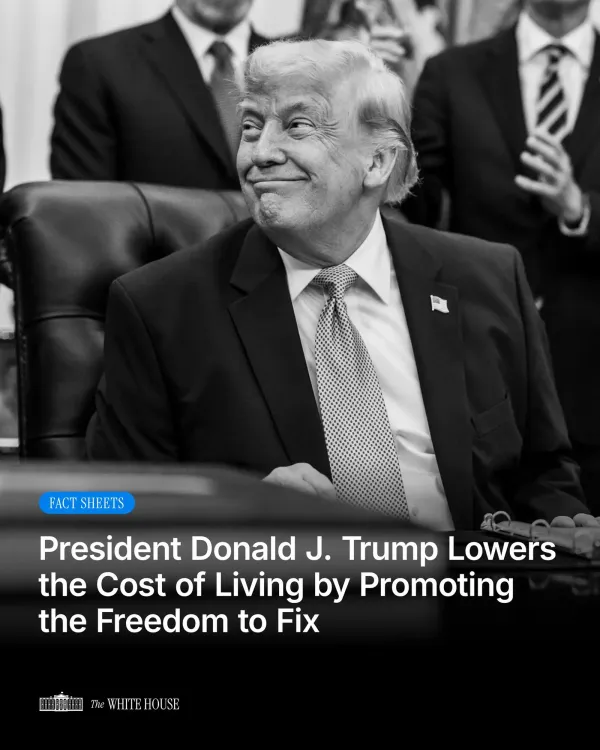
The White House announced on Tuesday, 30 June 2026 that President Donald J. Trump is rolling back federal regulations on vehicle repairs, framing the move as a direct cost-relief measure for American families and a restoration of consumer freedom to fix their own cars.
Context
The White House post states that President Trump is 'lowering costs for American families by giving back the freedom to fix their own vehicles, and slashing burdensome regulations that get in the way.' The announcement signals a targeted deregulatory action in the automotive sector, though the specific executive order or rule being revoked was not named in the post.
The 'right to repair' debate has been a long-running policy dispute in the United States, pitting vehicle owners and independent repair shops against original equipment manufacturers who have historically restricted access to proprietary diagnostic tools and software needed for modern vehicle maintenance.
Policy Backdrop
For years, independent mechanics and consumer advocates in the US have argued that manufacturer restrictions on repair data and tools effectively force vehicle owners to rely on authorised dealerships, raising costs substantially. Federal and state-level legislative efforts to address this had gained momentum in prior years, particularly as vehicles became more software-dependent.
The Trump administration's move fits within a broader deregulatory posture the White House has maintained since January 2025, which has included rolling back environmental, energy, and consumer-sector rules across multiple industries. Framing the action around household cost reduction aligns with the administration's recurring messaging on inflation and economic relief.
Stakeholders and Impact
Independent auto repair shops — a significant segment of small businesses across the United States — stand to benefit directly if manufacturers are required to share repair data and diagnostic access more openly. Consumer groups have long argued that restricted repair ecosystems add hundreds of dollars to routine maintenance costs per vehicle per year.
Automakers and their authorised dealer networks may face increased competition from independent shops if the regulatory rollback mandates broader access to proprietary systems. The move could also affect the market for aftermarket parts, which competes directly with manufacturer-supplied components.
For Indian-origin auto component manufacturers and exporters who supply parts to the US aftermarket — a multi-billion-dollar trade corridor — an expanded independent repair ecosystem in America could translate into modestly higher demand for compatible aftermarket parts.
What's Next
The specific regulatory instruments being revoked or amended have not yet been publicly detailed in this announcement. Formal rulemaking notices, if any, would be published in the Federal Register, after which industry stakeholders typically have a comment window before final implementation.
Consumer and small-business advocacy groups are expected to welcome the direction, while automaker lobbies may seek to narrow the scope of any mandated data-sharing requirements. The policy's full contours — and its durability through potential legal challenges — will become clearer as implementing documents are released.
Point of View
The administration broadens the appeal of what is essentially a pro-small-business, anti-monopoly policy — unusual terrain for a Republican White House. The 'right to repair' cause has historically drawn bipartisan support, giving this action cross-aisle resonance that the administration is likely keen to exploit ahead of any electoral cycle. How far the deregulation actually reaches — whether it mandates open diagnostic data or merely removes existing federal barriers — will determine whether the policy delivers on its headline promise.
NationPress
29 Sept 2026
Frequently Asked Questions
What is the 'right to repair' for vehicles in the US?
The 'right to repair' refers to the ability of vehicle owners and independent mechanics to access the tools, parts, and software data needed to fix cars without being restricted to manufacturer-authorised dealerships. Automakers have historically limited this access, raising repair costs for consumers.
What regulations is Trump cutting on vehicle repairs?
The White House announced President Trump is slashing regulations that restrict Americans' freedom to repair their own vehicles, though the specific rules being revoked were not named in the initial announcement. Details are expected to be published through formal regulatory channels.
How will Trump's vehicle repair deregulation lower costs for families?
By opening up vehicle repair to independent shops and enabling owners to fix their own cars, the policy is intended to increase competition against expensive authorised dealerships, potentially reducing maintenance and repair bills for American households.
Does Trump's vehicle repair policy affect India?
Indirectly, yes. Indian auto component manufacturers who export aftermarket parts to the United States could see increased demand if independent repair shops gain broader access to the US vehicle maintenance market as a result of this deregulation.
When did the White House announce the vehicle repair deregulation?
The White House announced the vehicle repair deregulation on Tuesday, 30 June 2026 , via an official post on X, the social media platform.