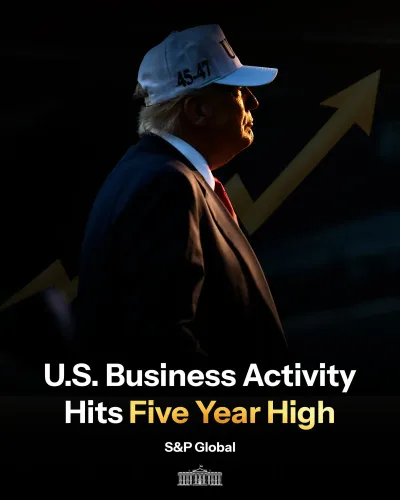
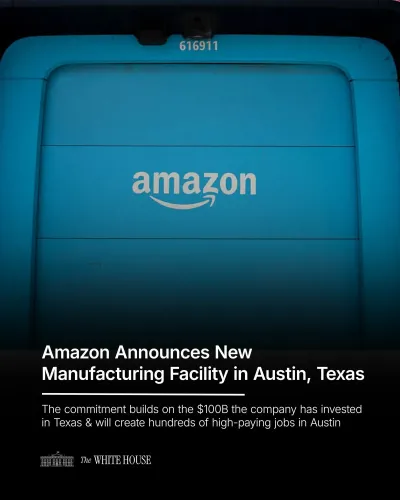
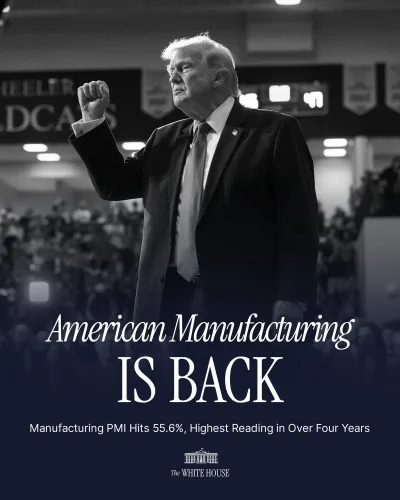
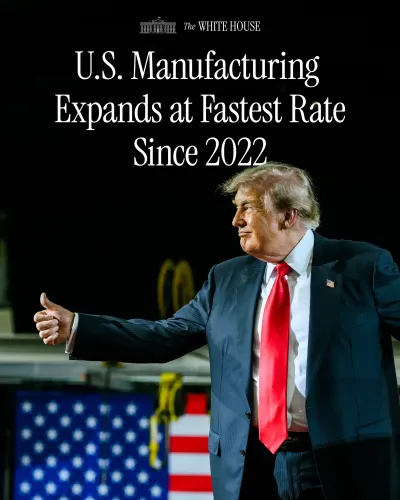
White House Claims Record Jobs and Manufacturing Wins Under Trump
Synopsis
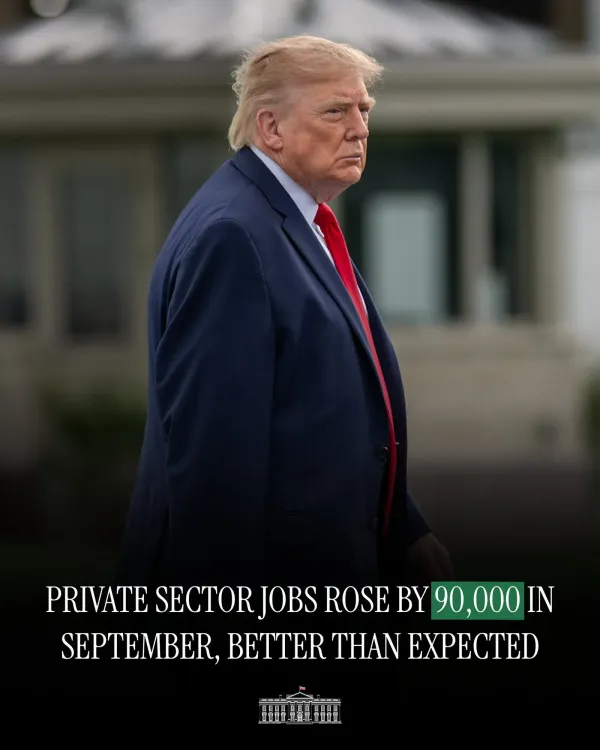
The White House declared record investments and historic manufacturing growth on 30 September 2026, attributing the gains to President Trump's pro-growth agenda — including the 2017 tax cuts, deregulation, and Made in America procurement directives — while specific figures await independent verification.
Key Takeaways
The White House posted on 30 September 2026 claiming record investments and historic manufacturing growth under President Trump .
The post credited Trump's pro-growth policies — including the 'Made in America' initiative — for a boom in private-sector job creation.
The Tax Cuts and Jobs Act of 2017 cut the US corporate tax rate from 35% to 21% , a central pillar of the administration's investment-attraction strategy.
Section 232 tariffs on steel and aluminium, imposed in 2018 , were designed to protect domestic manufacturing capacity and reduce import dependence.
The specific 'record' and 'historic' claims in the post have not yet been independently verified against Bureau of Labor Statistics or PMI data.
A sustained US manufacturing resurgence backed by tariff policy carries direct trade implications for Indian exporters in steel, pharma, and electronics.
The White House is touting what it calls a landmark economic moment — declaring record investments, historic manufacturing growth, and a resurgent private sector as proof that President Donald Trump's pro-growth agenda is delivering results. The official post, published on Wednesday, 30 September 2026, puts the 'Made in America' revival front and centre.
The 'Made in America' Machine Kicks Into Gear
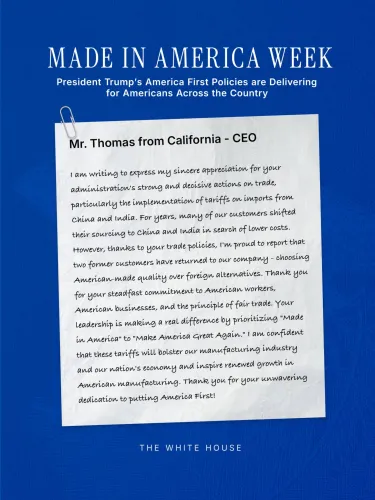
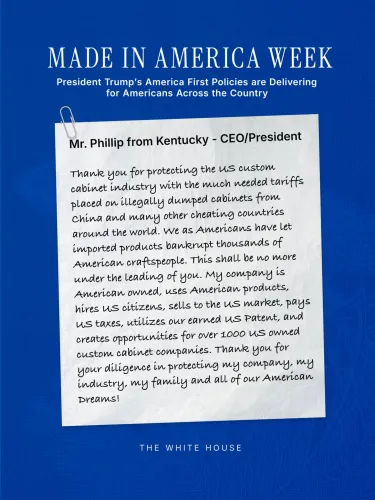
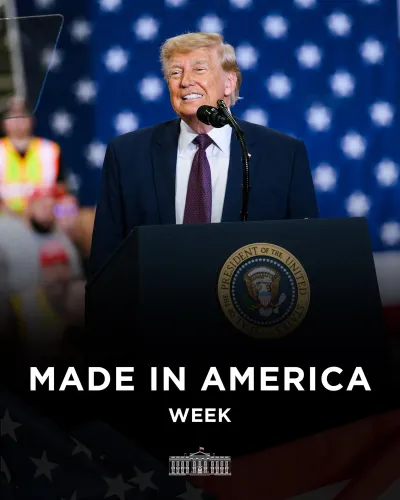
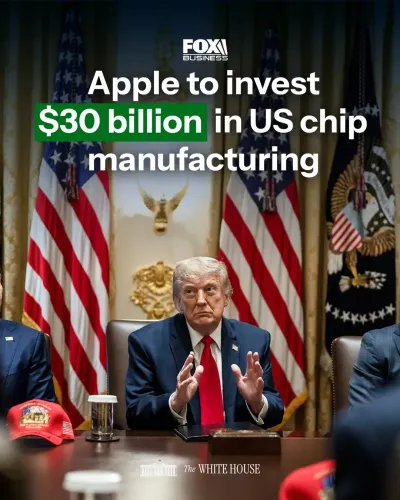
The White House framed the announcement around three pillars: investment inflows, manufacturing expansion, and private-sector job creation. 'Record investments, historic manufacturing growth, and bringing back Made in America,' the post stated. 'President Trump's pro-growth policies are paying off. Private sector job growth has boomed.'
The 'Made in America' banner has been a fixture of Trump economic messaging since his first term — functioning both as a federal procurement directive and as a broader rallying call to reshore supply chains that migrated offshore over decades. Under that framework, the administration pushed agencies to prioritise domestically produced goods and leaned on tariff walls to tilt the economics of manufacturing back toward United States soil.
The Policy Architecture Behind the Claims
The economic scaffolding dates back to Trump's first term. The Tax Cuts and Jobs Act of 2017 slashed the corporate tax rate from 35% to 21%, explicitly designed to make domestic investment more attractive and reduce the incentive to park profits overseas. Simultaneously, Section 232 tariffs imposed in 2018 on steel and aluminium imports were positioned as a shield for industries the administration viewed as strategically critical.
Together, those measures formed the core of what the White House branded its 'America First' economic playbook — a combination of tax relief, deregulation, and selective protectionism aimed at narrowing trade deficits and expanding domestic production capacity. Pre-pandemic data from Trump's first term did show modest gains in manufacturing employment alongside broader labour market strength.
What the Numbers Still Need to Prove
The specific claims of 'record' and 'historic' growth in the September 2026 post go beyond independently verifiable data available at this time. Monthly employment reports from the Bureau of Labor Statistics and manufacturing Purchasing Managers' Index readings remain the authoritative benchmarks against which those superlatives will be measured.
For Indian businesses — particularly exporters in steel, aluminium, pharmaceuticals, and electronics who ship to the United States — a sustained American manufacturing surge backed by tariff policy carries direct implications for market access and competitive positioning. Washington's trade posture is never purely a domestic story.
Whether the headline claims hold up to the next data release will determine if this post marks a genuine inflection point or simply the latest chapter in a long-running political narrative about industrial revival.
Point of View
A message with proven resonance in industrial swing states. The invocation of 'record' and 'historic' growth follows a well-worn playbook of pre-empting official data with headline claims, placing the burden of contradiction on critics rather than supporters. For trading partners like India, the signal is clear: domestic-production-first policy remains the dominant doctrine in Washington, and tariff architecture is unlikely to soften. The coming BLS employment cycle will be the real verdict on whether this announcement reflects durable structural change or sustained political messaging.
NationPress
30 Sept 2026
Frequently Asked Questions
What did the White House say about Trump's economic policies in September 2026?
The White House stated on 30 September 2026 that President Trump's pro-growth policies had produced record investments, historic manufacturing growth, and a boom in private-sector job creation, citing the Made in America initiative as central to these gains.
What is the Made in America initiative?
Made in America is a Trump administration policy and procurement directive that encourages federal agencies to purchase US-made goods and incentivises companies to reshore supply chains back to the United States.
How did the Tax Cuts and Jobs Act of 2017 affect US manufacturing?
The Tax Cuts and Jobs Act of 2017 reduced the US corporate tax rate from 35% to 21%, making domestic investment more financially attractive and reducing incentives for companies to shift profits and production overseas.
What are Section 232 tariffs and how do they relate to US manufacturing?
Section 232 tariffs are trade measures imposed by the Trump administration in 2018 on steel and aluminium imports, designed to protect domestic producers by making foreign metals more expensive and reviving US industrial capacity.
How does US manufacturing policy under Trump affect India?
A sustained American manufacturing revival backed by tariffs and the Made in America policy directly affects Indian exporters in sectors like steel, aluminium, pharmaceuticals, and electronics, potentially restricting their access to the US market.