CM Fadnavis launches India's first governance competition in Mumbai
Synopsis
Chief Minister Devendra Fadnavis presided over 'The Governance Challenge 2026' in Mumbai — India's first good-governance competition — announcing a 300-acre AI-focused Innovation City in Navi Mumbai, Maharashtra's first dedicated startup incubator M-Hub, and AI training for 2 lakh youth under the Maharashtra AI Policy 2026.
Key Takeaways
India's first governance-focused competition , 'The Governance Challenge 2026', was held in Mumbai on 30 September 2026 , with CM Devendra Fadnavis as chief guest and prize-giver.
Maharashtra claims 18% of all Indian startups and hosts more than 30,000 startups — the highest in any Indian state.
A 300-acre 'Innovation City' focused on AI and advanced technology is planned for Navi Mumbai .
Under the Maharashtra AI Policy 2026 , 2 lakh youth and professionals will be trained and AI incubators established statewide. 'M-Hub' is being developed as Maharashtra's first dedicated startup incubator.
Maharashtra has set targets of a $1 trillion economy by 2030 and a $2 trillion economy by 2035 , with innovation as the key driver.
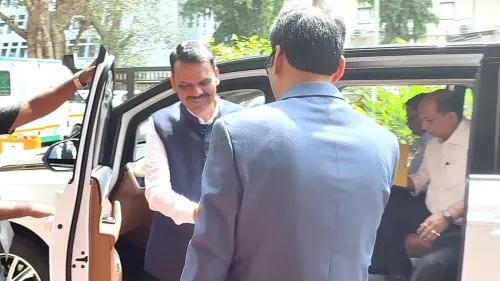
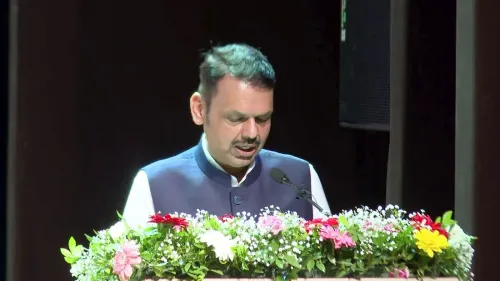
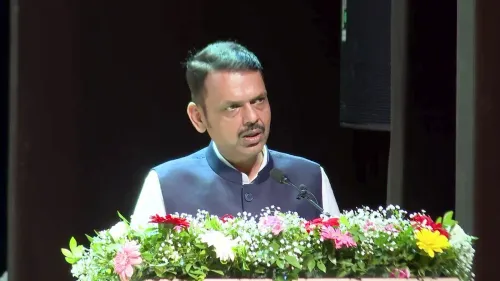
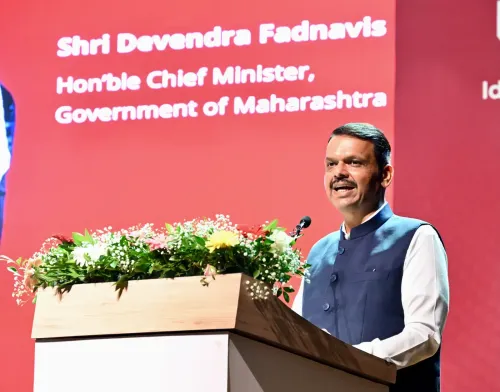
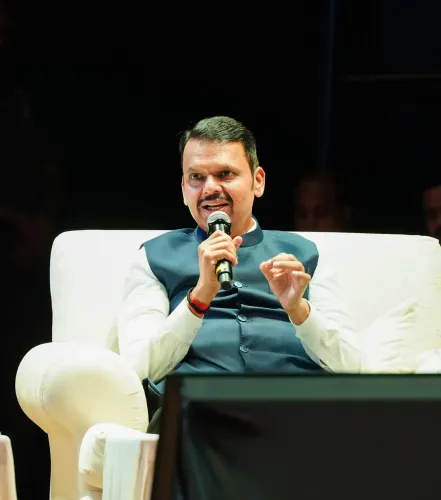
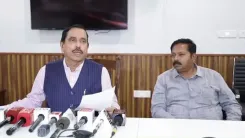
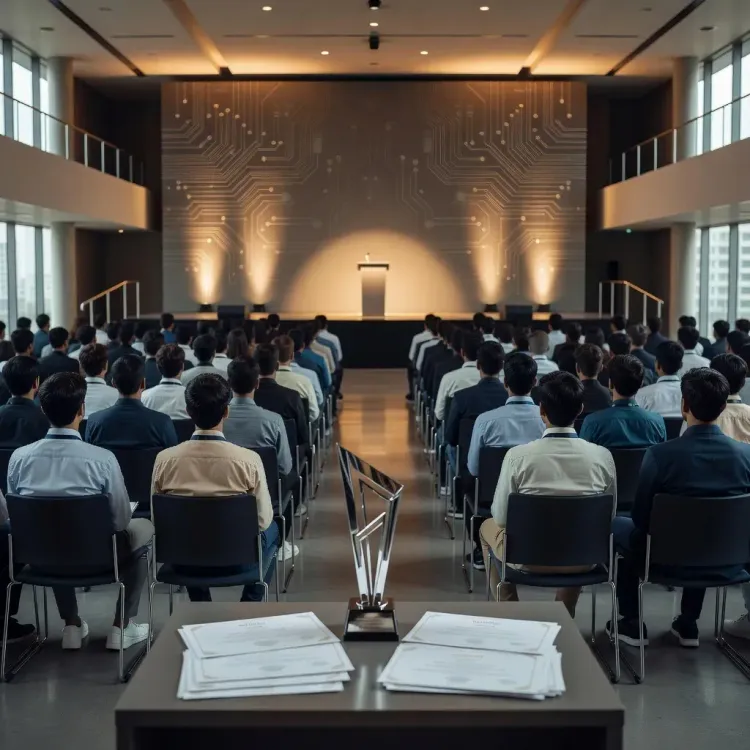
India's first good-governance-focused competition just found its stage in Mumbai — and Chief Minister Devendra Fadnavis used it to lay out an ambitious blueprint for turning Maharashtra into the world's next innovation hub. At 'The Governance Challenge 2026', held on 30 September 2026, six teams presented research-driven ideas centred on developing Maharashtra into a research powerhouse by 2035, with Fadnavis personally handing out prizes to the winners.
What 'The Governance Challenge' actually is
Fadnavis was emphatic that this was not merely a competition. 'ही केवळ स्पर्धा नसून... प्रतिभा आणि कल्पना शोधण्याचा उपक्रम आहे' — 'This is not just a competition but an initiative to discover the talent and ideas that will shape the future administrative architecture of Maharashtra and the nation,' he said. Organised in partnership with Samagra — a governance-focused organisation whose founder and CEO Gaurav Goyal was present — the event invited young researchers to pitch innovations across domains including artificial intelligence, data analytics, digital governance, agriculture, health, climate change, and urban planning.
Maharashtra's startup capital claim — and the numbers behind it
Fadnavis anchored his vision in a striking statistic: 18 per cent of all startups in India are based in Maharashtra, with the state hosting more than 30,000 startups — the highest count in the country. The Chief Minister declared Maharashtra India's 'startup capital', citing its leadership across finance, industry, entrepreneurship, and technology. He argued that the state's startup strength, combined with young researchers' ideas, would position Maharashtra as a global innovation hub.
The ecosystem ambition runs deep. Maharashtra has 87 universities, approximately 5,500 colleges, and more than 4.5 million students — a talent base Fadnavis described as the engine for building tomorrow's Maharashtra. He stressed that ideas emerging from classrooms must travel all the way to global companies, and that the state is building a complete innovation chain — from concept to real-world impact to international scale.
'M-Hub', Innovation City, and the AI Policy 2026
Three concrete infrastructure announcements anchored the speech. First, 'M-Hub' — being developed as Maharashtra's first dedicated startup incubator. Second, an 'Innovation City' spanning 300 acres in Navi Mumbai, focused on artificial intelligence and cutting-edge technology. Third, under the Maharashtra Artificial Intelligence Policy 2026, the government plans to train 2 lakh (200,000) youth and professionals and establish AI incubators across the state. Government data, Fadnavis said, will serve as a raw resource for young innovators' research — a significant open-data commitment.
Every district in the innovation map — from Nagpur to Kolhapur
Fadnavis called out cities by name — Nagpur, Nashik, Kolhapur, Nanded, Amravati — insisting that young researchers from every corner of Maharashtra must have access to mentors, technology, incubation support, and market linkages. Hackathons, he said pointedly, must not end with certificates; the ideas inside them must be implemented. It was a sharp rebuke of performative innovation theatre.
The $1 trillion clock is ticking
The competition sat inside a larger economic narrative. Maharashtra has set a target of a $1 trillion economy by 2030 and a $2 trillion economy by 2035, with innovation named as the primary driver. The Chief Minister's Fellowship programme — running since 2015 across seven cohorts — has already given young professionals direct exposure to senior administration, and Fadnavis signalled the government would continue expanding such pipelines. The overarching frame is Viksit Bharat 2047, the national goal of a developed India, to which youth-led governance innovation is now explicitly linked.
Point of View
M-Hub, and Innovation City translate into funded, operational infrastructure — or remain aspirational anchors in a long series of Maharashtra innovation announcements.
NationPress
30 Sept 2026
Frequently Asked Questions
What is 'The Governance Challenge 2026' in Maharashtra?
'The Governance Challenge 2026' is India's first good-governance-focused competition, organised in Maharashtra and held in Mumbai on 30 September 2026. Six teams presented innovation ideas focused on developing Maharashtra into a research-driven economy by 2035, with CM Devendra Fadnavis presenting prizes to the winners.
What is the Innovation City announced by CM Fadnavis?
CM Fadnavis announced an 'Innovation City' to be built on 300 acres in Navi Mumbai, dedicated to artificial intelligence and cutting-edge technology. It forms part of Maharashtra's broader strategy to become a global innovation hub.
What is Maharashtra's AI Policy 2026?
Under the Maharashtra Artificial Intelligence Policy 2026, the state government plans to train 2 lakh (200,000) youth and professionals in AI and establish AI incubators across Maharashtra to promote AI-based research.
Is Maharashtra really India's startup capital?
CM Fadnavis cited figures showing Maharashtra hosts more than 30,000 startups — the highest in any Indian state — accounting for 18% of all startups in the country. The state claims leadership across finance, industry, entrepreneurship, and technology sectors.
What is the Chief Minister's Fellowship programme in Maharashtra?
The Chief Minister's Fellowship programme, running since 2015, has completed seven cohorts and gives young professionals from diverse fields the opportunity to work directly alongside senior administrators, deepening the link between youth talent and governance.