CM Fadnavis Crowns Winners of India's First Governance Challenge
Synopsis
Chief Minister Devendra Fadnavis presented awards at The Governance Challenge 2026 in Mumbai — India's first governance-centric competition — with Masters Union, ISB, and IIM Mumbai taking top honours in urban development, education, and healthcare respectively.
Key Takeaways
The Governance Challenge 2026 is India's first competition focused exclusively on governance innovation.
Masters Union School of Business won first place for its Urban Development proposal.
Indian School of Business claimed second prize in the Education Sector category.
IIM Mumbai took third place for its Healthcare Sector entry.
Prizes were awarded by Chief Minister Devendra Fadnavis in Mumbai on 30 September 2026 .
Maharashtra has a track record of academic-government partnerships dating to the Aaple Sarkar e-governance initiative of 2014–2019 .
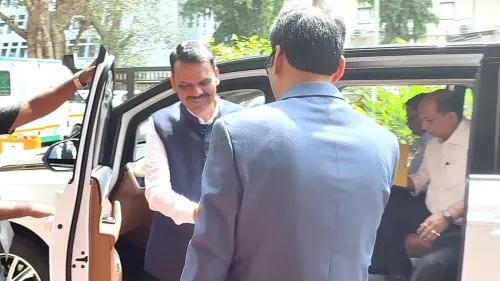
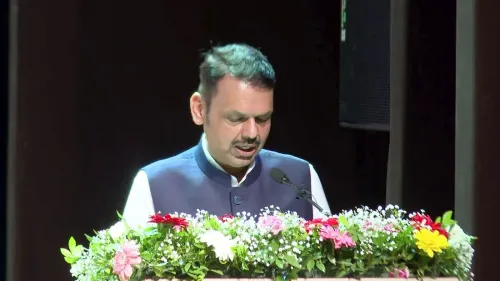
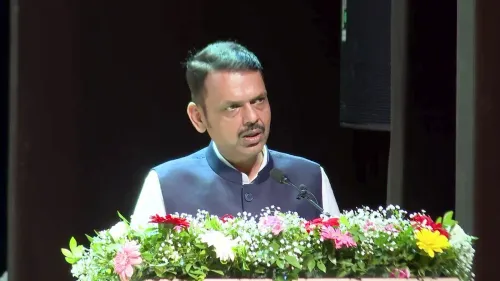
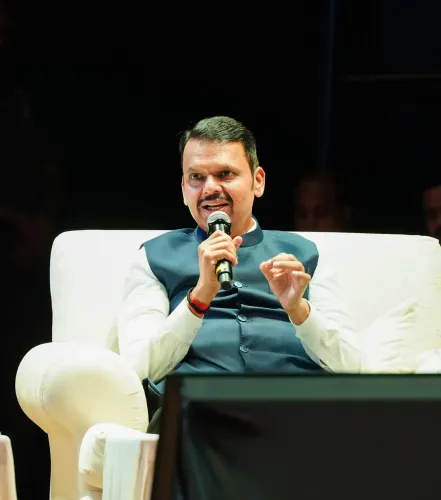
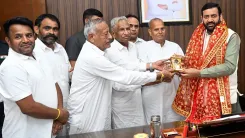
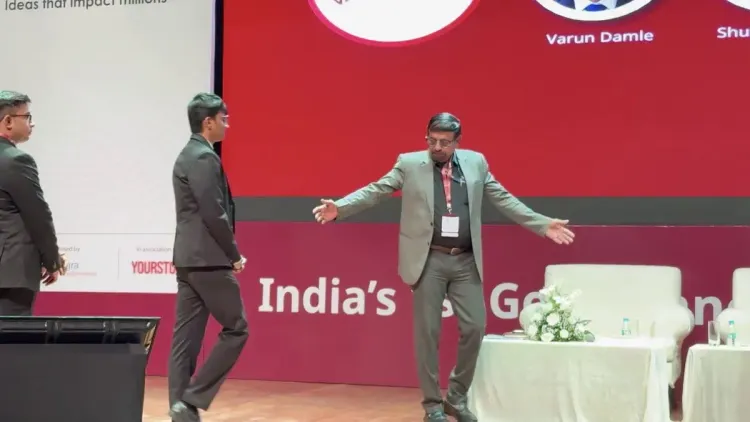
India's first governance-centric competition found its champions in Mumbai on Wednesday, 30 September 2026, as Chief Minister Devendra Fadnavis personally handed trophies to three business schools whose policy blueprints impressed judges across urban development, education, and healthcare. The Chief Minister's Office of Maharashtra made the announcement, signalling that the state is serious about drawing premier academic talent into the machinery of public governance.
The three winners and what they proposed
Masters Union School of Business claimed the top prize with a proposal centred on Urban Development — the sector arguably under the heaviest pressure in a state home to Mumbai, one of Asia's most densely populated cities. Second place went to the Indian School of Business for its entry in the Education Sector, while the Indian Institute of Management Mumbai rounded out the podium with a Healthcare Sector submission.
The competition, branded 'The Governance Challenge 2026' (TGC2026), is described as India's first governance-centric contest of its kind — a deliberate invitation for business-school rigour to stress-test real public-policy problems rather than corporate case studies.
Fadnavis's long bet on institutional partnerships
Chief Minister Fadnavis has a well-documented appetite for marrying administrative ambition with external expertise. During his 2014–2019 tenure, his government launched platforms like Aaple Sarkar to digitise citizen services and widen governance transparency. The Governance Challenge extends that instinct into a competitive format: instead of commissioning a consultant, the state invites institutions to compete — and rewards the sharpest ideas publicly.
Maharashtra administrations have periodically leaned on academic partners to generate fresh ideas for public service delivery, but a formalised, prize-bearing national competition of this scale marks a notable step up from ad-hoc collaborations.
What happens to the winning ideas next
The real test, as always, lies downstream. The question Maharashtra's policy watchers are now asking is whether the Urban Development blueprint from Masters Union, the education framework from ISB, and the healthcare model from IIM Mumbai will find a path into live state schemes — or remain elegant PDFs. Any announcement about piloting the winning proposals, or the launch of a TGC 2027 edition, will tell observers how seriously the government intends to institutionalise this pipeline.
For now, the trophies are handed. The harder work of translation — from competition podium to policy on the ground — is about to begin.
Point of View
The government sidesteps the slow procurement route and generates public intellectual capital simultaneously. The risk, however, is the perennial one: India has no shortage of award-winning policy blueprints that never survive contact with implementation. Whether TGC2026 produces a genuine policy legacy or merely a well-photographed event will hinge entirely on whether the state commits resources to piloting the winning ideas in the next budget cycle.
NationPress
1 Oct 2026
Frequently Asked Questions
What is The Governance Challenge 2026?
'The Governance Challenge 2026' (TGC2026) is India's first governance-centric competition, inviting business schools and institutions to propose innovative solutions to public-sector problems across areas like urban development, education, and healthcare.
Who won The Governance Challenge 2026?
Masters Union School of Business won first place (Urban Development), Indian School of Business won second place (Education Sector), and IIM Mumbai won third place (Healthcare Sector).
Who presented the awards at The Governance Challenge 2026?
Chief Minister Devendra Fadnavis presented the prizes at a ceremony held in Mumbai on 30 September 2026.
What is Masters Union School of Business known for?
Masters Union School of Business is a business school that won the top prize at The Governance Challenge 2026 for its Urban Development proposal submitted to the Maharashtra government.
Will Maharashtra implement the ideas from The Governance Challenge 2026?
The state government has not yet announced specific implementation plans. Policy observers are watching for any announcement about piloting the winning proposals within Maharashtra's existing schemes or a TGC 2027 edition.