White House Celebrates Made in America Week, Backs Trump's Manufacturing Push
Synopsis
The White House marked Made in America Week on 24 July 2026, celebrating the US workforce and reaffirming President Trump's record on domestic manufacturing. The post anchors a broader policy arc spanning the Buy American order, steel tariffs, and USMCA — all aimed at reshoring production jobs.
Key Takeaways
The White House posted on 24 July 2026 to mark Made in America Week , celebrating the American workforce.
President Donald Trump is credited with prioritising domestic industry through the Buy American and Hire American executive order signed in 2017 .
Tariffs on steel and aluminium imports were imposed from 2018 to shield US metal producers from foreign competition.
The USMCA , ratified in 2020 , replaced NAFTA and raised regional content requirements for automobiles and other manufactured goods.
Upcoming Labour Department factory employment data and possible expansion of domestic-content rules in infrastructure spending are the next key indicators to watch.
India's export sectors, including steel, textiles, and pharmaceuticals, have direct exposure to shifts in US trade and procurement policy .
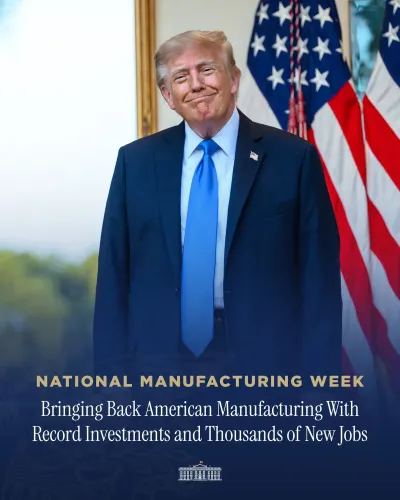
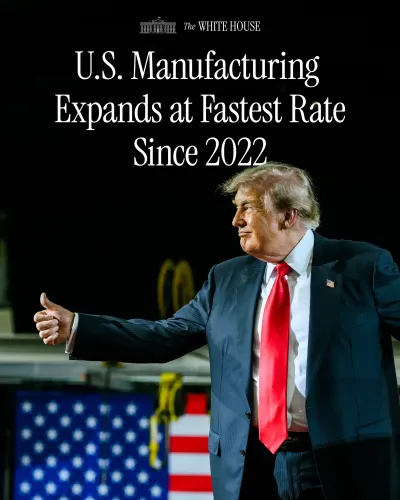
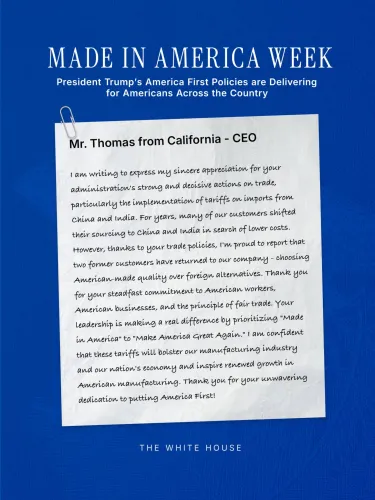
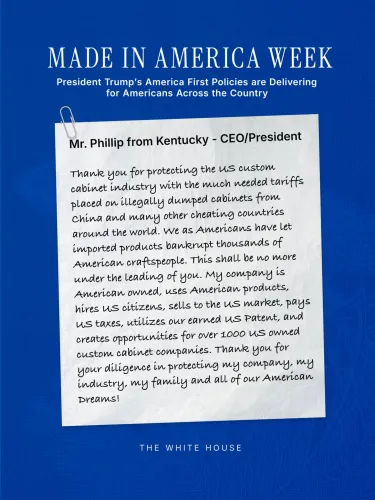
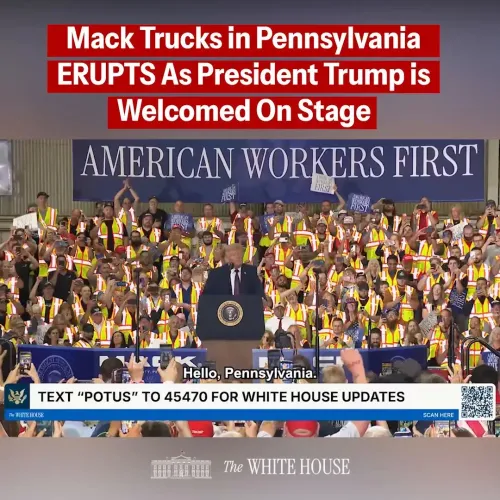
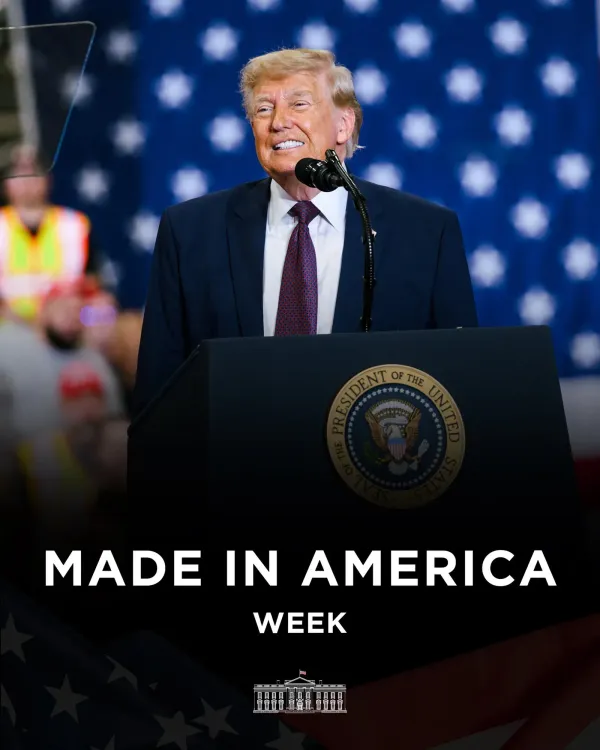
The White House on Friday, 24 July 2026 marked Made in America Week with a post on X saluting the American workforce and reaffirming President Donald Trump's commitment to domestic industry and manufacturing jobs.
The official White House account declared, 'Bringing back MADE IN THE USA,' adding that 'no President has prioritised American industry, manufacturing and workers like President Trump.' The post called on Americans to celebrate 'the great American workforce who keep this country moving.'
Context
Made in America Week is an annual observance that spotlights the contribution of domestic industrial output and the workers who drive it. The Trump administration first institutionalised the event during its first term as a platform to showcase goods manufactured entirely within the United States. The week typically features federal showcases of American-made products and messaging that ties economic nationalism to everyday employment. The White House's post arrives at a moment when the administration has been pressing its 'America First' economic agenda with renewed vigour, framing domestic production as both an economic and a national-security imperative.Policy Backdrop
The manufacturing push is rooted in a series of landmark policy moves. In 2017, President Trump signed the Buy American and Hire American executive order, directing federal agencies to give preference to US-made goods in government procurement and to prioritise domestic hiring. The order set the template for subsequent actions. Beginning in 2018, the administration imposed tariffs on steel and aluminium imports to protect American metal producers from cheaper overseas competition. Around the same period, the United States-Mexico-Canada Agreement (USMCA) was negotiated to replace the older NAFTA framework, raising regional content requirements — particularly for automobiles — and tightening rules of origin to ensure more North American manufacturing value in traded goods. USMCA was ratified in 2020. Taken together, these measures reflect a consistent policy arc: using tariffs, procurement rules, and trade agreements to redirect production and jobs back to American soil.Stakeholders and Impact
The primary beneficiaries of this policy posture are manufacturing workers, US factories, and the broader network of industrial suppliers that feed into domestic production chains. Sectors such as steel, aluminium, automobiles, and heavy equipment have been the most visible targets of the administration's reshoring efforts. The broader strategic rationale centres on reducing the United States' dependence on overseas supply chains — particularly those rooted in Asia — which were exposed as vulnerable during global disruptions in recent years. Proponents argue that a stronger domestic manufacturing base translates directly into stable, well-paying jobs in communities that had seen factory closures over decades of offshoring. Critics, however, have cautioned that tariff-driven approaches can raise input costs for downstream industries and consumers, and that the net employment effect depends heavily on how trading partners respond.What's Next
Policy watchers are monitoring potential expansion of domestic-content requirements in infrastructure spending, which could further mandate the use of American-made materials in federally funded projects. Upcoming Labour Department reports on factory employment will be closely scrutinised for evidence of whether the administration's manufacturing agenda is translating into measurable job gains on the ground. For India, whose export sectors — including steel, pharmaceuticals, textiles, and electronics — have exposure to US trade policy, shifts in American procurement rules and tariff structures remain a key variable in bilateral trade calculations. As Washington doubles down on economic nationalism, New Delhi will be watching how any new domestic-content mandates affect market access for Indian goods.Point of View
Procurement rules, and trade renegotiation to signal that manufacturing jobs are a political priority. The timing reinforces that economic nationalism remains central to the Trump administration's domestic messaging heading into the second half of 2026. For countries like India with significant export exposure to the US market, the steady drumbeat of 'Buy American' rhetoric is a reminder that market-access conditions could tighten further. The real test, as always, will be whether Labour Department data confirms that factory employment is actually rising in the communities these policies target.
NationPress
22 Oct 2026
Frequently Asked Questions
What is Made in America Week?
Made in America Week is an annual observance in the United States that highlights domestic industrial output and honours the workers who produce American-made goods. The Trump administration institutionalised it during its first term as a platform to showcase products manufactured entirely within the US.
What is the Buy American and Hire American executive order?
The Buy American and Hire American executive order was signed by President Trump in 2017. It directs federal agencies to prioritise US-made goods in government procurement and to favour domestic workers in hiring, forming the legal backbone of the administration's reshoring agenda.
How do Trump's steel and aluminium tariffs affect manufacturing?
Tariffs on steel and aluminium imports, imposed from 2018, are designed to make foreign metals more expensive and thereby protect US producers. Supporters say they safeguard domestic factory jobs; critics argue they raise costs for industries that use these metals as inputs.
What is USMCA and why does it matter for American manufacturing?
The United States-Mexico-Canada Agreement, ratified in 2020, replaced the older NAFTA framework. It raised regional content requirements — particularly for automobiles — meaning a higher share of a product must be made in North America to qualify for preferential trade terms, boosting domestic manufacturing value.
How does US Made in America policy affect India?
India's export sectors, including steel, textiles, pharmaceuticals, and electronics, have exposure to US trade and procurement rules. A tightening of domestic-content mandates or new tariff actions in the US can affect the competitiveness of Indian goods in the American market, making shifts in Washington's manufacturing policy a key concern for New Delhi.