White House Champions 'Made in USA' in Fresh Push for Domestic Manufacturing
Synopsis
The White House celebrated 'Made in USA' in a June 23, 2026 post on X, reinforcing the administration's long-running push for domestic manufacturing. The message invokes FTC labelling standards and the Buy American Act, signalling continued executive focus on US industrial policy amid elevated trade tensions.
Key Takeaways
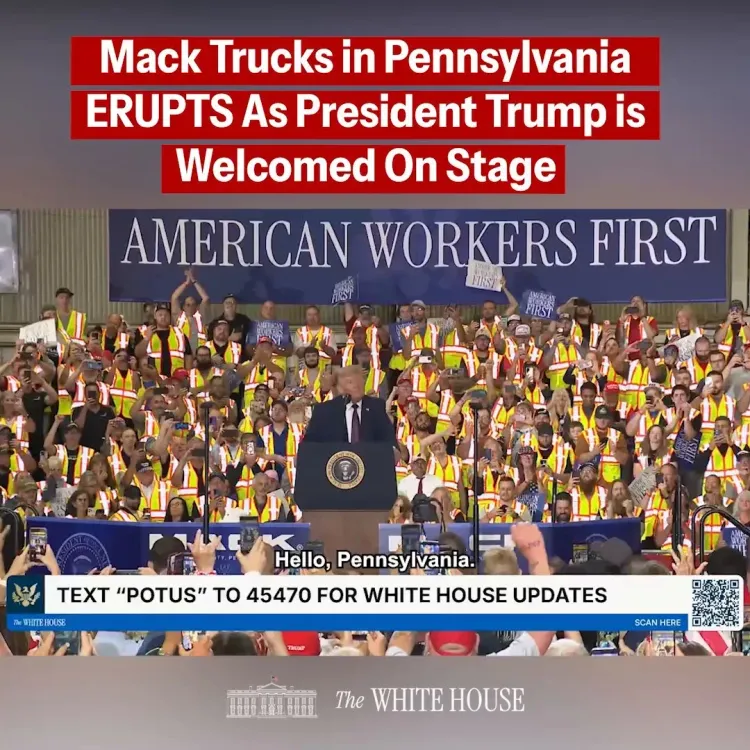
The White House posted a celebratory 'Made in USA' message on X on June 23, 2026 , accompanied by a video.
The Federal Trade Commission administers the 'Made in USA' label, requiring products to be substantially transformed within the United States.
The Buy American Act of 1933 is the legislative foundation for domestic-content preferences in federal government procurement.
US administrations have paired 'Made in USA' rhetoric with concrete tools including tariffs and stricter procurement rules, particularly targeting imports from China .
Primary stakeholders include US manufacturers and factory workers , while Indian exporters in pharmaceuticals, textiles, and electronics face indirect implications.
The next policy signposts are the Bureau of Labor Statistics manufacturing employment report and any updates to federal Buy American regulations.
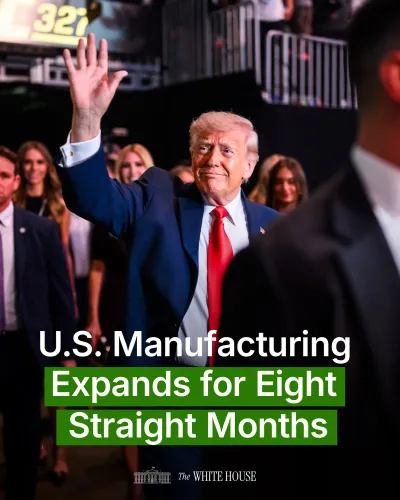
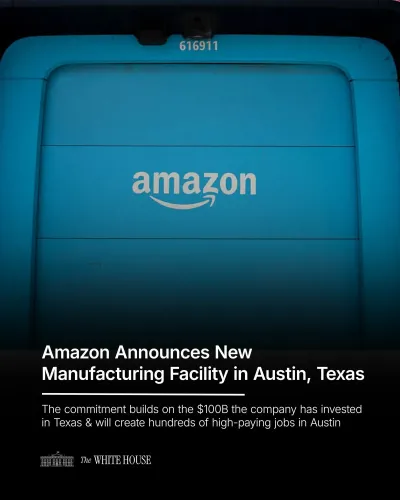
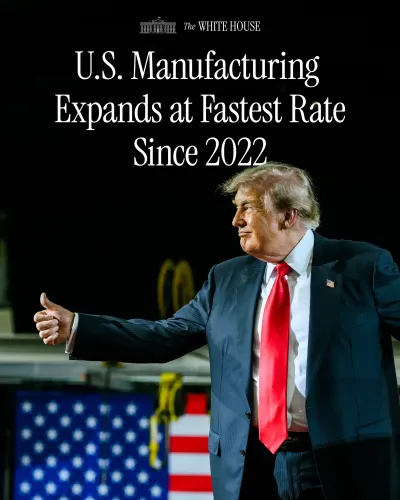
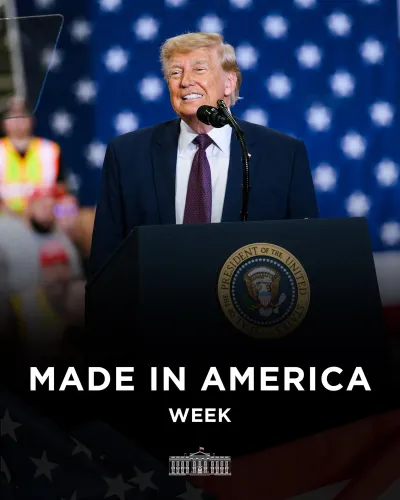
The White House on Tuesday, June 23, 2026 posted a pointed message on X celebrating American-made products, declaring 'THOSE BEAUTIFUL WORDS, MADE IN THE USA!' alongside a video, signalling continued executive emphasis on domestic manufacturing as a cornerstone of US economic policy.
Context
The post, brief but emphatic, invokes the 'Made in USA' label — a standard administered by the Federal Trade Commission (FTC) that requires a product to be 'substantially transformed' within the United States to carry the designation. The label has long served as both a quality signal for consumers and a rallying point for policymakers seeking to bolster domestic industry.
The White House's choice to highlight these words reflects a deliberate communications strategy: linking national pride to supply-chain policy at a moment when trade tensions with major manufacturing rivals remain elevated.
Policy Backdrop
The roots of 'Buy American' policy stretch back to the Buy American Act of 1933, which established a preference for domestically produced materials in federal government procurement. Successive administrations have built on this foundation through executive orders, procurement rules, and trade enforcement actions.
In recent years, tariffs targeting imports — particularly from China — have been deployed alongside stricter domestic-content requirements in federal contracts, all aimed at rebuilding industrial supply chains that policymakers argue are critical to both economic resilience and national security. The 'Made in USA' message fits squarely within this longer arc.
Stakeholders and Impact
US manufacturers and factory workers stand as the primary beneficiaries when 'Made in USA' policies translate into concrete procurement rules or trade measures. For American industry, a strong executive voice on domestic production can influence buyer behaviour in both the public and private sectors.
For India, which has its own 'Make in India' industrial programme and navigates a complex trade relationship with Washington, signals of US economic nationalism carry direct implications — shaping the competitive landscape for Indian exporters and informing bilateral trade negotiations. Indian manufacturers in sectors such as pharmaceuticals, textiles, and electronics watch such messaging closely for downstream policy signals.
What's Next
Analysts will look to the next monthly manufacturing employment report from the Bureau of Labor Statistics to assess whether the rhetoric is tracking real-world industrial gains. Any updates to federal Buy American rules or new trade enforcement actions against specific import categories would give the White House's messaging concrete policy weight.
As the United States continues recalibrating its industrial strategy, the 'Made in USA' declaration from the executive office is a reminder that domestic manufacturing — and the political capital attached to it — remains a live and consequential issue on both sides of the Pacific and the Atlantic.
Point of View
The executive office is reinforcing a narrative that connects factory jobs, supply-chain security, and national sovereignty in a single phrase. For trading partners including India, such messaging is a reminder that US economic nationalism has durable institutional backing, from the 1933 Buy American Act to modern FTC enforcement. The next concrete test will be whether this communication is followed by measurable policy action — tighter procurement rules, new tariffs, or sector-specific domestic-content mandates.
NationPress
22 Sept 2026
Frequently Asked Questions
What does 'Made in USA' actually mean legally?
The 'Made in USA' label is governed by the Federal Trade Commission, which requires that a product be 'all or virtually all' made in the United States — meaning its final assembly and substantially all its components must originate domestically.
Why is the White House promoting Made in USA in 2026?
The White House has consistently used 'Made in USA' messaging to signal support for domestic manufacturers and factory workers, often tied to broader trade policy measures such as tariffs and stricter Buy American procurement rules.
What is the Buy American Act and how does it relate to this?
The Buy American Act of 1933 requires the US federal government to prefer domestically produced goods in its procurement. It is the legislative backbone behind executive-branch 'Made in USA' campaigns.
How does US 'Made in USA' policy affect India?
US domestic manufacturing drives can affect Indian exporters in sectors like pharmaceuticals, textiles, and electronics by shifting US government procurement away from imports, and can influence broader bilateral trade negotiations between Washington and New Delhi.
What should I watch for next on US manufacturing policy?
Key indicators include the Bureau of Labor Statistics' monthly manufacturing employment data and any executive updates to federal Buy American rules or new trade enforcement actions targeting specific import categories.