White House Puts American Workers First in Latest Push
Synopsis
The White House declared 'American Workers First' on 24 June 2026, reinforcing the US executive's long-standing rhetorical and policy commitment to protecting domestic employment from foreign competition — a stance with direct implications for India-US trade and bilateral relations.
Key Takeaways
The White House posted 'American Workers First' on 24 June 2026 , reinforcing domestic employment as a top executive priority.
The message echoes the America First doctrine first articulated in President Trump's 2017 inaugural address and operationalised through tariff actions.
Historically, such White House rhetoric has preceded tariff escalations, 'Buy American' mandates, and trade-agreement renegotiations .
India faces potential exposure through US trade actions affecting exports in steel, pharmaceuticals, and IT services, as well as visa policy for Indian-American workers.
Observers will watch the next US monthly employment situation report and any follow-on legislation for concrete policy signals.
The post's brevity is a deliberate communications strategy, designed to set a political narrative ahead of a possible policy announcement.
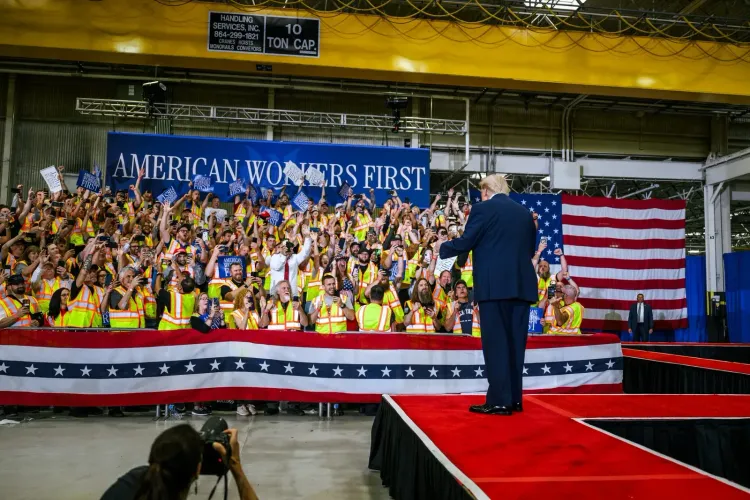
The White House, the official communications account of the Executive Office of the President of the United States, posted a pointed declaration on Wednesday, 24 June 2026, signalling a continued emphasis on domestic employment as a central pillar of US economic policy. The two-word message — 'American Workers First' — accompanied by the American flag emoji, is the latest in a series of rhetorical affirmations that prioritise homegrown labour over foreign competition and offshoring.
Context
The post, while brief, carries significant political weight in the current US economic climate. The White House has consistently used social media to reinforce messaging around domestic job creation, manufacturing revival, and trade protectionism. Slogans of this nature are rarely standalone — they typically precede or accompany concrete policy announcements, executive orders, or legislative pushes tied to employment and trade.
The phrase echoes the broader 'America First' doctrine, which was formally articulated in President Trump's 2017 inaugural address and operationalised through a series of tariff actions targeting imports from major trading partners. That agenda sought to shield US manufacturing employment from what its proponents described as unfair competition and decades of offshoring.
Policy Backdrop
White House messaging of this kind has appeared across multiple administrations when addressing voter anxieties in industrial states — the so-called 'Rust Belt' and manufacturing heartlands of the American Midwest. The rhetorical emphasis on protecting domestic labour markets from import competition has historically preceded tariff escalations, trade-agreement renegotiations, and 'Buy American' procurement rules.
The America First trade framework, when implemented, led to significant tariff actions against goods from China, the European Union, Canada, and Mexico, with downstream effects on global supply chains — including those feeding into Indian export sectors such as steel, aluminium, pharmaceuticals, and information technology services. For India, any shift in US trade or labour policy carries direct implications for bilateral commerce and the large Indian-American professional workforce.
Stakeholders and Impact
The primary audience for this messaging is the American manufacturing workforce — workers in sectors such as automotive, steel, semiconductors, and consumer goods who have seen employment volatility over decades of globalisation. The post is also a signal to corporate America and foreign governments that domestic job preservation remains a non-negotiable political priority at the executive level.
For India, the stakes are tangible. Indian firms with significant US operations, as well as Indian-American workers in technology and services sectors, watch such signals closely. A renewed push for manufacturing repatriation or tighter visa regimes linked to 'American workers first' rhetoric could affect hiring pipelines, outsourcing contracts, and bilateral trade negotiations currently underway between New Delhi and Washington.
What's Next
Observers will track the release of the next US monthly employment situation report for data that may be cited to justify follow-on policy action. Any trade or infrastructure legislation linked to the 'American workers first' slogan will be closely watched by markets, trading partners, and labour advocacy groups alike.
The frequency and tone of White House social media posts on this theme in the coming weeks will offer early signals about whether a specific policy announcement — such as new tariffs, a manufacturing incentive package, or a 'Buy American' executive order — is imminent. For India, the diplomatic channel will be key to navigating any fallout.
Point of View
Not merely a social media post — it activates a well-worn playbook of trade nationalism that has historically preceded tariff actions, procurement mandates, or legislative pushes. For India, which straddles the line between strategic partner and trade competitor in US political discourse, such messaging demands careful diplomatic attention. The timing, ahead of potential monthly employment data releases, suggests the executive may be building a narrative scaffold for a concrete policy move. The brevity of the post is itself a communications choice — it is designed to be amplified, not explained.
NationPress
22 Sept 2026
Frequently Asked Questions
What does 'American Workers First' mean as a US policy stance?
'American Workers First' signals a political priority to protect domestic employment through measures such as tariffs, 'Buy American' procurement rules, and restrictions on outsourcing — policies that have historically accompanied trade-nationalist administrations in the United States.
How does the White House 'American Workers First' message affect India?
India could face indirect consequences through tighter US trade policies, potential tariff actions on Indian exports such as steel, pharmaceuticals, or IT services, and possible visa restrictions affecting Indian-American professionals in the technology sector.
Is 'America First' the same as 'American Workers First'?
'American Workers First' is closely aligned with the broader 'America First' doctrine articulated in President Trump's 2017 inaugural address, which prioritised domestic manufacturing and labour protection through tariffs and trade-agreement renegotiations.
What policy actions could follow the White House's 'American Workers First' post?
Based on historical patterns, such messaging has preceded tariff announcements, executive orders on domestic procurement, infrastructure investment packages, or trade-agreement renegotiations aimed at retaining or repatriating factory jobs.
Why does the White House post slogans like 'American Workers First' on social media?
The White House uses short, high-impact social media posts to set the political agenda, signal priorities to Congress and trading partners, and mobilise voter sentiment — particularly among manufacturing workers in key industrial states.