White House Posts 'America First' Video, Reviving Signature Doctrine
Synopsis
The White House has posted an 'America First' message with a video on X, reviving the signature slogan that has anchored President Donald Trump's foreign and trade policy since 2017. The brief post signals continued emphasis on protectionist trade measures, bilateral deals and scrutiny of alliance costs — closely watched by India and other trading partners.
Key Takeaways
The White House posted 'America First' with a video on X on 3 June 2026 .
The slogan has anchored President Donald Trump's policy framing since the 2016 campaign and 2017 inaugural address.
It was formally codified in the 2017 National Security Strategy .
Past applications include withdrawal from the Trans-Pacific Partnership and pressure on NATO allies over defence spending.
India and other partners will watch for follow-up moves on tariffs and bilateral trade.
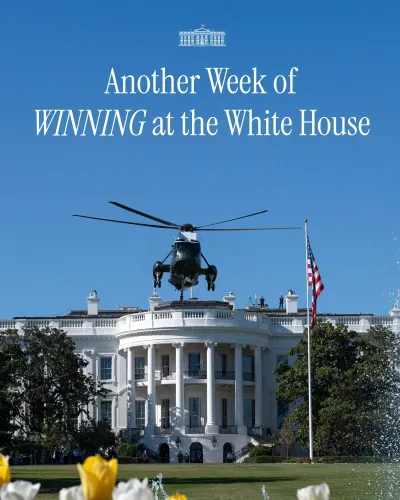
The White House, the official communications arm of the Executive Office of the President of the United States, posted a two-word message — 'America First' — on its official X handle on 3 June 2026, accompanied by a video. The terse post, published just past midnight India time, revives the signature framing that has defined President Donald Trump's foreign and economic policy posture across both his terms.
The post carried no caption beyond the slogan itself, with the attached video serving as the primary message vehicle. The brevity is consistent with the administration's social-media style, which has frequently leaned on slogan-led visuals rather than long-form statements to signal policy direction.
Context
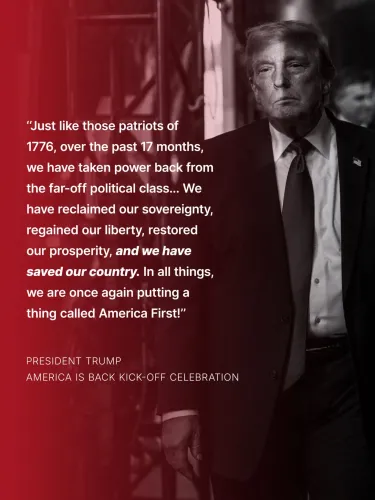
'America First' is among the most recognisable political slogans in contemporary US discourse. It was the centrepiece of President Trump's 2016 campaign and was formally embedded in his 2017 inaugural address, which framed the doctrine as a commitment to placing US workers, industries and security ahead of multilateral obligations.
The phrase has since functioned as shorthand for a cluster of positions: scepticism of open-ended alliance commitments, a preference for bilateral over multilateral deals, and a willingness to use tariffs and executive action to reshape trade flows.
Policy backdrop
The first Trump administration's National Security Strategy, released in December 2017, codified 'America First' as an organising principle of US statecraft. That document emphasised economic security as national security, scrutiny of alliance burden-sharing, and a tougher posture on China.
In practice, the doctrine produced the US withdrawal from the Trans-Pacific Partnership, a renegotiation of the North American trade pact, and repeated public pressure on NATO members over defence spending. It marked a deliberate departure from the broadly internationalist consensus that had guided US foreign policy since 1945.
Stakeholders and impact
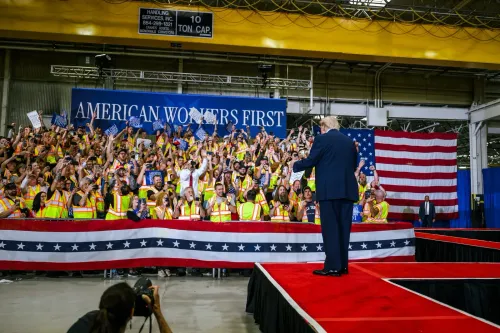
The slogan's primary domestic audience is US workers and domestic manufacturers, who have been positioned as the chief beneficiaries of protectionist trade measures and reshoring incentives. For trading partners, including India, every iteration of 'America First' messaging is parsed for hints about tariffs, visa policy, and bilateral negotiating posture.
New Delhi has navigated the doctrine pragmatically in the past, leaning on convergence with Washington on Indo-Pacific security while contending with friction on tariffs, market access and digital trade. A renewed emphasis on the slogan is likely to sharpen attention on ongoing trade discussions and any pending executive action on imports.
What's next
Analysts will watch for follow-up communications from the White House — particularly any presidential address, executive order, or trade announcement — that gives operational content to the slogan. Tariff schedules, alliance funding demands, and the framing of upcoming bilateral engagements are the most immediate indicators.
For Indian policymakers and exporters, the post is a reminder that the doctrinal frame remains intact, and that sectoral decisions in Washington will continue to be filtered through the 'America First' lens in the months ahead.
Point of View
The White House signals that 'America First' remains the operating frame for everything from tariffs to alliance management, not a campaign relic. For India, the question is not whether the doctrine applies but where — trade access, visas and tech transfer being the most exposed surfaces. Expect partners to read every subsequent executive action through this lens.
NationPress
18 Oct 2026
Frequently Asked Questions
What does 'America First' mean as a policy?
'America First' is a foreign and economic policy framing that prioritises US workers, industries and security over multilateral commitments. It typically translates into protectionist trade measures, a preference for bilateral deals, and pressure on allies to share defence costs.
When did the America First doctrine begin?
The phrase became central to Donald Trump's 2016 presidential campaign and was formally articulated in his January 2017 inaugural address. It was later codified in the December 2017 National Security Strategy.
How does America First affect India?
It shapes US posture on tariffs, market access, visas and digital trade — all areas of active India-US engagement. New Delhi typically balances cooperation on Indo-Pacific security with negotiation on trade frictions arising from the doctrine.
What past decisions reflected America First?
Key examples include the US withdrawal from the Trans-Pacific Partnership, renegotiation of the North American trade pact, and repeated public pressure on NATO members to raise defence spending.
Who runs the White House X account?
The handle is operated by the official communications team of the Executive Office of the President of the United States and is used for formal administration messaging.