White House Reaffirms 'America First' Policy Stance
Synopsis
The White House posted a stark 'America First' declaration on June 17, 2026, reaffirming President Donald Trump's governing doctrine of economic nationalism and selective global engagement — a signal closely watched by trading partners including India.
Key Takeaways
The White House posted 'America First' on June 17, 2026 , reaffirming the Trump administration's core governing doctrine.
The 'America First' framework was first codified in the 2017 National Security Strategy and drove major trade actions including USMCA renegotiation.
The doctrine prioritises US manufacturing workers and domestic industries through tariffs, bilateral deals, and reduced multilateral commitments.
India faces potential scrutiny of its exports in pharmaceuticals, textiles, and IT services under this framework.
Follow-up executive actions on tariffs and NATO spending targets are expected in late 2026 .
The post is consistent with the administration's pattern of using social media to frame the political environment ahead of formal policy moves.
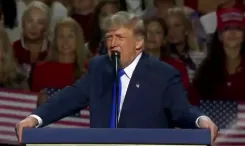
The White House, the official communications account of the Executive Office of the President of the United States, posted a pointed two-word declaration on Wednesday, June 17, 2026, reaffirming the administration's governing philosophy with the words 'America First,' accompanied by the American flag emoji and a linked image.
Context
The phrase 'America First' has served as the defining slogan of President Donald Trump's political identity since his 2016 presidential campaign. It signals a governing doctrine that places domestic economic and security interests above multilateral commitments and international consensus-building. The Wednesday post, brief as it is, functions as a public restatement of that doctrine at a moment when several major foreign policy and trade decisions are expected to unfold in late 2026.
The linked image was included in the post but its specific contents have not been independently verified. The slogan alone, issued from the official White House account, carries institutional weight as a signal of current executive priorities.
Policy Backdrop
The 'America First' framework was formally codified in the 2017 National Security Strategy during Trump's first term, which repositioned US foreign policy away from post-1945 multilateralism toward bilateral arrangements that maximise American leverage. Trade measures including the renegotiation of USMCA (the United States-Mexico-Canada Agreement) and the imposition of broad tariffs on imports from multiple countries were early expressions of this doctrine.
In the current second term, the framework continues to animate decisions on NATO burden-sharing demands, tariff schedules, and bilateral trade negotiations. US manufacturing workers and domestic industries remain the stated primary beneficiaries of this approach, which prioritises reshoring production and reducing trade deficits.
Stakeholders and Impact
For India, the 'America First' posture carries direct consequences. Bilateral trade between the two countries has grown significantly, but Washington's emphasis on reciprocal tariffs and reduced trade deficits has periodically placed Indian exports — particularly in pharmaceuticals, textiles, and IT services — under scrutiny. Indian policymakers and exporters watch signals from the White House closely for indications of upcoming tariff actions or renegotiated market-access terms.
Globally, allies in Europe and Asia-Pacific interpret 'America First' messaging as a cue to reassess dependence on US security guarantees and supply-chain partnerships. Multilateral institutions, from the World Trade Organization to NATO, have had to recalibrate their engagement with Washington under this framework.
What's Next
Analysts tracking the administration expect follow-up executive actions on tariffs, renewed pressure on NATO members to meet spending targets, and the possible conclusion or breakdown of bilateral trade talks in the months ahead. The White House post, while sparse in detail, is consistent with a pattern of using short, high-visibility social media statements to frame the political environment ahead of formal policy announcements.
Whether the Wednesday post presages a specific executive order, a trade action, or a diplomatic statement remains to be seen. What is clear is that 'America First' continues to function as the organising principle of US foreign and economic policy under the current administration — a reality that governments and markets worldwide, including in New Delhi, will continue to factor into their strategic calculations.
Point of View
In this administration, is a deliberate rhetorical choice — it invites projection and commands attention without committing to specifics. The timing in mid-2026 suggests the administration is priming domestic and international audiences ahead of anticipated trade or alliance decisions. For India, caught between deepening strategic ties with Washington and vulnerability to tariff pressure, such signals demand careful reading. The broader arc is one of sustained US retreat from post-war multilateralism, a structural shift that is reshaping alliance calculus from New Delhi to Brussels.
NationPress
17 Sept 2026
Frequently Asked Questions
What does 'America First' mean as a US policy?
'America First' is the governing doctrine of President Donald Trump that prioritises US domestic economic and security interests over multilateral commitments, favouring bilateral trade deals, tariffs on imports, and demands that allies bear more of their own defence costs.
Why did the White House post 'America First' on June 17, 2026?
The White House posted 'America First' on June 17, 2026, as a public reaffirmation of the Trump administration's core policy philosophy. The post included a linked image, though the specific context or trigger for the post has not been officially elaborated upon.
How does the America First policy affect India?
The America First policy affects India through potential tariff actions on Indian exports — particularly in pharmaceuticals, textiles, and IT services — and through a broader US preference for bilateral trade arrangements that seek to reduce the American trade deficit with partners including India.
When did America First policy start?
The America First policy was first articulated during Donald Trump's 2016 presidential campaign and was formally codified in the 2017 National Security Strategy during his first term, driving actions such as the USMCA renegotiation and broad import tariffs.
What executive actions are expected from the Trump administration in 2026?
Analysts expect follow-up executive actions on tariff schedules, renewed pressure on NATO members to increase defence spending, and potential conclusions or breakdowns in bilateral trade negotiations in late 2026, consistent with the America First framework.