White House Posts 'America Above All' in Latest Policy Signal
Synopsis
The White House posted 'America above all' on June 15, 2026, reviving nationalist foreign policy rhetoric reminiscent of the 'America First' doctrine. The terse post carries no specific policy detail but signals the administration's continued prioritisation of U.S. national interest — with implications for trade partners and allies worldwide, including India.
Key Takeaways
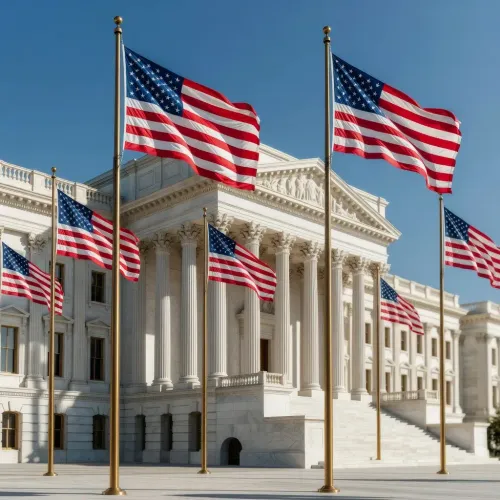
The White House posted 'America above all' on June 15, 2026 , accompanied by an image and the U.S. flag emoji.
The phrase echoes the 'America First' doctrine that defined U.S. foreign and trade policy during the 2017–2021 period.
No specific policy announcement accompanied the post; it functions primarily as a political and rhetorical signal.
Historically, such nationalist messaging from the White House has preceded concrete moves on trade agreements and alliance commitments.
Countries with significant trade and strategic ties to the United States — including India — will monitor follow-up statements closely.
Future White House communications on trade, multilateral summits, and alliance posture will clarify whether this signals an imminent policy shift.
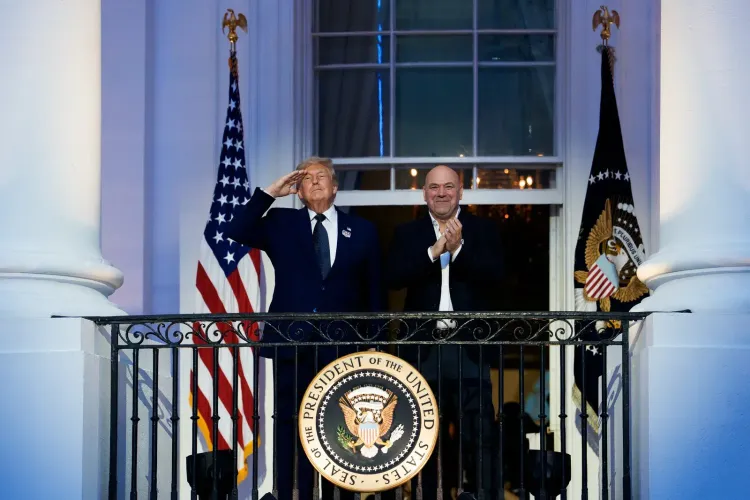
The White House, the official communications account of the Executive Office of the President of the United States, posted a terse but pointed message on Monday, June 15, 2026, declaring 'America above all' alongside the American flag emoji. The post, accompanied by an image, signals a continued emphasis on nationalist positioning from the current administration.
Context
The phrase 'America above all' is a direct echo of the 'America First' doctrine that has shaped United States foreign and trade policy at key intervals over the past decade. The White House's choice to post such a message without accompanying policy detail is itself a form of political signalling — one that resonates strongly with a domestic base that prioritises national sovereignty over multilateral commitments.
Short, declarative posts of this kind from official government accounts are increasingly common tools of political communication, designed to frame the administration's posture without committing to specific policy announcements.
Policy Backdrop
The 'America First' doctrine was most prominently codified during the 2017–2021 presidency, when it was used to justify renegotiating trade agreements, reassessing alliance commitments, and withdrawing from or renegotiating multilateral frameworks. The current post revives that rhetorical register, suggesting continuity with that policy lineage.
Historically, such nationalist slogans from the White House have coincided with concrete policy moves — including tariff actions, bilateral deal-making, and friction with multilateral bodies. Observers tracking U.S. trade and foreign policy will watch closely for any follow-up announcements that give this message operational meaning.
Stakeholders and Impact
American citizens are the stated primary beneficiaries of an 'America above all' posture, at least in the administration's own framing. For India, a major trade and strategic partner of the United States, such signals carry weight: any shift in U.S. trade priorities or alliance calculus has direct implications for bilateral commerce, defence cooperation, and diplomatic alignment.
Allies and trading partners across the world — including those in Europe, Asia, and the Indo-Pacific — have historically interpreted 'America First'-style messaging as a precursor to harder bargaining on market access, defence burden-sharing, and multilateral commitments. Business communities and policymakers in these regions tend to monitor such posts for early signals of policy direction.
What's Next
The post's brevity leaves its immediate policy implications open. Future White House statements on trade negotiations, upcoming multilateral summits, or alliance commitments will be closely scrutinised for whether this message translates into concrete action. If history is a guide, declarative nationalist rhetoric from the White House tends to precede rather than follow policy moves.
For India, which has navigated a careful balance between its strategic partnership with the United States and its own sovereign interests, the evolution of this posture in the coming weeks will be a key diplomatic variable to track.
Point of View
Giving the administration rhetorical flexibility while energising its domestic base. It draws directly from the 'America First' playbook, suggesting ideological continuity rather than a new departure. For countries like India that have built layered partnerships with Washington, such signals create a need to recalibrate expectations around trade and defence negotiations. The post's starkness — no context, no policy detail — is likely deliberate, maximising interpretive space while minimising accountability.
NationPress
14 Sept 2026
Frequently Asked Questions
What does the White House's 'America above all' post mean?
The post is a nationalist political signal from the White House, echoing the 'America First' doctrine that prioritises U.S. economic and security interests over multilateral commitments. No specific policy was announced alongside it.
What is the 'America First' doctrine?
'America First' is a foreign policy doctrine most associated with the 2017–2021 U.S. presidency, which emphasised prioritising American economic and security interests, renegotiating trade deals, and reassessing multilateral alliance commitments.
How does the White House's 'America above all' post affect India?
India, as a major trade and strategic partner of the United States, could be affected if the rhetoric translates into harder bargaining on market access, tariffs, or defence cooperation. Indian policymakers will watch follow-up statements closely.
When did the White House post 'America above all'?
The White House posted the message on Monday, June 15, 2026, on the social media platform X.
What should we watch for after the White House 'America above all' post?
Watch for White House announcements on trade policy, upcoming multilateral summits, tariff decisions, and alliance commitments, which would indicate whether this post signals a concrete policy shift.