Nadda: AIIMS grew from 1 to 23, medical colleges doubled in 10 years

Synopsis
Union Health Minister J. P. Nadda highlights a decade of health infrastructure growth under PM Modi — AIIMS rising from 1 to 23, medical colleges from 387 to 863, and crores of health records being digitised through the Ayushman Bharat Digital Mission.
Key Takeaways
Union Health Minister J.
Nadda posted a health infrastructure review on October 29, 2026 , citing progress over the last 10 years under PM Modi.
The number of AIIMS has grown from 1 to 23 , dramatically expanding apex medical education and specialist care capacity.
Medical colleges increased from 387 to 863 , widening the pipeline of doctors entering India's health system.
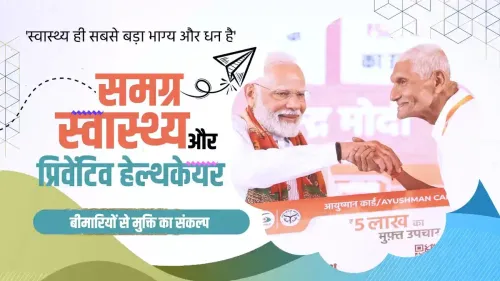
The Ayushman Bharat Digital Mission is digitising health records, vaccinations, and screenings for crores of citizens to improve access and transparency.
The digital health push traces back to the National Digital Health Blueprint 2019 and the broader Ayushman Bharat programme of 2018 .
Phased operationalisation of newer AIIMS campuses and state-level ABDM adoption remain the key metrics to watch.
India's healthcare map has been redrawn in a decade. Union Health Minister J. P. Nadda on Thursday, October 29, 2026, posted a detailed account of the health infrastructure built under Prime Minister Narendra Modi since 2014 — citing a near-doubling of medical colleges, a twenty-three-fold expansion of AIIMS, and the digitisation of health records for crores of Indians through the Ayushman Bharat Digital Mission.
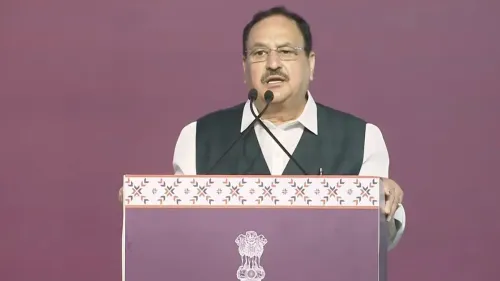
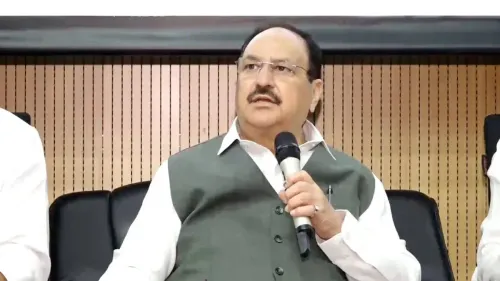
Posting in Hindi, Nadda said: 'Under the respected Prime Minister Shri Narendra Modi's leadership, India has made great progress in healthcare and digital service delivery over the last 10 years. The number of AIIMS has grown from 1 to 23 and medical colleges from 387 to 863.' He added that through the Ayushman Bharat Digital Mission, the health records, vaccinations and screenings of crores of people are being digitised so that health services become 'more accessible, effective and transparent.'
From one institute to twenty-three: the AIIMS expansion story
For most of independent India, there was a single All India Institute of Medical Sciences — the iconic AIIMS New Delhi, established in 1956. It served as the apex referral hospital for a country of hundreds of millions, perpetually overwhelmed. The push to replicate that model across states accelerated sharply from 2015 onwards, with Cabinet approvals for new campuses in states that had chronically low doctor-to-population ratios. Nadda's post puts the current total at 23 AIIMS — institutions that collectively represent a seismic shift in where specialist medical education and advanced care exist in India. The medical college count tells an equally sharp story. Moving from 387 to 863 colleges means that the pipeline of doctors entering the system has expanded dramatically. The National Health Policy 2017 had explicitly set targets for increased medical education capacity; the college approvals and upgrades carried out by successive health ministries were the operational response to that blueprint.Ayushman Bharat Digital Mission: the invisible infrastructure
Bricks and beds tell only half the story. The second plank of Nadda's post is the Ayushman Bharat Digital Mission (ABDM) — a programme designed to build the connective tissue of Indian healthcare: unique health IDs, interoperable electronic health records, and a digital layer over vaccination and screening drives. The ABDM traces its lineage to the National Digital Health Blueprint of 2019 and to the broader Ayushman Bharat programme launched in 2018, which combined insurance coverage with the creation of health and wellness centres. The digital mission operationalises the promise that a patient's history — tests, prescriptions, vaccines — should follow them wherever they seek care, not sit locked in a paper file at a single hospital. For crores of Indians who have historically accessed healthcare episodically and without continuity, that shift from paper to portable record is consequential. State health departments and primary care workers are the last mile in making ABDM real; adoption metrics at that level will determine whether the architecture delivers on its promise.What the numbers mean for the next decade
The figures Nadda cites are the supply side of a health system in transformation. More AIIMS campuses mean more postgraduate seats, more research capacity, and — eventually — more specialists in tier-2 and tier-3 cities. More medical colleges mean a larger cohort of MBBS graduates each year, addressing the doctor-shortage that has long hobbled primary care in rural India. The outstanding question is operationalisation. Several of the newer AIIMS campuses are still in phased rollout, building faculty strength and completing infrastructure. And the ABDM's value compounds only as more hospitals, clinics, and patients enrol — making state-level adoption the metric to watch over the next few years. A health system that was once concentrated in a handful of cities is spreading its roots. The test is whether those roots hold.Point of View
Data-backed legacy argument ahead of future electoral cycles. The AIIMS and medical college numbers serve as vivid proof-points for the BJP's governance narrative, while the ABDM framing places India within a global trend of tech-enabled public health delivery. The real policy test, however, lies downstream: whether new AIIMS reach full operational capacity and whether ABDM achieves the interoperability it promises — two outcomes still unfolding at the state level. The post signals that health infrastructure will remain a central plank of the ruling party's 'development delivery' pitch.
NationPress
29 Oct 2026
Frequently Asked Questions
How many AIIMS are there in India now?
According to Union Health Minister J. P. Nadda's post on October 29, 2026, India now has 23 AIIMS , up from just 1 before 2014. Several of the newer campuses are still in phased operationalisation.
How many medical colleges are there in India in 2026?
Nadda's post states the number of medical colleges has grown from 387 to 863 over the last 10 years under PM Modi's government, reflecting Central Cabinet approvals and upgrades of government medical institutions.
What is the Ayushman Bharat Digital Mission?
The Ayushman Bharat Digital Mission (ABDM) is a Central government scheme that assigns unique health IDs to citizens and digitises their health records, vaccinations, and screenings to make healthcare more accessible and interoperable across providers.
When was the Ayushman Bharat programme launched?
The broader Ayushman Bharat programme was launched in 2018 , combining health insurance coverage with health and wellness centres. The Digital Mission arm evolved from the National Digital Health Blueprint of 2019 .
What did JP Nadda say about India's healthcare progress?
Nadda said India has made 'great progress in healthcare and digital service delivery' over 10 years, pointing to the AIIMS expansion, near-doubling of medical colleges, and the digitisation of crores of health records through ABDM for more accessible, effective, and transparent services.