Nadda Highlights IIM, AIIMS, Medical College Surge Under Modi
Synopsis
Union Health Minister J. P. Nadda has highlighted a sweeping expansion of premier institutions under PM Narendra Modi, with IIMs rising from 13 to 21, AIIMS from 7 to 23, and medical colleges from 376 to 820. Himachal Pradesh received an IIM, four medical colleges, and a new AIIMS.
Key Takeaways
Union Health Minister J.
Nadda posted on June 12, 2026 marking #12YearsOfSeva of the Modi government.
The number of IIMs in India has grown from 13 to 21 since 2014, according to Nadda's post.
Medical colleges have more than doubled nationally, rising from 376 to 820 .
AIIMS campuses have grown from 7 to 23 across the country.
Himachal Pradesh specifically received IIM Sirmaur , medical colleges in Chamba, Una, Hamirpur and Sirmaur , and AIIMS Bilaspur .
The expansion targets geographic equity, with new institutions placed in hill states and previously underserved regions.
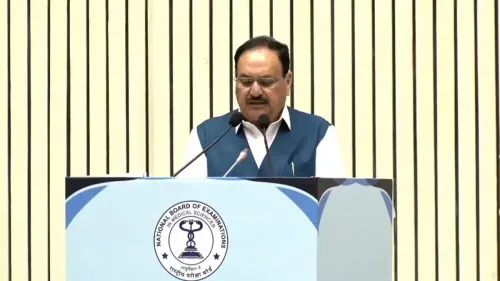
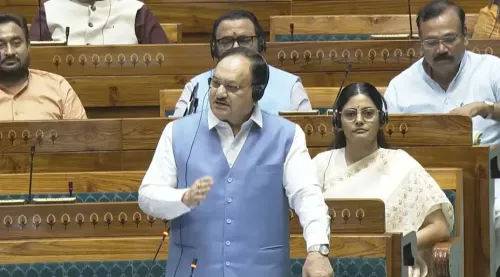
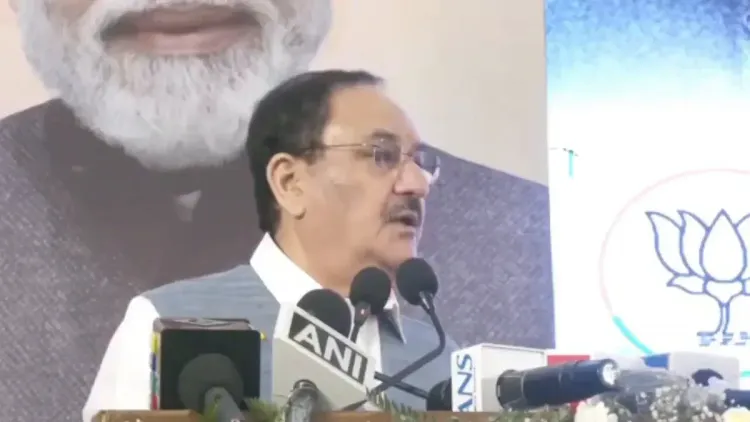
Union Health Minister and BJP national president J. P. Nadda on Friday, June 12, 2026, credited the government of Prime Minister Narendra Modi with an unprecedented expansion of higher education and healthcare infrastructure, citing sharp increases in the number of IIMs, AIIMS, and medical colleges since 2014. The post, shared under the hashtag #12YearsOfSeva, specifically highlighted Himachal Pradesh as a beneficiary of this institutional growth.
Context
Nadda posted in Hindi, stating: 'Aadaraniya Pradhan Mantri Shri Narendra Modi ji ke netritva mein shiksha aur swasthya kshetra mein abhutpurva vistar hua hai' — ('Under the respected leadership of Prime Minister Shri Narendra Modi, there has been unprecedented expansion in the education and health sectors.'). He cited specific figures: IIMs rising from 13 to 21, medical colleges from 376 to 820, and AIIMS from 7 to 23 across the country.
For Himachal Pradesh, Nadda named an IIM in Sirmaur, medical colleges in Chamba, Una, Hamirpur, and Sirmaur, and an AIIMS in Bilaspur as concrete examples of this development journey.
Policy Backdrop
The expansion of premier medical and management institutions has been a recurring theme in Union budgets and cabinet decisions since 2014. The Pradhan Mantri Swasthya Suraksha Yojana was extended to fund new AIIMS campuses and upgrade existing district hospitals to medical colleges, addressing a longstanding shortage of trained doctors and specialists in underserved regions.
On the management education side, the government approved several new IIMs between 2015 and 2017, including IIM Sirmaur, with the explicit goal of broadening access to premier business education beyond the major metros. Hill states and north-eastern regions were prioritised to correct geographic inequities in institutional presence.
Stakeholders and Impact
The beneficiaries of this infrastructure push span multiple groups: medical students and aspirants who now have more seats and campuses to apply to; residents of Himachal Pradesh who gain access to tertiary care at AIIMS Bilaspur without travelling to distant cities; and management graduates from IIM Sirmaur who receive a nationally recognised degree. The doubling of medical colleges from 376 to 820 nationally also has downstream implications for the country's doctor-to-population ratio.
The post arrives as the ruling BJP marks 12 years of the Modi government, making it part of a broader political communication exercise to document welfare and infrastructure achievements for a national audience.
What's Next
The operational readiness of newer campuses — particularly AIIMS Bilaspur and the four Himachal medical colleges — remains a point of scrutiny, with parliamentary and audit assessments expected to examine faculty recruitment, bed capacity, and admission outcomes for the 2026-27 academic year. IIM Sirmaur's placement and enrolment data will similarly be watched as indicators of whether institutional expansion has translated into quality outcomes. As the government builds its record on social infrastructure, the gap between sanctioned institutions and fully functional ones will be a key measure of delivery.
Point of View
Arriving as the BJP formally marks 12 years of the Modi government. By anchoring the message in hard numbers — IIMs, AIIMS, medical colleges — the party is attempting to shift the welfare narrative from cash transfers and subsidies to durable physical infrastructure, a framing that is harder to contest. The specific call-out of Himachal Pradesh, a state the BJP lost in the 2022 assembly elections, signals an effort to reclaim political ground by associating the Centre with visible development. The broader pattern — doubling institutions while questions about operational quality persist — means the government's infrastructure story will increasingly be judged not by what was built, but by what is fully functional.
NationPress
29 Jul 2026
Frequently Asked Questions
How many AIIMS are there in India now as per JP Nadda?
According to J. P. Nadda 's post on June 12, 2026 , the number of AIIMS in India has grown from 7 to 23 under the Modi government since 2014.
How many medical colleges are there in India in 2026?
J. P. Nadda cited the number of medical colleges rising from 376 to 820 since 2014, representing more than a doubling of capacity at the national level.
Where is AIIMS Bilaspur located?
AIIMS Bilaspur is located in Bilaspur district, Himachal Pradesh . It was established as part of the post-2014 expansion of AIIMS campuses to underserved states.
Which IIM is in Himachal Pradesh?
IIM Sirmaur , located in Sirmaur district of Himachal Pradesh , is the state's premier management institution set up under the central government's expansion of IIMs since 2014.
What is #12YearsOfSeva?
#12YearsOfSeva is a hashtag used by the BJP and its leaders to mark 12 years of the Narendra Modi government, cataloguing policy achievements across sectors including health, education, and infrastructure.