Medical colleges double to 818 under Modi: Nadda at ILBS convocation
Synopsis
India's medical college count has more than doubled — from 387 to 818 — and the country now has 23 AIIMS, up from just one at the turn of the century. Health Minister Nadda used the ILBS convocation to frame this as a dual 'hardware and software' transformation, with a further 75,000 UG seats targeted over five years.
Key Takeaways
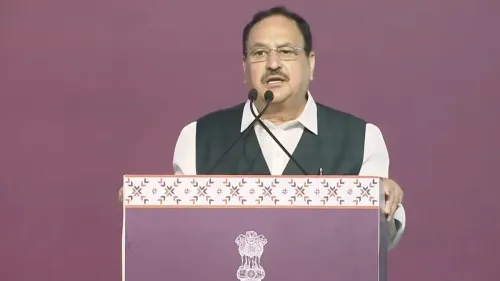
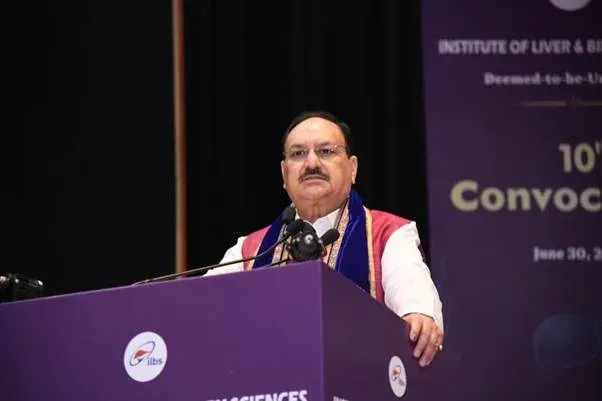
Jagat Prakash Nadda addressed the 10th Convocation of ILBS in New Delhi on 30 June .
Medical colleges in India have grown from 387 to 818 under the Modi government.
Undergraduate medical seats rose from ~ 50,000 to over 1.20 lakh ; postgraduate seats from ~ 30,000 to over 80,000 .
India now has 23 AIIMS — 16 operationalised under PM Modi , six approved under Atal Bihari Vajpayee .
Government targets 75,000 additional UG medical seats in five years; nearly 25,000 already added.
More than 1.85 lakh Ayushman Arogya Mandirs established as primary healthcare touchpoints.
Union Health and Family Welfare Minister Jagat Prakash Nadda on Tuesday, 30 June said that the government has expanded India's medical education ecosystem on two parallel tracks — 'hardware' (infrastructure and institutions) and 'software' (policy frameworks and academic environment) — under the leadership of Prime Minister Narendra Modi. He was addressing the 10th Convocation of the Institute of Liver and Biliary Sciences (ILBS) in New Delhi.
Key Developments in Medical Education
Nadda outlined a sharp expansion in medical infrastructure over the past decade. The number of medical colleges in India has more than doubled, rising from 387 to 818. Undergraduate medical seats have grown from approximately 50,000 to over 1.20 lakh, while postgraduate seats have expanded from around 30,000 to over 80,000 — a development Nadda said has significantly strengthened the availability of specialist doctors nationwide.
He also noted the growth of AIIMS institutions. At the turn of the century, India had only one AIIMS. Former Prime Minister Atal Bihari Vajpayee approved six more, and since then, 16 new AIIMS have been operationalised under the Modi government, bringing the national total to 23.
75,000 New UG Seats Target
Referring to an announcement made by Prime Minister Modi from the Red Fort, Nadda said the government has set a target of adding 75,000 undergraduate medical seats over the next five years. Of these, nearly 25,000 seats have already been added, indicating steady progress toward the goal.
Nadda underscored that the true measure of a healthcare system's strength lies not just in building institutions, but in cultivating an ecosystem where excellence can be sustained. He urged graduating students to recognise how visionary policymaking and a supportive academic environment together drive lasting change.
Primary Healthcare: Ayushman Arogya Mandirs
To address the healthcare needs of nearly 1.5 billion people, Nadda highlighted the establishment of more than 1.85 lakh Ayushman Arogya Mandirs across the country. He described these centres as the first point of contact for citizens and said they have transformed India's approach to primary healthcare by integrating preventive, promotive, curative, and rehabilitative services under one framework.
What This Means for Healthcare Access
The combined expansion — more colleges, more seats, more AIIMS, and a strengthened primary care network — reflects a structural shift in how India is approaching health system capacity. Notably, the postgraduate seat expansion is particularly significant given longstanding concerns about specialist shortages in tier-2 and tier-3 cities. Whether the pace of seat additions translates into equitable distribution of doctors across states remains a key question for policymakers going forward.
Point of View
But quantity and quality are different metrics. Doubling medical colleges is a headline achievement; ensuring those colleges have adequate faculty, equipment, and clinical exposure is the harder, less visible task. The 75,000 new UG seat target is ambitious, but India's specialist shortage is concentrated in specific geographies — rural districts and poorer states — not just in aggregate seat counts. The postgraduate expansion to 80,000 seats is arguably the more consequential figure, yet it received the least emphasis. The real test of this 'ecosystem' framing will be whether new doctors stay in underserved areas or migrate to urban private practice, as the historical pattern has shown.
NationPress
28 Sept 2026
Frequently Asked Questions
How many medical colleges does India have now?
India currently has 818 medical colleges , up from 387 before the recent expansion drive. The increase reflects both new government institutions and private medical colleges approved over the past decade.
How many AIIMS are there in India in 2025?
India now has 23 AIIMS in total. The country had only one AIIMS at the end of the twentieth century; six more were approved under former PM Atal Bihari Vajpayee , and 16 additional AIIMS have been operationalised under PM Narendra Modi .
What is the government's target for new undergraduate medical seats?
The government has set a target of adding 75,000 undergraduate medical seats over the next five years, as announced by PM Modi from the Red Fort . Nearly 25,000 seats have already been added toward this goal.
What are Ayushman Arogya Mandirs?
Ayushman Arogya Mandirs are government-run primary healthcare centres, of which more than 1.85 lakh have been established across India. They serve as the first point of contact for citizens and integrate preventive, promotive, curative, and rehabilitative care.
How have postgraduate medical seats changed in India?
Postgraduate medical seats have expanded from approximately 30,000 to over 80,000 , according to Health Minister Nadda . This increase is aimed at addressing the shortage of specialist doctors across the country.