Mandaviya Quotes President Murmu on India's Youth Dividend
Synopsis
Union Minister Mansukh Mandaviya quoted President Draupadi Murmu's assertion that 65% of India's population is under 35 and constitutes the nation's most valuable asset, amplifying the demographic dividend message on Independence Day eve 2026.
Key Takeaways
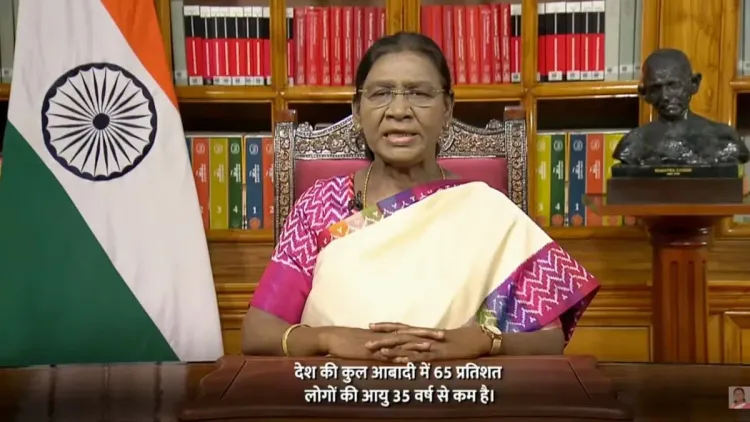
65% of India's total population is below 35 years of age , according to the presidential quote shared by Minister Mandaviya.
President Draupadi Murmu , India's first tribal woman head of state, described this youth population as the country's 'most valuable asset.' The post was shared on August 14, 2026 — the eve of India's Independence Day.
The Skill India Mission , launched in 2015 , targeted training over 400 million people to translate demographic scale into economic productivity.
Mandaviya holds the combined portfolio of Labour & Employment and Youth Affairs & Sports , making him the primary policy executor of youth development goals.
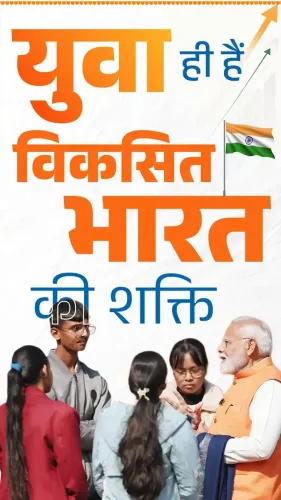
Sixty-five percent of India's population is under 35 years old — and on the eve of Independence Day, Union Labour and Sports Minister Mansukh Mandaviya made sure that number landed with the weight it deserves, sharing words from the highest office in the land.
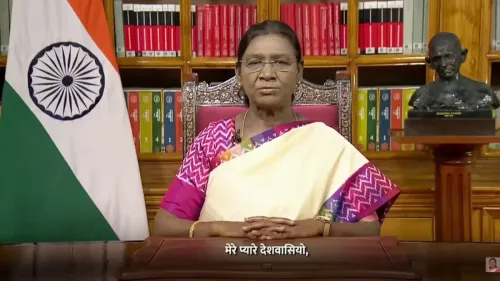
Mandaviya quoted President Draupadi Murmu on Friday, August 14, 2026: 'देश की कुल आबादी में 65 प्रतिशत लोगों की आयु 35 वर्ष से कम है। यह युवा आबादी हमारी सबसे मूल्यवान संपदा है।' — 'Sixty-five percent of the country's total population is below the age of 35. This young population is our most valuable asset.'
Why Murmu's words carry special weight
President Murmu, who became the first tribal woman to hold India's highest constitutional office in 2022, has consistently championed the cause of marginalised youth and inclusive development. Her framing of young Indians not as a challenge to be managed but as the nation's 'most valuable asset' signals a philosophical anchor for policy — one that Mandaviya, who holds the combined portfolio of Labour, Youth Affairs, and Sports, is in a direct position to act on.
The policy architecture already in place
The demographic reality the President cites is not new — but the institutional response has been building for over a decade. The National Youth Policy 2014 set structured objectives for empowerment and participation targeting Indians aged 15 to 29. A year later, the Skill India Mission was launched with an ambition to train over 400 million people, directly linking population scale to economic productivity.
Mandaviya's combined ministerial brief — covering employment, youth affairs, and sports — is itself a structural bet on that same logic: that skilling, job creation, and athletic development are three levers of the same demographic engine.
What the number actually means
A country where nearly two in three citizens are under 35 holds a window of demographic dividend that economists argue will narrow by mid-century as the population ages. The pressure on policymakers is real and time-bound: convert this youthful bulge into a trained, employed, and healthy workforce before the window closes. The President's words, amplified by the minister responsible for doing exactly that, carry an implicit urgency that goes well beyond ceremonial rhetoric.
As India marks another Independence Day, the question is not whether the country has the numbers — it plainly does. The question is what the policy machinery does with them.
Point of View
Mandaviya signals a deliberate political posture — grounding youth policy in constitutional authority on the eve of Independence Day. The combined Labour-Youth-Sports portfolio is increasingly being used as a unified instrument to address the demographic dividend, and this post reinforces that framing publicly. With skill and employment schemes under periodic scrutiny for outcomes, invoking the President's moral authority is also a way of elevating the stakes of the ministry's mandate. Watch for whether this rhetoric precedes a concrete policy announcement in an upcoming session or budget cycle.
NationPress
29 Sept 2026
Frequently Asked Questions
What percentage of India's population is below 35 years of age?
According to the statement quoted by Minister Mansukh Mandaviya from President Draupadi Murmu, 65 percent of India's total population is below the age of 35 years .
Who is Mansukh Mandaviya and what is his ministry?
Mansukh Mandaviya is a senior BJP leader serving as India's Union Minister of Labour & Employment and Youth Affairs & Sports , giving him oversight of employment policy, youth development, and sports promotion.
What is the Skill India Mission?
The Skill India Mission is a flagship government programme launched in 2015 with the goal of training over 400 million people in vocational and technical skills to boost employment and economic productivity.
Who is President Draupadi Murmu?
Draupadi Murmu has been the President of India since 2022 and is the first tribal woman to hold the office, making her statements on inclusive development and youth particularly significant.
What is India's demographic dividend?
India's demographic dividend refers to the economic growth potential that arises from having a large, young, and working-age population. With 65% of citizens under 35 , India has a time-bound window to convert this youth bulge into a trained and productive workforce before the population begins to age.