Nadda credits Modi govt for 12-yr medical education leap
Synopsis
Union Health Minister J. P. Nadda has credited PM Narendra Modi's 12-year leadership with unprecedented progress in medical education, citing domestic capacity building through new AIIMS campuses and NMC reforms, and the global reach of Indian-trained doctors.
Key Takeaways
Nadda posted on 23 May 2026 crediting PM Modi's 12 years in office with 'unprecedented progress' in medical education.
India's medical education expansion has been anchored by the Pradhan Mantri Swasthya Suraksha Yojana (PMSSY) , which funded new AIIMS campuses and upgraded state medical colleges after 2014 .
The National Medical Commission Act (2019) replaced the Medical Council of India and introduced competency-based curriculum standards.
Nadda highlighted that Indian doctors are now 'serving with distinction across the world', pointing to the global mobility of India-trained medical graduates.
The remarks come as the Health Ministry faces parliamentary scrutiny of its budget demands for further medical education infrastructure.
The post is part of a broader BJP communication push framing health-sector governance as a legacy achievement of the Modi era.
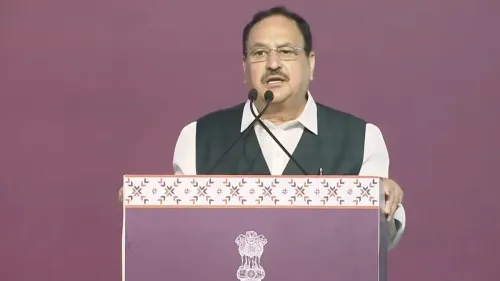
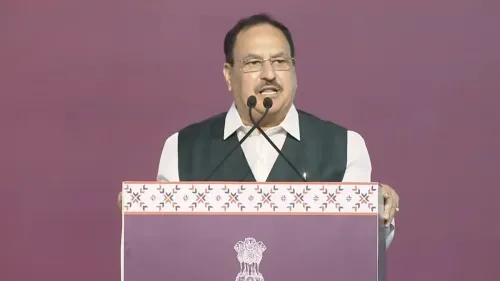
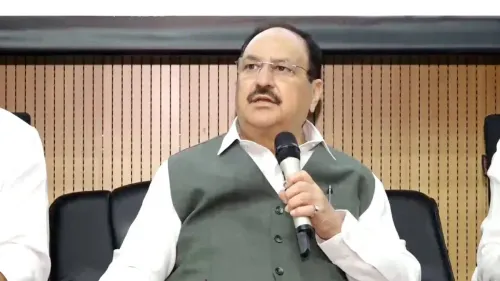
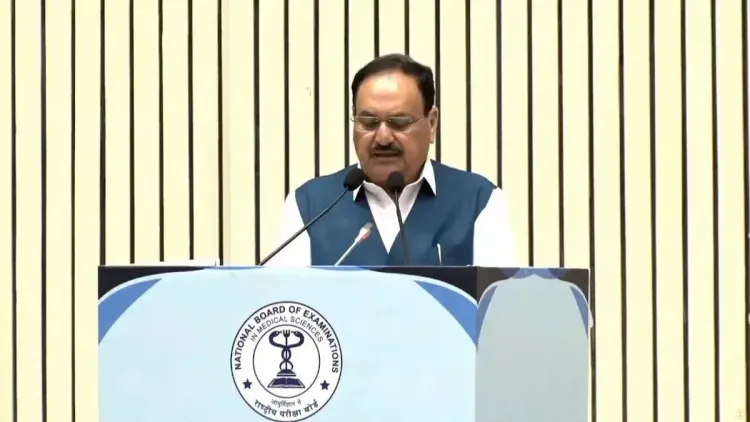
Union Health Minister J. P. Nadda on Saturday, 23 May 2026 credited Prime Minister Narendra Modi's leadership over the past 12 years with delivering 'unprecedented progress' in medical education, saying India has strengthened healthcare training at home while producing doctors who serve with distinction across the world.
Context
Posting on X, Nadda wrote that as 'a nation of 1.4 billion people, India has not only strengthened healthcare education domestically but has also produced doctors who are serving with distinction across the world.' He called the transformation a demonstration of how 'visionary policymaking can create a lasting impact.'
The remarks arrive as the Modi government approaches its twelfth year in office and the health ministry faces parliamentary scrutiny of its budget demands for medical education infrastructure. The post is accompanied by a video, signalling a coordinated communication push around the milestone.
Policy Backdrop
The government's record on medical education rests on two pillars. First, the Pradhan Mantri Swasthya Suraksha Yojana (PMSSY) was expanded after 2014 to fund new All India Institutes of Medical Sciences (AIIMS) campuses and upgrade state government medical colleges, adding teaching capacity in underserved regions.
Second, the National Medical Commission (NMC) Act of 2019 replaced the long-criticised Medical Council of India with a statutory regulator mandated to introduce competency-based curriculum standards and tighten quality norms across medical institutions. Together, these moves form the legislative and infrastructural backbone of the expansion Nadda is referencing.
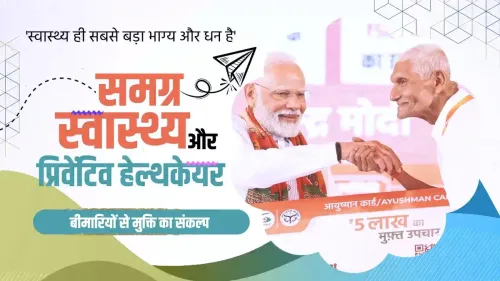
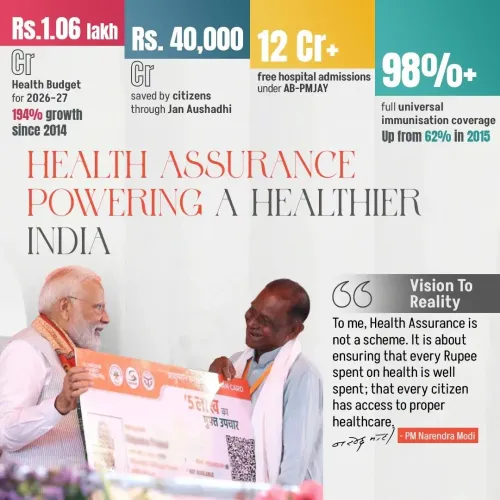
Successive annual increases in MBBS and postgraduate seats — driven by new college approvals and regulatory liberalisation — have been central to the government's pitch that it is addressing India's chronic doctor shortage. The expansion also sits alongside Ayushman Bharat, the flagship health insurance scheme, as part of a broader effort to scale both the demand and supply sides of the health system.
Stakeholders and Impact
Medical graduates and aspiring doctors are the most direct beneficiaries of seat expansion and improved institutional infrastructure. Healthcare institutions — both public AIIMS-network colleges and private medical universities — have had to align their curricula with NMC competency frameworks, reshaping how future doctors are trained.
The global dimension Nadda highlights — Indian doctors 'serving with distinction across the world' — speaks to a long-standing pattern of medically trained Indians filling workforce gaps in countries such as the United States, the United Kingdom, and Gulf nations. Whether that outflow represents a success story or a brain-drain challenge remains a live policy debate.
What's Next
Attention will now turn to the NMC's next-phase rollout of competency-based curriculum reforms, which are expected to deepen changes to how clinical skills are assessed in medical colleges. Parliamentary committees are also set to examine the Health Ministry's budget demands for further medical education infrastructure investment.
Nadda's post signals that the BJP intends to make the medical education expansion a centrepiece of its governance narrative as the party heads into the political cycle — framing regulatory and infrastructural change as evidence of 'visionary policymaking' with measurable global reach.
Point of View
NMC) and global outcomes (Indian doctors abroad), the BJP is attempting to frame medical education reform as a two-front success story. The tension, however, is real: the same global mobility that signals quality training also raises questions about whether India is subsidising healthcare systems abroad rather than retaining talent at home. Nadda's framing sidesteps that debate entirely, which will likely invite opposition pushback on doctor-to-population ratios and rural healthcare access.
NationPress
20 Sept 2026
Frequently Asked Questions
What progress has India made in medical education in the last 12 years?
Since 2014, India has expanded its network of AIIMS campuses under PMSSY , replaced the Medical Council of India with the National Medical Commission in 2019, and increased MBBS and postgraduate seats through new college approvals and regulatory changes.
What is the National Medical Commission and why was it created?
The National Medical Commission (NMC) is a statutory body established by the NMC Act of 2019 to replace the Medical Council of India. It was created to introduce competency-based curricula, tighten quality standards, and reduce corruption in medical college approvals.
What is PMSSY and how does it relate to medical education?
The Pradhan Mantri Swasthya Suraksha Yojana (PMSSY) is a central government scheme that funds the establishment of new AIIMS institutions and the upgrade of existing state government medical colleges, directly expanding teaching and training capacity.
Why did J. P. Nadda post about medical education in May 2026?
J. P. Nadda posted on 23 May 2026 to mark what the BJP frames as 12 years of 'unprecedented progress' under PM Modi , positioning medical education expansion as a key governance achievement ahead of parliamentary budget scrutiny of the Health Ministry.
Are Indian doctors really working across the world?
Yes, Indian-trained doctors have long filled medical workforce gaps in countries including the United States , the United Kingdom , and Gulf nations . Nadda referenced this in his post as evidence of the quality and global reach of India's medical education system, though the debate over brain drain versus global distinction continues.