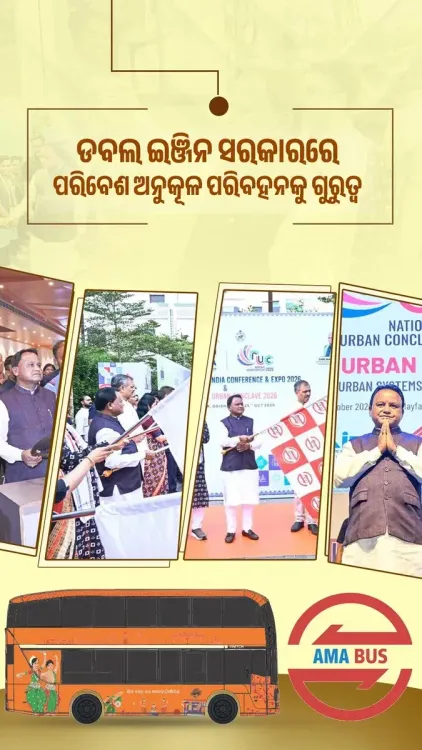
CM Majhi launches 26 e-buses, plans 550 more under PM e-Bus Sewa
Synopsis
Odisha CM Mohan Charan Majhi launches 26 electric buses under PM e-Bus Sewa, with 550 more in the pipeline. The state-run Ama Bus service will also expand from 7 to 16 cities, advancing Odisha's green urban transport agenda.
Key Takeaways
26 new electric buses launched in Odisha under the central PM e-Bus Sewa scheme on 4 November 2026 .
An additional 550 electric, midi, and mini buses are planned for phased induction under the same scheme.
The state-run Ama Bus service will expand from 7 cities to 16 cities , covering 9 new urban centres .
PM e-Bus Sewa was approved by the Government of India in 2023 to fund EV bus deployment and charging infrastructure.
CM Majhi attributed the rollout to 'double engine' coordination between the BJP-led state and central governments.
Odisha's BJP government assumed office after the 2024 state elections , making urban infrastructure a key governance priority.
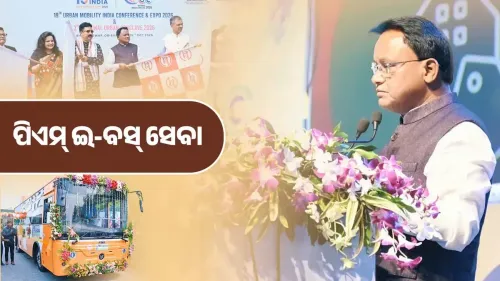
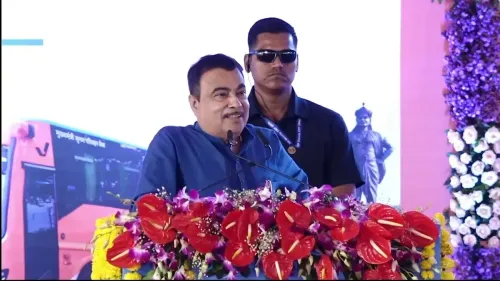
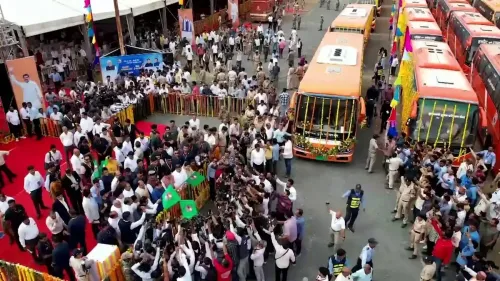
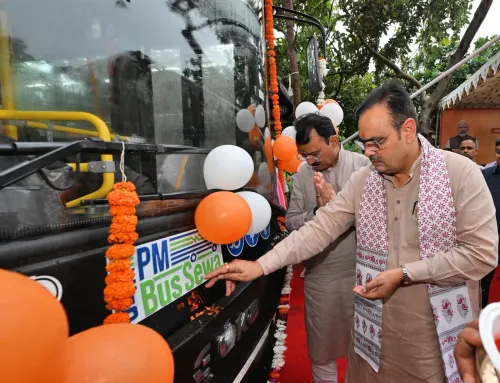
Odisha's streets are about to get a lot greener. Odisha Chief Minister Mohan Charan Majhi on Wednesday, 4 November 2026 announced the launch of 26 new electric buses under the PM e-Bus Sewa scheme, signalling an accelerated push toward clean, affordable urban mobility across the state.
26 buses today, 550 more on the way
The 26 e-buses inaugurated today are only the opening act. Majhi confirmed that an additional 550 electric, midi, and mini buses will be inducted in phases under the same PM e-Bus Sewa umbrella. The central scheme, approved by the Government of India in 2023, funds electric bus fleets and supporting infrastructure in selected cities to cut urban emissions and reduce dependence on fossil fuels.
Majhi framed the rollout squarely within the BJP's signature 'double engine government' narrative — the idea that a BJP state working in tandem with a BJP-led Centre unlocks faster, better-funded delivery of public infrastructure. 'Double engine sarkar re adhunik, sulabha o paribesh anukul gamanagaman byabasthaku miluchi nua gati' — 'Under the double-engine government, modern and eco-friendly transport is gaining new momentum,' he wrote.
Ama Bus network jumps from 7 cities to 16
Beyond the e-bus fleet, CM Majhi announced a substantial expansion of the state's own Ama Bus service. Currently operational in 7 cities, the network will spread to 9 additional cities, bringing the total to 16 urban centres served by the state-run bus programme. For commuters in those incoming cities, it marks a direct upgrade from fragmented private transport to a structured public network.
Ama Bus — literally 'Our Bus' in Odia — was conceived as Odisha's answer to the urban last-mile problem: reliable, affordable intra-city connectivity that private operators had little incentive to provide. The expansion deepens that footprint at a moment when the state is simultaneously injecting green capacity through the central scheme.
Electric mobility as a governance signal
India's electric-bus push sits inside a broader national pattern. Urban emissions from diesel fleets remain a significant public-health cost in mid-sized Indian cities, and the Centre's PM e-Bus Sewa was designed precisely to give state governments a financial on-ramp to transition. Odisha's BJP government, which came to power in the 2024 state elections displacing the long-ruling Biju Janata Dal, has consistently used infrastructure announcements to demonstrate administrative momentum in its early years.
The numbers to watch now: the phased timeline for the remaining 550 buses, which cities join the Ama Bus network, and whether charging infrastructure keeps pace with the growing fleet — the classic bottleneck that has slowed e-bus adoption elsewhere in India.
Sixteen cities, 576 buses in the pipeline, and a central government scheme as the financial engine — Odisha's urban commuter is, for the first time in a long while, the story's hero.
Point of View
Majhi reinforces the 'double engine' brand that BJP has made central to its state-level electoral pitch. The Ama Bus expansion to nine new cities simultaneously demonstrates independent state-level governance ambition, insulating the narrative from the risk of looking purely dependent on Delhi's funding. The bigger structural question is whether Odisha can build charging and depot infrastructure fast enough to absorb 550 additional buses — that execution gap has bedevilled similar announcements in other Indian states and will define whether this is a genuine mobility upgrade or a fleet-size headline.
NationPress
4 Nov 2026
Frequently Asked Questions
What is PM e-Bus Sewa and how does it work in Odisha?
PM e-Bus Sewa is a central government scheme approved in 2023 to deploy electric buses and related charging infrastructure in Indian cities. Under the scheme, the Centre funds bus procurement and operations support, while state governments and city authorities handle day-to-day management. Odisha has launched 26 buses under the scheme, with 550 more planned.
What is Ama Bus service in Odisha?
Ama Bus — meaning 'Our Bus' in Odia — is Odisha's state-run urban public bus programme designed to provide affordable intra-city connectivity. It currently operates in 7 cities and CM Majhi announced it will expand to 9 additional cities, taking the total to 16.
How many new cities will Ama Bus cover after the expansion?
Ama Bus will add 9 new cities to its existing 7-city network, bringing the total number of cities served to 16. The specific cities have not been officially listed in the announcement.
What does 'double engine government' mean in the context of Odisha?
'Double engine government' is a BJP political phrase referring to states where both the state and central governments are led by the BJP, implying smoother coordination and faster delivery of central schemes. CM Majhi used it to credit the e-bus launch to this alignment between Bhubaneswar and New Delhi.
When did BJP come to power in Odisha?
The BJP formed the government in Odisha after the 2024 state assembly elections, ending the long tenure of the Biju Janata Dal. Mohan Charan Majhi became Chief Minister following the BJP's victory.