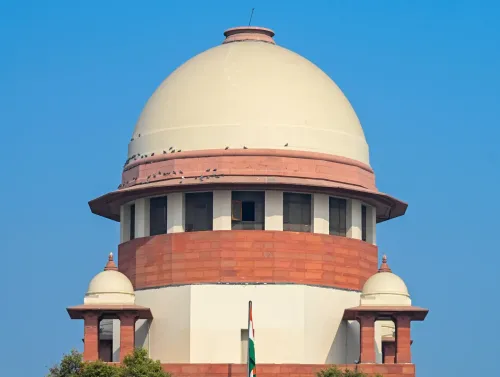
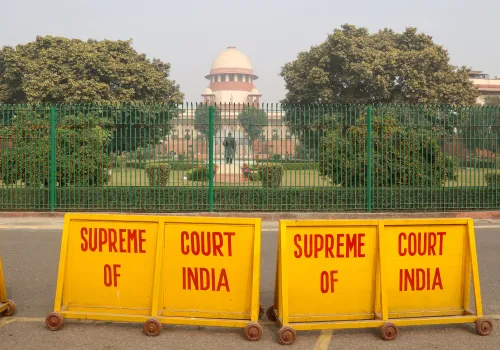
Two-child poll disqualification rule outdated amid falling fertility rates, says Supreme Court
Synopsis
The Supreme Court has signalled a potential legal overhaul of two-child disqualification rules in Indian elections, observing that India's Total Fertility Rate has fallen below the replacement level of 2.1 — the very demographic concern that justified these laws no longer exists. By referring the landmark 2003 Javed ruling to a larger Bench, the court has opened the door to striking down provisions that affect panchayat candidates across multiple states.
Key Takeaways
The Supreme Court on 4 November 2026 questioned the continued relevance of laws barring persons with more than two children from contesting local body elections.
India's Total Fertility Rate (TFR) has fallen below the replacement level of 2.1 , a sharp change from the TFR of approximately 3 when the original 2003 ruling was delivered.
The apex court set aside the disqualification of Mangala Bhimrao , former Sarpanch of Kakoda Gram Panchayat , Maharashtra, who was barred after the birth of her third child.
The court referred the landmark Javed vs State of Haryana (2003) judgment to a larger Bench for reconsideration.
The larger Bench will determine whether electoral disqualification tied to family size remains constitutionally valid amid concerns about demographic ageing.
The ruling could affect similar two-child disqualification clauses in panchayati raj laws across multiple states .
The Supreme Court of India on Wednesday, 4 November 2026, observed that laws barring individuals with more than two children from contesting local body elections may have lost constitutional relevance, citing a dramatic shift in India's demographic landscape over the past two decades. The court noted that the country's Total Fertility Rate (TFR) has dropped below the replacement level of 2.1, raising fresh concerns about population ageing rather than population explosion.
What Prompted the Observation
The observations arose from an appeal filed by Mangala Bhimrao, a former Sarpanch of Kakoda Gram Panchayat in Maharashtra, who had been disqualified from contesting elections after the birth of her third child. The Supreme Court Bench allowed her appeal, setting aside the disqualification order. In doing so, it used the case as a vehicle to scrutinise the broader legal framework underpinning such electoral bars.
Landmark 2003 Ruling Referred to Larger Bench
Crucially, the court decided to refer its earlier judgment in Javed vs State of Haryana (2003) to a larger Bench for reconsideration. In that ruling, a three-judge Bench had upheld the constitutional validity of provisions under the Haryana Panchayati Raj Act, 1994, which disqualified persons with more than two living children from contesting panchayat elections. At the time of that judgment, India's TFR stood at approximately three children per woman, making population control a pressing policy concern. The court noted that this demographic context has changed substantially since then.
The Demographic Shift at the Heart of the Case
The apex court pointed out that India's fertility rate has witnessed a steady decline and has now fallen below the replacement level of 2.1. This transformation, it observed, raises concerns about an ageing population in the coming decades — a challenge diametrically opposite to the overpopulation anxieties that informed legislation of the 1990s and early 2000s. This comes amid broader global evidence that sub-replacement fertility triggers long-term economic and social pressures, including shrinking workforces and rising dependency ratios. Notably, several Indian states, particularly in the south, have already been grappling with below-replacement fertility for over a decade.
What the Larger Bench Will Decide
The referral to a larger Bench means the question of whether electoral disqualification provisions tied to family size remain constitutionally valid will now receive a fresh, authoritative examination. The larger Bench will assess whether such provisions are consistent with fundamental rights in a demographic environment where population growth has slowed significantly. The outcome could affect similar laws across multiple states, as several state-level panchayati raj legislations carry comparable disqualification clauses.
Wider Implications
The case has implications beyond one woman's disqualification. Laws linking electoral eligibility to family size have been contested on grounds of gender discrimination, as women — who physically bear children — are disproportionately affected by such provisions. Critics have long argued that these laws punish individuals for personal reproductive choices without adequately accounting for socioeconomic factors. The Supreme Court's referral signals that the judiciary is now prepared to weigh these concerns against a changed demographic reality.
The larger Bench's ruling, when it comes, is expected to set a definitive precedent on the constitutional compatibility of two-child norms in electoral law across India.
Point of View
But a larger Bench must, is the gender dimension: two-child norms in electoral law have always fallen harder on women, who bear the visible biological marker of a third pregnancy. If the demographic rationale collapses, the discriminatory-impact argument becomes even harder to defend. The ruling could set a precedent that forces several state governments to revisit legislation they have treated as settled law for over two decades.
NationPress
4 Nov 2026
Frequently Asked Questions
What did the Supreme Court say about the two-child norm for contesting elections?
The Supreme Court observed on 4 November 2026 that laws disqualifying persons with more than two children from contesting local body elections may no longer be relevant, given that India's Total Fertility Rate has fallen below the replacement level of 2.1. The court referred the landmark 2003 Javed vs State of Haryana judgment to a larger Bench for reconsideration.
What is the Javed vs State of Haryana (2003) case?
In the 2003 ruling, a three-judge Supreme Court Bench upheld the constitutional validity of provisions under the Haryana Panchayati Raj Act, 1994, which barred persons with more than two living children from contesting panchayat elections. The court at the time accepted population control as a valid policy justification for the disqualification.
Who is Mangala Bhimrao and why was her case significant?
Mangala Bhimrao is a former Sarpanch of Kakoda Gram Panchayat in Maharashtra who was disqualified from contesting elections after the birth of her third child. The Supreme Court allowed her appeal and set aside her disqualification, using the case to initiate a broader review of two-child electoral disqualification laws.
Why does the court say the two-child norm may be outdated?
The court pointed out that when the Javed judgment was delivered, India's TFR stood at around three children per woman, making population control a pressing concern. Today, the TFR has fallen below the replacement level of 2.1, shifting the demographic challenge from overpopulation to potential population ageing.
What happens next after this Supreme Court ruling?
A larger Bench of the Supreme Court will now determine whether electoral disqualification provisions tied to family size remain constitutionally valid. The outcome is expected to set a binding precedent that could affect similar two-child norm clauses in panchayati raj laws across multiple Indian states.