BSF on high alert in Tripura as 9 accused in jawan attack may flee to Bangladesh

Synopsis
A mob of around 50 people allegedly attacked BSF jawans in Tripura's Sepahijala district after a smuggling interception went awry — injuring a Company Commander and two jawans, and resulting in the snatching of a service weapon. With 9 of 19 accused still at large and feared to be heading for Bangladesh, the incident has triggered a border-wide alert and exposed a recurring pattern of organised violence against security forces in one of India's most porous frontier zones.
Key Takeaways
A mob of around 50 people attacked BSF personnel in the Ashabari area, Sepahijala district, Tripura on Monday night, 3 November 2026 .
Two jawans and a Company Commander were critically injured; a Pump Action Gun (PAG) and a BSF vehicle were also seized or damaged.
The BSF FIR names 19 attackers ; 10 have been arrested , including three women; 9 remain at large .
Tripura Police have alerted the BSF to prevent the remaining accused from crossing into Bangladesh .
BSF IG Princee Rani visited the site and briefed CM Manik Saha ; joint area-domination operations are underway.
Tripura shares an 856-km border with Bangladesh; the district has seen fatal attacks on security forces in 2017 and 2019 .
Tripura Police have put the Border Security Force (BSF) on heightened alert along the India-Bangladesh international border to prevent the nine remaining accused — allegedly involved in a mob attack that left two jawans and a Company Commander critically injured — from escaping to Bangladesh, officials said on Wednesday, 4 November 2026. The assault, which took place on Monday night in the Ashabari area of Sepahijala district, has sharply raised tensions along one of India's most smuggling-prone border stretches.
What Happened on Monday Night
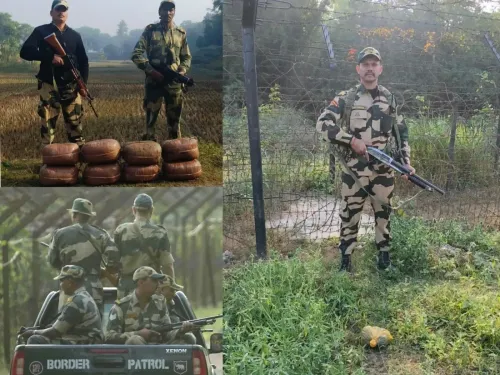
According to officials, BSF personnel on patrol spotted Indian and Bangladeshi smugglers allegedly engaged in the illegal cross-border trade of ganja (marijuana) along the international border fence. The jawans apprehended one Indian smuggler, while Bangladeshi smugglers on the other side of the fence fled. The detained Indian smuggler subsequently managed to escape and allegedly informed nearby villagers that he had been assaulted by BSF personnel.
What followed was swift and violent. Around 50 men and women converged on the spot, surrounded the BSF vehicle, and attacked the personnel. Three BSF personnel — including the Company Commander — sustained grievous injuries and were taken to a government hospital for treatment. The mob also allegedly snatched a Pump Action Gun (PAG) from one of the jawans and damaged a BSF vehicle. One attacker was also reportedly injured in the incident.
Arrests and Ongoing Manhunt
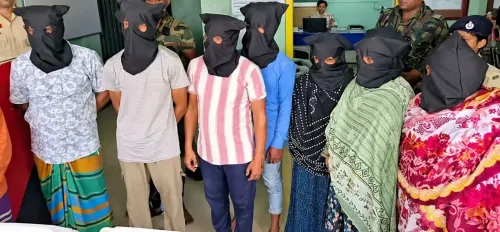
The FIR lodged by the BSF names 19 attackers. As of Wednesday, 10 accused — including three women — have been arrested. An intensive search operation launched immediately after the attack remains underway for the remaining nine suspects. 'The accused might cross the international border and take shelter in adjoining Bangladesh to evade arrest. We have also alerted the BSF to keep a close watch and prevent any unauthorised cross-border movement,' a senior Tripura Police official said.
Inspector General of BSF, Tripura Frontier, Princee Rani, and Sepahijala District Superintendent of Police Bijoy Debbarma visited the Ashabari border area on Tuesday. The BSF IG subsequently held a meeting with Tripura Chief Minister Manik Saha and briefed him on the incident. She also directed troops to follow border-guarding protocols with extra vigilance.
Area Domination and BSF's Statement
Tension continued to prevail in the area on Wednesday. The BSF, Tripura State Rifles, and police jointly conducted a foot march as part of an area-domination exercise to maintain law and order. In an official statement, the BSF said the force remained 'resolute in its commitment to safeguarding the India-Bangladesh border and preventing trans-border smuggling and other unlawful activities.'
The force also issued a firm warning: 'Any attempt to intimidate or obstruct BSF personnel in the discharge of their lawful duties will be dealt with firmly.' Notably, the BSF highlighted that despite being attacked, its personnel 'exercised exemplary restraint and refrained from resorting to lethal force.'
A Pattern of Violence Against Security Forces
This is not the first time security personnel have been targeted in Sepahijala's smuggling-prone corridors. On 16 October 2017, Deputy Commandant Deepak Kumar Mandal of the 145th Battalion BSF was run over by a vehicle driven by smugglers at Balerdepha in the Sonamura subdivision; he succumbed to his injuries on 20 October 2017. On 21 November 2019, Sub-Inspector Durga Kumar Hrangkhawl of the Tripura Police was killed after being deliberately run over by a vehicle allegedly operated by cross-border smuggling networks in the same district.
Tripura shares an 856-km-long international border with Bangladesh and is surrounded by the neighbouring country on three sides, making it acutely vulnerable to cross-border migration, illegal trade, and transnational crime. While most of the frontier has been fenced, a few stretches remain porous — a persistent vulnerability that organised smuggling networks have repeatedly exploited.
Point of View
A snatched firearm, and 9 suspects still at large and reportedly heading for Bangladesh. The BSF's carefully worded emphasis on 'exemplary restraint' signals an institutional awareness that escalation would hand a propaganda victory to those who want to frame smuggling enforcement as aggression. The harder question — why the same stretch of Sepahijala border keeps producing these incidents despite prior fatalities in 2017 and 2019 — deserves a sharper policy answer than another area-domination march.
NationPress
4 Nov 2026
Frequently Asked Questions
What happened in the BSF jawan attack in Tripura?
On Monday night, 3 November 2026, a mob of around 50 people attacked BSF personnel in the Ashabari area of Sepahijala district, Tripura, after jawans intercepted suspected cross-border ganja smugglers. Two jawans and a Company Commander were critically injured, a Pump Action Gun was allegedly snatched, and a BSF vehicle was damaged.
How many accused have been arrested so far?
As of Wednesday, 4 November 2026, 10 of the 19 people named in the BSF's FIR have been arrested, including three women. Nine accused remain at large and are feared to be attempting to cross into Bangladesh to evade arrest.
Why is Bangladesh border vigilance being stepped up?
Authorities fear the nine remaining accused may attempt to cross Tripura's 856-km international border with Bangladesh to evade arrest. Tripura Police have alerted the BSF to watch for and prevent any unauthorised cross-border movement by the suspects.
Who visited the site and what action has been taken?
BSF Inspector General Princee Rani and Sepahijala SP Bijoy Debbarma visited the Ashabari border area on Tuesday. The BSF IG briefed Chief Minister Manik Saha and ordered heightened border-guarding protocols. Joint foot marches by BSF, Tripura State Rifles, and police have been conducted as area-domination exercises.
Is this the first attack on security forces in this area?
No. In October 2017, BSF Deputy Commandant Deepak Kumar Mandal was run over by smugglers in Sepahijala's Sonamura subdivision and died of his injuries. In November 2019, Tripura Police Sub-Inspector Durga Kumar Hrangkhawl was killed in a similar vehicle attack in the same district, allegedly by cross-border smuggling networks.