CM Bhajan Lal Sharma: ₹511 Cr Tarbandi Push Guards Rajasthan Crops

Synopsis
CM Bhajan Lal Sharma says Rajasthan's Tarbandi Yojana has fenced 445 lakh metres of farmland with ₹511 crore in subsidies over 34 months, shielding crops from nilgai and stray cattle damage.
Key Takeaways
₹511 crore in government subsidies disbursed under Tarbandi Yojana over 34 months .
445 lakh metres (approximately 4,450 km ) of wire fencing installed on agricultural land across Rajasthan .
The scheme targets crop damage caused by nilgai antelope and stray cattle — a persistent threat to Rajasthan farmers.
CM Bhajan Lal Sharma described farmer prosperity as the government's top priority in his 4 November 2026 post.
The BJP-led Rajasthan government assumed office in December 2023 and has positioned income protection — not just production — as its rural welfare cornerstone.
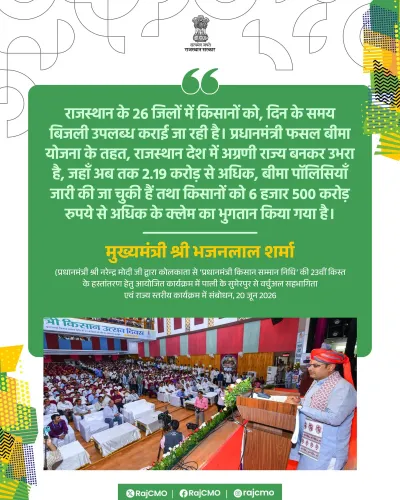
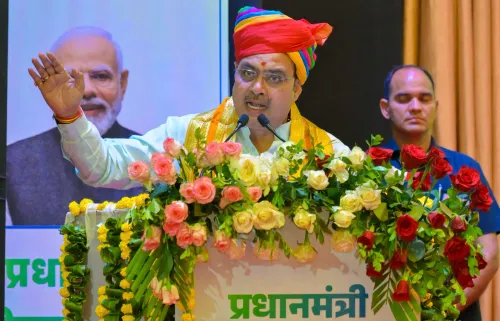
Nilgai herds and stray cattle have long been a silent catastrophe for Rajasthan's farming families — and Rajasthan Chief Minister Bhajan Lal Sharma says his government is finally putting a fence between that threat and a farmer's livelihood. On Wednesday, 4 November 2026, Sharma posted that the state's Tarbandi Yojana has delivered ₹511 crore in subsidies over 34 months, fencing 445 lakh metres of agricultural land across Rajasthan.
Posting in Hindi, Sharma framed the update in unambiguous terms: 'अन्नदाता की समृद्धि ही हमारी प्राथमिकता है' — 'The prosperity of the farmer is our priority.' The message: crop protection is not a footnote in rural welfare, it is the headline.
What Tarbandi Yojana actually does for a Rajasthan farmer
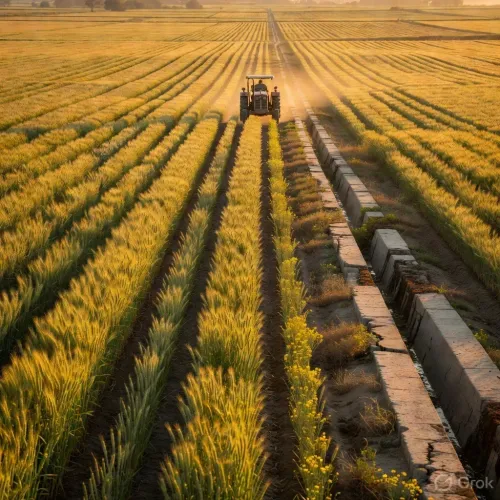
Tarbandi Yojana is a state government scheme that provides wire-fencing subsidies to farmers so they can ring-fence their fields against nilgai antelope and stray cattle — two of the most destructive forces Rajasthan's agricultural communities contend with season after season. The scheme does not ask a smallholder to absorb the full cost of industrial-grade fencing; the subsidy bridges the gap between need and affordability.
Rajasthan's flat, semi-arid terrain makes fields particularly vulnerable. Nilgai — large, fast-moving ungulates — can flatten a standing wheat or mustard crop in a single night. Stray cattle, a problem that intensified sharply after informal cattle markets contracted across north India, compound the damage. For a marginal farmer, one bad raid can erase an entire season's investment.
34 months, 445 lakh metres — the scale in perspective
The numbers cited by CM Sharma suggest an aggressive rollout since the BJP government took office in December 2023. 445 lakh metres of fencing — that is 4,450 kilometres of protective wire — spread across Rajasthan's farm belts represents a substantial logistical undertaking. The ₹511 crore in grants channelled directly to farmers places this among the larger single-purpose agricultural subsidy drives the state has mounted in recent years.
The Sharma administration has repeatedly positioned farmer income protection — not just production support — as its core rural agenda. Tarbandi fits that framing precisely: it does not increase yield, it prevents loss. In a state where rainfed agriculture dominates and margins are thin, stopping a loss is functionally equivalent to creating income.
A persistent problem, a recurring policy answer
Wire-fencing subsidies are not new to Rajasthan. Previous state governments also ran versions of the scheme, but the current administration's claim is one of renewed scale and speed. The broader BJP state-level pattern across Rajasthan, Madhya Pradesh, and Uttar Pradesh has consistently emphasised rural distress reduction as a political and policy priority — with animal-damage mitigation schemes forming a recurring chapter of that playbook.
What to watch next: the state's upcoming budget allocations for Tarbandi and whether district-level data on crop-loss reduction begins to validate the scale of the investment.
Four and a half thousand kilometres of wire fence may sound like a construction statistic — but for the farmer who plants knowing an animal raid will not erase it overnight, it sounds like security.
Point of View
Visible output (kilometres of fencing, crores spent) rather than aspirational targets. The focus on loss-prevention rather than yield-enhancement reflects a shrewd read of Rajasthan's marginal-farmer politics, where a single crop failure can flip a constituency. If district-level crop-loss data eventually corroborates the scale of the rollout, it strengthens the template for other BJP-governed states facing similar human-wildlife agricultural conflict. The 34-month timeframe also quietly anchors the narrative to the post-December 2023 administration, drawing a contrast with predecessor governments without naming them.
NationPress
4 Nov 2026
Frequently Asked Questions
What is Tarbandi Yojana in Rajasthan?
Tarbandi Yojana is a Rajasthan government scheme that provides subsidies to farmers for wire fencing around their fields, protecting crops from damage by nilgai and stray cattle.
How much has Rajasthan spent on Tarbandi Yojana in 2024-2026?
According to CM Bhajan Lal Sharma's post on 4 November 2026, the Rajasthan government spent ₹511 crore on Tarbandi Yojana subsidies over the preceding 34 months .
How many metres of fencing have been done under Tarbandi Yojana?
CM Sharma stated that 445 lakh metres — roughly 4,450 kilometres — of agricultural land has been fenced under the scheme in 34 months.
Why do Rajasthan farmers need protection from nilgai?
Nilgai are large, fast-moving antelope native to the Indian subcontinent that can destroy standing crops overnight. Combined with stray cattle, they cause significant seasonal income loss for Rajasthan's farming communities, particularly in rainfed areas.
When did Bhajan Lal Sharma become Chief Minister of Rajasthan?
Bhajan Lal Sharma was sworn in as Chief Minister of Rajasthan in December 2023 after the BJP's victory in the state assembly elections.