CM Bhajanlal launches VBGRMJ Yojana in Beawar, thanks PM Modi
Synopsis
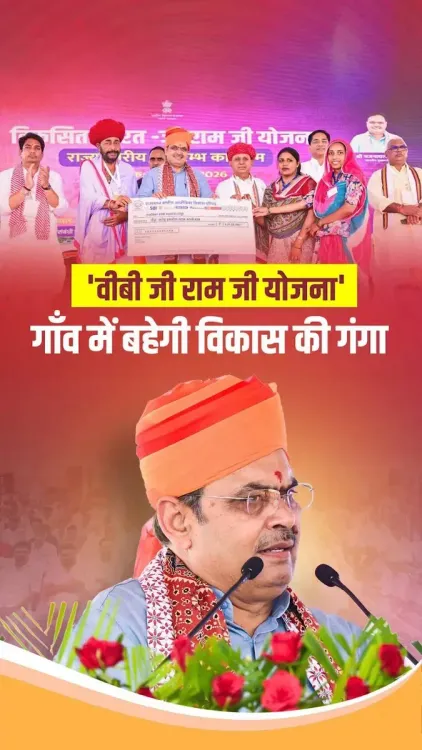
Chief Minister Bhajanlal Sharma formally launched the VBG Ram Ji Yojana at the Masuda Agricultural Produce Mandi in Beawar district on 3 July 2026, calling it a scheme to bring the 'Ganga of development' to villages and crediting Prime Minister Narendra Modi for the initiative.
Key Takeaways
CM Bhajanlal Sharma addressed the state-level public convention for the launch of the VBG Ram Ji Yojana in Beawar district on 3 July 2026 .
The event was held at the Masuda Agricultural Produce Mandi , signalling the scheme's focus on farmers and rural communities.
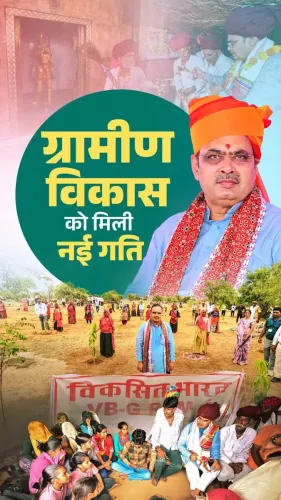
CM Sharma described the scheme as one that would 'bring the Ganga of village development' to rural Rajasthan.
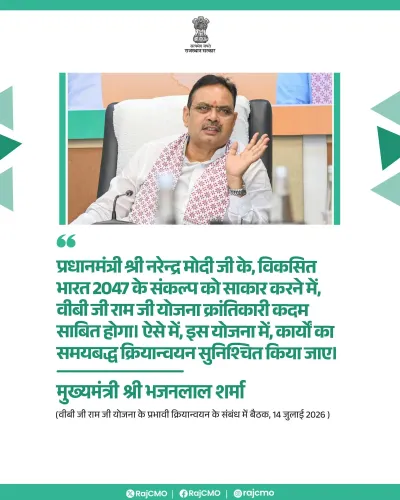
He publicly credited Prime Minister Narendra Modi for the scheme, framing it as a centrally-backed initiative.
Beawar is a newly notified district created in Rajasthan's 2023 administrative reorganisation .
District-wise rollout details, funding structure, and convergence with central programmes are yet to be officially announced.
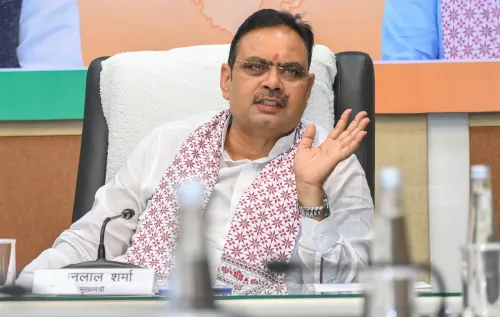
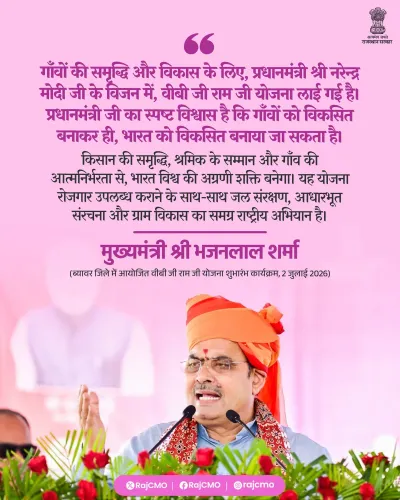
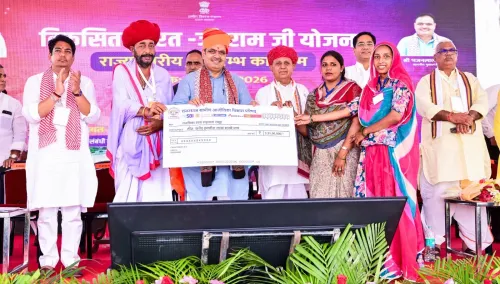
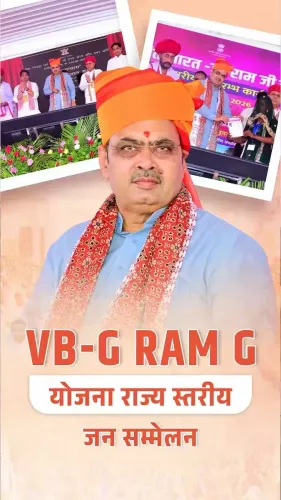
Chief Minister Bhajanlal Sharma addressed the state-level public convention (jan sammelan) for the co-launch of the VBG Ram Ji Yojana at the Masuda Agricultural Produce Mandi in Beawar district, Rajasthan, on Friday, 3 July 2026. Speaking at the event, he declared that the scheme — aimed at channelling development to villages — was being formally launched from the soil of Masuda, and expressed gratitude to Prime Minister Narendra Modi for making it possible.
Context
Addressing the gathering, CM Bhajanlal Sharma said, in his words, that 'Masuda ki dharti se VBG Ram Ji Yojana ka shubharambh ho raha hai' — 'the VBG Ram Ji Yojana is being inaugurated from the land of Masuda.' He framed the scheme as one that would 'bring the Ganga of village development' (gaon ke vikas ki Ganga bahane wali yojana), invoking imagery of a transformative, life-giving flow of progress to rural communities. The event was organised at the mandi premises, a deliberate choice that underscored the scheme's agricultural and rural orientation.
Policy Backdrop
Beawar was notified as a new district in Rajasthan's 2023 administrative reorganisation, part of a broader push to bring governance closer to citizens at the local level. CM Sharma, who has led a BJP government in Rajasthan since December 2023, has consistently aligned state rural and agricultural programmes with central government frameworks, citing cooperative federalism as a guiding principle. State-level launches at agricultural mandis have become a recurring format for rolling out welfare schemes, combining symbolic weight with direct outreach to farmers and village communities.
The VBG Ram Ji Yojana was positioned at the event as a village-development initiative backed by the central government's policy direction. CM Sharma specifically credited PM Modi for the scheme, reflecting the BJP's standard practice of linking state welfare delivery to national leadership, particularly in the run-up to and aftermath of electoral cycles.
Stakeholders and Impact
The primary beneficiaries of the scheme, as indicated by the event's framing and venue, are farmers and rural communities across Rajasthan. Holding the state-level convention at the Masuda mandi — a functioning agricultural market — signals that the scheme's implementation may intersect with existing agricultural market infrastructure. The presence of a large public gathering (jan sammelan) at the district level suggests the government intends broad grassroots mobilisation around the rollout.
Beawar district's inclusion as the launch site also carries administrative significance: as a recently created district, it represents the government's emphasis on decentralised delivery of services and schemes to areas that previously had fewer direct administrative touchpoints.
What's Next
The state government is expected to announce a district-wise rollout schedule for the VBG Ram Ji Yojana following the state-level launch. Observers will watch for details on the scheme's specific objectives, eligible beneficiaries, funding structure, and any convergence with existing central programmes for agricultural markets or village infrastructure. Budget allocations and implementation timelines are likely to be clarified in subsequent official communications under the #AapnoAgraniRajasthan campaign framework that the Rajasthan CMO has been using to brand its development agenda.
Point of View
High-footfall spaces that maximise outreach to the farmer constituency that BJP governments in Rajasthan have consistently courted. CM Sharma's public acknowledgement of PM Modi's role reinforces the BJP's top-down credit attribution model, tying state welfare delivery to the national leadership ahead of any future electoral calculus. The launch in a newly created district like Beawar also serves a dual purpose: it validates the administrative reorganisation of 2023 while demonstrating that new districts are receiving tangible scheme benefits. How quickly the government publishes verifiable scheme details will determine whether this event is remembered as a substantive policy milestone or a well-staged public mobilisation exercise.
NationPress
1 Oct 2026
Frequently Asked Questions
What is the VBG Ram Ji Yojana launched in Rajasthan?
The VBG Ram Ji Yojana is a village-development scheme formally launched by Rajasthan Chief Minister Bhajanlal Sharma at the Masuda mandi in Beawar district on 3 July 2026. The government has described it as a scheme to channel development to rural communities, though full details on its objectives and funding are yet to be officially published.
Where was the VBG Ram Ji Yojana state-level launch held?
The state-level public convention for the launch was held at the Masuda Agricultural Produce Mandi in Beawar district, Rajasthan, on 3 July 2026.
Who launched the VBG Ram Ji Yojana in Rajasthan?
Chief Minister Bhajanlal Sharma launched the scheme, crediting Prime Minister Narendra Modi for the initiative during his address at the Masuda mandi event.
What is the Aapno Agrani Rajasthan campaign?
'Aapno Agrani Rajasthan' — meaning 'Our Leading Rajasthan' — is the branding hashtag used by the Rajasthan Chief Minister's Office to group its development and governance announcements under a unified identity.
What is Beawar district and why was it chosen for the launch?
Beawar is a district in Rajasthan notified in 2023 as part of the state's administrative reorganisation to improve local governance and service delivery. Its selection as the launch site for a state-level scheme underscores the government's focus on newly created districts and their rural and farming communities.