CM Bhajanlal Launches Rural Jobs Scheme in Beawar via VC
Synopsis
Chief Minister Bhajanlal Sharma joined the national launch of India's new rural employment guarantee mission via video conference from Beawar on 3 July 2026, distributing employment cards, Rs 4.47 crore in SHG credit, and laying foundation stones for Rs 424 crore in local development works.
Key Takeaways
Union Minister Shivraj Singh Chouhan launched the Viksit Bharat Rozgar Evam Aajivika Mission (Rural) Guarantee Yojana nationally from Tirupati, Andhra Pradesh on 3 July 2026 .
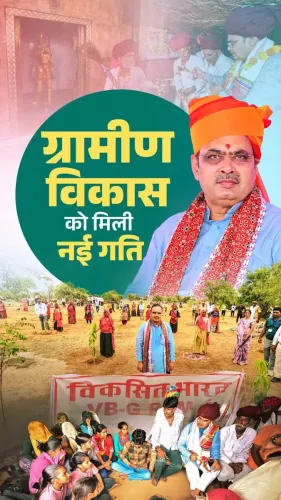
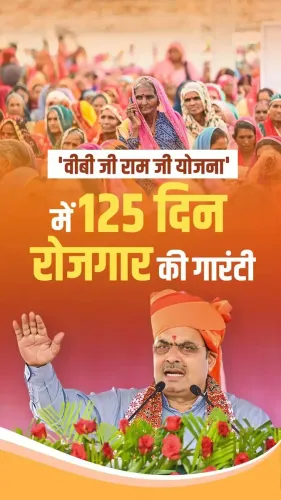
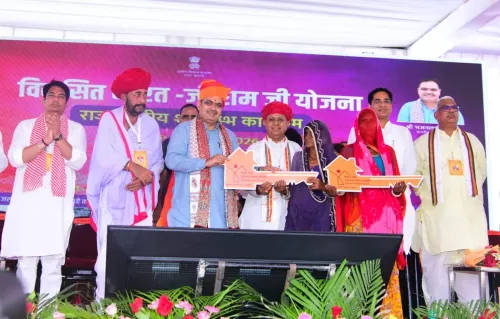
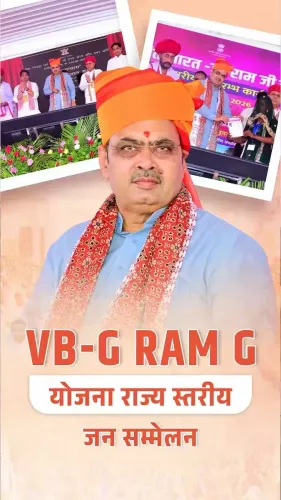
CM Bhajanlal Sharma participated via video conference from Masuda Krishi Upaj Mandi, Beawar district , and addressed the state-level launch of the VBG Ram Ji Yojana .
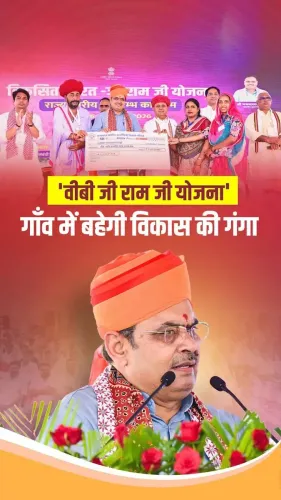
Two beneficiaries received Rural Employment Guarantee Cards at the Beawar event.
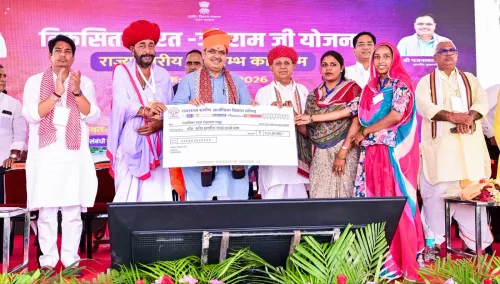
SHG women members received credit linkage cheques of Rs 3.31 crore through banks and Rs 1.16 crore in loans under Rajasthan Mahila Nidhi schemes.
CM Sharma laid foundation stones for development works worth approximately Rs 424 crore in the Beawar region.
The scheme aligns with PM Modi's Viksit Bharat 2047 vision of developing India through village-level prosperity.
Chief Minister Bhajanlal Sharma joined the national launch of the Viksit Bharat Rozgar Evam Aajivika Mission (Rural) Guarantee Yojana via video conference from the Masuda Krishi Upaj Mandi in Beawar district on Friday, 3 July 2026. The national launch event was addressed in person by Union Minister for Rural Development, Agriculture and Farmers Welfare Shivraj Singh Chouhan from Tirupati, Andhra Pradesh. The Chief Minister's Office of Rajasthan announced the event, with CM Sharma simultaneously presiding over the state-level public convention and launch of the VBG Ram Ji Yojana from Beawar.
What Was Announced
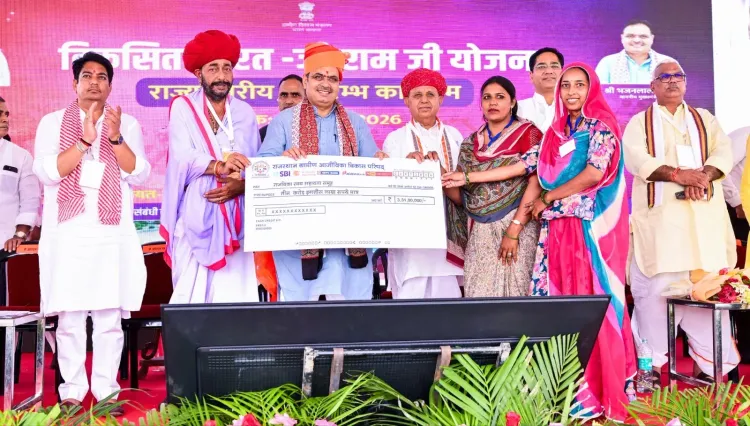
Addressing the gathering, CM Sharma said the VBG Ram Ji Yojana was conceived from Prime Minister Narendra Modi's vision for rural prosperity, stating: 'gaon ko viksit banakar hi Bharat ko viksit banaya ja sakta hai' (India can be developed only by developing its villages). On the occasion, the Chief Minister distributed Rural Employment Guarantee Cards to two beneficiaries under the VBG Ram Ji Yojana.
Women members of self-help groups — referred to as SHG deedis — received credit linkage cheques worth Rs 3.31 crore routed through various banks. Additionally, loan cheques amounting to Rs 1.16 crore were distributed under various schemes of Rajasthan Mahila Nidhi to SHG members. CM Sharma also laid the foundation stones for development works valued at approximately Rs 424 crore in the region.
Context
The Viksit Bharat Rozgar Evam Aajivika Mission (Rural) Guarantee Yojana is a central government scheme aimed at guaranteeing rural employment and livelihoods in alignment with the Viksit Bharat 2047 goal. Its national launch from Tirupati by Union Minister Shivraj Singh Chouhan — a former four-term Chief Minister of Madhya Pradesh — signals the Centre's push to roll out the scheme simultaneously across states through federal coordination mechanisms.
The simultaneous VC-linked state events reflect a standard federal implementation model that has been used since the 2000s to ensure political visibility and administrative alignment across multiple states on the same day.
Policy Backdrop
India's rural employment guarantee architecture has evolved over two decades. The Mahatma Gandhi National Rural Employment Guarantee Act (MGNREGA), enacted in 2005, established the foundational guarantee of at least 100 days of wage employment per rural household per year. The Deendayal Antyodaya Yojana – National Rural Livelihoods Mission (DAY-NRLM), launched in 2011, layered self-help group formation and credit linkage on top of that base.
Rajasthan has implemented successive iterations of SHG credit linkage programmes under NRLM since 2011. The Rajasthan Mahila Nidhi, a state-level initiative, provides dedicated credit and financial support to women's SHGs, and its inclusion in Friday's event underscores the BJP government's focus on women's financial inclusion as a complement to employment guarantees.
Stakeholders and Impact
The primary beneficiaries are rural households in Beawar district and, by extension, across Rajasthan who will be enrolled under the rural employment guarantee scheme. Women SHG members stand to gain through both the credit linkage of Rs 3.31 crore via banks and the Rs 1.16 crore in loans under Rajasthan Mahila Nidhi schemes disbursed at the event.
The Rs 424 crore in development works whose foundation stones were laid on Friday are expected to generate local construction employment and improve rural infrastructure in the Beawar region. Policymakers and district administration officials will now be responsible for tracking beneficiary registration and utilisation of sanctioned funds.
What's Next
State-level coverage targets and beneficiary registration numbers under the new central rural guarantee scheme will be closely watched in the coming weeks. The utilisation of the Rs 424 crore sanctioned for development works in Beawar and the pace of SHG credit linkage disbursements across other Rajasthan districts will serve as early indicators of on-ground implementation. The BJP government in Rajasthan, which took office in December 2023, is likely to use scheme rollouts such as this to demonstrate rural welfare delivery ahead of future electoral cycles.
Point of View
Still consolidating its footing after its December 2023 election win, associating with a PM Modi-branded rural guarantee scheme provides a visible welfare delivery moment. The layering of women's SHG credit linkage onto an employment guarantee launch also reflects a deliberate policy design choice — combining wage-work guarantees with financial inclusion to broaden the beneficiary base. Watch whether the Rs 424 crore in sanctioned works translates into ground-level contracting or remains at the foundation-stone stage, as that gap has historically been the weak link in rural infrastructure announcements.
NationPress
1 Oct 2026
Frequently Asked Questions
What is the Viksit Bharat Rozgar Evam Aajivika Mission Rural Guarantee Yojana?
It is a central government rural employment and livelihood guarantee scheme launched under the Viksit Bharat 2047 framework, aimed at ensuring wage employment and income opportunities for rural households across India.
What is VBG Ram Ji Yojana in Rajasthan?
VBG Ram Ji Yojana is the state-level implementation programme linked to the central rural employment guarantee mission, launched in Rajasthan by CM Bhajanlal Sharma from Beawar district on 3 July 2026.
How much money was distributed to SHG women at the Beawar event?
A total of Rs 4.47 crore was distributed: Rs 3.31 crore as bank credit linkage cheques and Rs 1.16 crore as loan cheques under Rajasthan Mahila Nidhi schemes to women self-help group members.
What is Rajasthan Mahila Nidhi?
Rajasthan Mahila Nidhi is a state government initiative that provides dedicated credit and financial support to women's self-help groups in Rajasthan, complementing central livelihood missions.
Who launched the Viksit Bharat rural employment scheme nationally?
Union Minister for Rural Development, Agriculture and Farmers Welfare Shivraj Singh Chouhan launched the scheme nationally from Tirupati, Andhra Pradesh, on 3 July 2026.