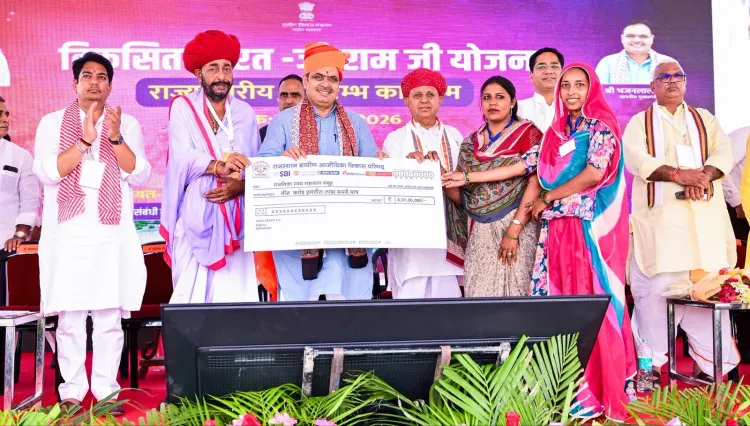
CM Bhajan Lal launches Viksit Bharat Ji Ram Ji Yojana in Beawar
Synopsis
Rajasthan CM Bhajan Lal Sharma joined the state-level launch of the Viksit Bharat Ji Ram Ji Yojana in Beawar on 2 July 2026, distributing welfare cheques and inaugurating ₹425 crore in development projects. The scheme promises 125 days of guaranteed rural employment, skill development, and transparent benefit delivery under the Viksit Bharat 2047 agenda.
Key Takeaways
Rajasthan CM Bhajan Lal Sharma attended the state-level launch of the Viksit Bharat Ji Ram Ji Yojana in Beawar on 2 July 2026 .
Union Minister Shivraj Singh Chouhan addressed the national launch virtually from Tirupati , signalling a simultaneous pan-India rollout.
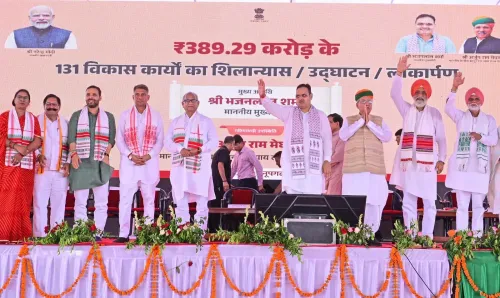
Sharma inaugurated development works worth ₹425 crore and distributed financial assistance cheques to welfare beneficiaries.
The scheme guarantees 125 days of employment to rural households — 25 days more than the existing MGNREGA floor of 100 days.
Additional components include livelihood improvement, skill development , and transparent delivery of benefits, aligned with the Viksit Bharat 2047 agenda.
The initiative is framed around the philosophy of Antyodaya — ensuring development reaches the most marginalised citizens first.
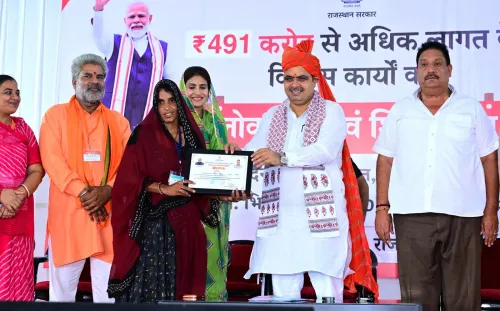
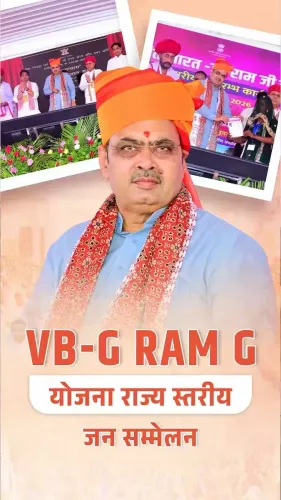
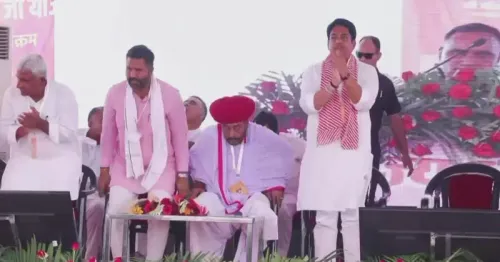
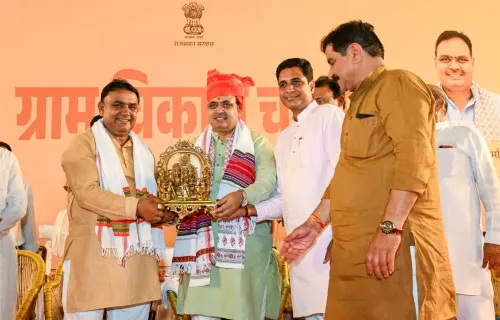
Rajasthan Chief Minister Bhajan Lal Sharma attended the state-level launch of the Viksit Bharat Ji Ram Ji Yojana in Beawar, Ajmer district, on 2 July 2026, as the scheme was simultaneously rolled out nationally from Tirupati by Union Agriculture and Rural Development Minister Shivraj Singh Chouhan via virtual address. The Chief Minister distributed benefit cheques to welfare scheme beneficiaries and laid the foundation stone for development works worth ₹425 crore.
Context
Sharma participated in the programme alongside an exhibition showcasing various public welfare schemes, where he interacted with beneficiaries receiving direct financial assistance. In his remarks, he described the initiative as a milestone rooted in the philosophy of Antyodaya — reaching the last person in the queue — under the Viksit Bharat vision championed by Prime Minister Narendra Modi.
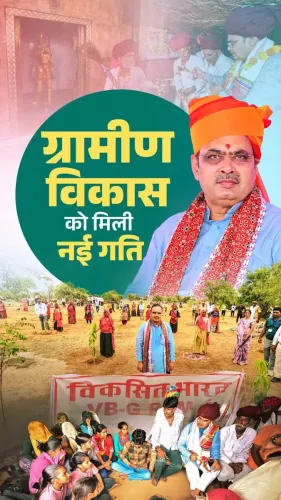
The scheme promises 125 days of guaranteed employment to rural households, along with livelihood improvement, skill development, and transparent delivery of benefits. Sharma said the government is 'continuously working to take the fruits of development to the person standing in the last row through good governance and participation of every citizen.'
Policy Backdrop
The new scheme builds on the foundation laid by the Mahatma Gandhi National Rural Employment Guarantee Act (MGNREGA), enacted in 2005, which guarantees at least 100 days of wage employment per year to rural households. The Viksit Bharat Ji Ram Ji Yojana extends that floor to 125 days while adding skill development and livelihood diversification components, reflecting successive NDA administrations' efforts to layer additional support on existing rural safety nets.
The launch is part of the broader Viksit Bharat 2047 agenda, which aims to raise rural incomes, reduce distress migration, and build self-reliant village economies by the centenary of Indian independence. Chouhan's virtual address from Tirupati signalled a pan-India rollout coordinated across states simultaneously.
Stakeholders and Impact
The primary beneficiaries are rural households and agricultural labourers across Rajasthan, a state with a large agrarian population and significant dependence on seasonal employment. The ₹425 crore in infrastructure works inaugurated at Beawar is expected to generate local construction employment in addition to the scheme's direct wage component.
Skill development provisions within the scheme target younger rural workers, aiming to reduce dependence on unskilled labour and improve long-term earning capacity. Transparent delivery mechanisms — likely leveraging direct benefit transfer infrastructure — are positioned as a safeguard against leakage, a persistent challenge in rural employment programmes.
What's Next
Implementation will depend on state-level guidelines, district-wise allocation of funds, and enrolment of eligible households under the 125-day employment guarantee. Analysts will watch whether Rajasthan moves quickly to notify operational rules and whether the expanded employment norm receives a formal legislative or budgetary backing in the next parliamentary session.
If the scheme achieves its stated targets, it could serve as a template for other BJP-governed states looking to align rural welfare delivery with the Viksit Bharat narrative ahead of future electoral cycles.
Point of View
The scheme signals a political intent to go beyond MGNREGA's legacy and reframe rural support as a growth instrument rather than a dole. The simultaneous national rollout from Tirupati, with Chouhan at the helm, underscores the Centre's effort to project unified delivery across states. Whether implementation matches the political optics will depend on how swiftly Rajasthan operationalises the scheme's transparency and skill components at the ground level.
NationPress
1 Oct 2026
Frequently Asked Questions
What is the Viksit Bharat Ji Ram Ji Yojana?
The Viksit Bharat Ji Ram Ji Yojana is a rural welfare scheme launched nationally on 2 July 2026 that promises 125 days of guaranteed employment to rural households, along with skill development, livelihood support, and transparent benefit delivery, as part of the Viksit Bharat 2047 agenda.
Where was the Rajasthan state-level launch of the Viksit Bharat Ji Ram Ji Yojana held?
The state-level launch was held in Beawar, a city in Ajmer district, Rajasthan, on 2 July 2026, attended by Chief Minister Bhajan Lal Sharma.
What is the difference between MGNREGA and the Viksit Bharat Ji Ram Ji Yojana?
MGNREGA, enacted in 2005, guarantees 100 days of wage employment per year to rural households. The Viksit Bharat Ji Ram Ji Yojana extends this to 125 days and adds skill development and livelihood diversification components.
How much development work did CM Bhajan Lal Sharma inaugurate in Beawar?
CM Bhajan Lal Sharma laid the foundation stone for development works worth ₹425 crore at the Beawar event on 2 July 2026.
Who launched the Viksit Bharat Ji Ram Ji Yojana at the national level?
Union Minister for Agriculture and Rural Development Shivraj Singh Chouhan addressed the national launch virtually from Tirupati, Andhra Pradesh, on 2 July 2026.