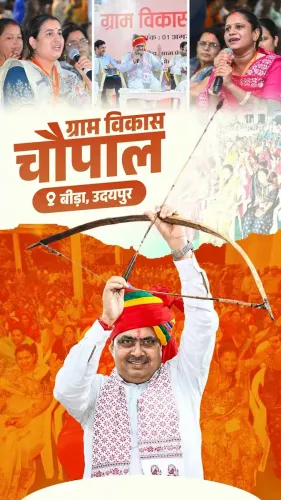
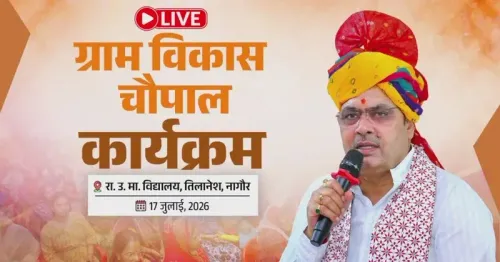
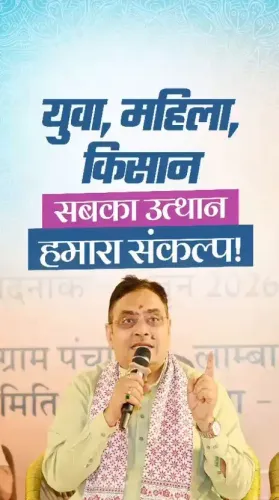
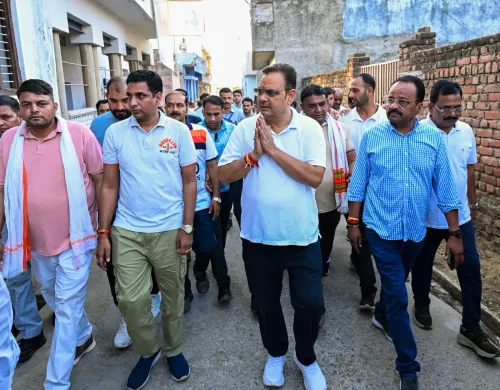
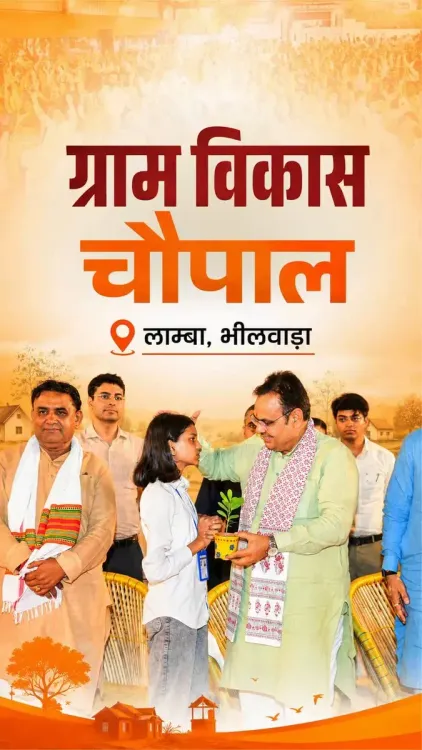
CM Bhajan Lal Holds Gram Vikas Chaupal in Bhilwara
Synopsis
Rajasthan Chief Minister Bhajan Lal Sharma visited Lamba Gram Panchayat in Bhilwara on June 6, 2026, for a Gram Vikas Chaupal under #GRAM2026, engaging villagers, farmers, women, and youth to gather grassroots feedback on welfare scheme delivery and chart the path toward a Viksit Rajasthan.
Key Takeaways
CM Bhajan Lal Sharma attended a Gram Vikas Chaupal at Lamba Gram Panchayat, Bhilwara on June 6, 2026 .
The event was conducted under the #GRAM2026 campaign focused on last-mile welfare delivery in Rajasthan.
Sharma engaged directly with farmers, women, youth, and elders to record aspirations and suggestions on development schemes.
The government's stated goal is transparent and effective implementation of every welfare scheme down to the village and hamlet level.
The chaupal format builds on the participatory governance framework of the 73rd Constitutional Amendment (1992) .
Further chaupal events across Rajasthan districts and potential policy follow-up from the Bhilwara session are expected.
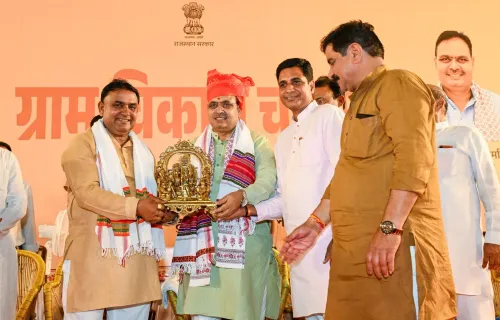
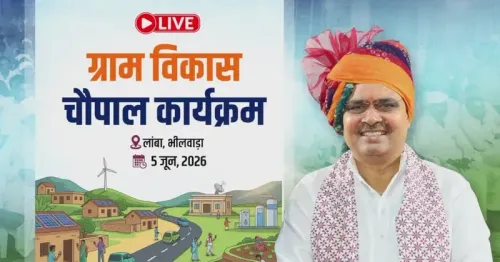
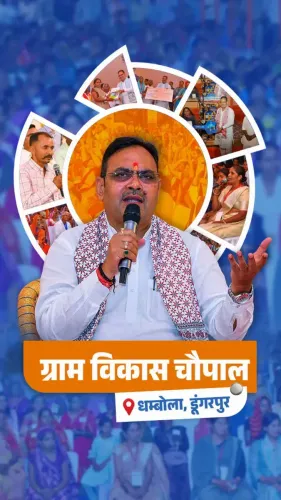
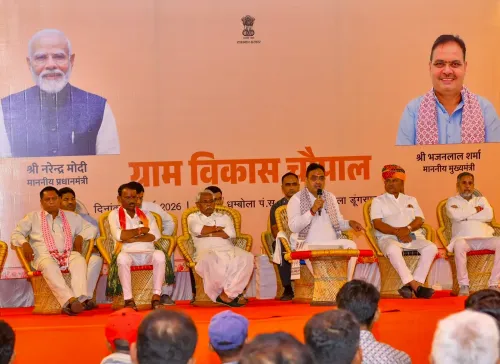
Rajasthan Chief Minister Bhajan Lal Sharma on Saturday, June 6, 2026, participated in a Gram Vikas Chaupal at Lamba Gram Panchayat in Bhilwara district, engaging directly with villagers, farmers, women, youth, and elders to gather feedback on the state government's welfare and development programmes.
Context
Posting on X under the hashtag #GRAM2026, Sharma stated that his government's firm resolve is that 'vikas aur jankalyan ki pratyek yojana ka labh' ('the benefit of every development and public welfare scheme') must reach the last person in every village and hamlet through transparency and effective implementation. He described the chaupal as an opportunity to engage in 'aatmiya samvad' ('heartfelt dialogue') with rural residents, understanding their aspirations, expectations, and valuable suggestions.
The event was held at Lamba Gram Panchayat, a village-level administrative unit in Bhilwara, a district in central Rajasthan known for its rural economy and textile industry. Sharma said the affection, trust, and suggestions received at the chaupal would provide 'new strength and direction' to the resolve of building a 'Viksit Rajasthan' ('Developed Rajasthan').
Policy Backdrop
The Gram Vikas Chaupal format draws on the participatory governance framework institutionalised by the 73rd Constitutional Amendment of 1992, which empowered gram panchayats and gram sabhas as platforms for direct citizen engagement in local development. The BJP government in Rajasthan, which assumed office in December 2023, has consistently emphasised last-mile delivery and transparency in centrally sponsored schemes including PMAY and PM-KISAN.
The chaupal model combines physical public hearings with the state's broader push toward direct benefit transfers, aiming to close gaps between scheme design and ground-level implementation. Similar outreach formats have been deployed in other BJP-governed states to surface delivery bottlenecks at the panchayat level.
Stakeholders and Impact
The primary beneficiaries of the outreach are rural households in Bhilwara, including farmers (annadata), women (matrishakti), youth, and senior citizens — groups that Sharma specifically named in his post. Their direct feedback is positioned by the Chief Minister as an input into the state's development planning under the #GRAM2026 initiative.
For the broader rural population of Rajasthan, the chaupal series signals an administrative intent to address implementation gaps in welfare delivery at the gram panchayat level. Farmers and women-led self-help groups stand to benefit most directly if the feedback loop translates into corrective policy action.
What's Next
Observers will watch for the rollout of further Gram Vikas Chaupals across other Rajasthan districts as part of the #GRAM2026 campaign, and whether inputs gathered at events such as the Bhilwara session inform upcoming state cabinet decisions or budget allocations. If the feedback mechanism is formalised, it could set a template for participatory governance outreach ahead of the next electoral cycle in the state.
Point of View
District-by-district rollout rather than a one-off event, which could build a data trail of local grievances that the administration may cite when defending welfare expenditure. For Chief Minister Sharma, who took office in December 2023, sustained grassroots outreach helps consolidate his identity as an accessible administrator in a large, predominantly rural state. The real test will be whether feedback gathered at chaupals like the one in Bhilwara produces measurable corrections in scheme implementation or remains largely ceremonial.
NationPress
24 Sept 2026
Frequently Asked Questions
What is the Gram Vikas Chaupal organised by Rajasthan CM Bhajan Lal Sharma?
The Gram Vikas Chaupal is a grassroots public dialogue forum where CM Bhajan Lal Sharma meets villagers, farmers, women, and youth at the gram panchayat level to collect direct feedback on the implementation of government welfare and development schemes.
Where was the Gram Vikas Chaupal held on June 6, 2026?
The chaupal was held at Lamba Gram Panchayat in Bhilwara district, Rajasthan, on Saturday, June 6, 2026.
What is the #GRAM2026 campaign in Rajasthan?
#GRAM2026 is a Rajasthan government initiative under Chief Minister Bhajan Lal Sharma aimed at ensuring transparent, last-mile delivery of development and welfare schemes to every village and hamlet in the state.
Who participated in the Bhilwara Gram Vikas Chaupal?
CM Sharma engaged with rural residents including farmers (annadata), women (matrishakti), youth, and senior citizens from the Lamba Gram Panchayat area in Bhilwara.
What is the significance of gram chaupals for rural governance in India?
Gram chaupals are rooted in the participatory governance framework established by the 73rd Constitutional Amendment of 1992, which empowered gram panchayats as platforms for direct citizen engagement, allowing residents to raise concerns and provide input on local development.