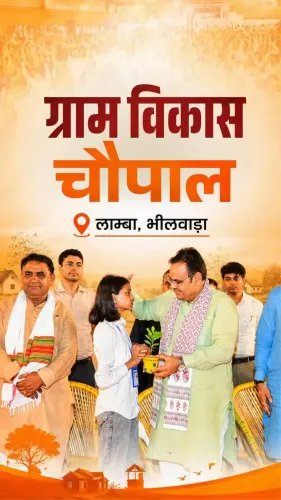
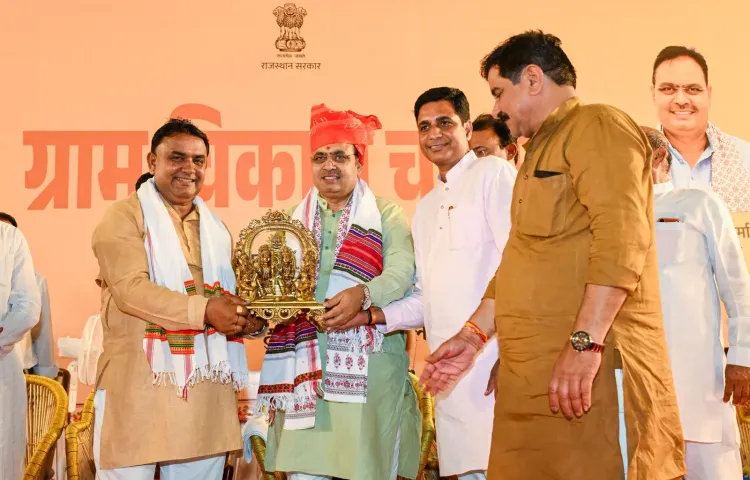
CM Bhajan Lal holds Gram Vikas Chaupal in Lamba village
Synopsis
Rajasthan Chief Minister Bhajan Lal Sharma visited Gram Panchayat Lamba on 5 June 2026 for a Gram Vikas Chaupal, engaging rural women on central welfare schemes including Ujjwala, Jal Jeevan Mission, Jan Dhan, PM Awas, and Lakhpati Didi under the #GRAM2026 outreach drive.
Key Takeaways
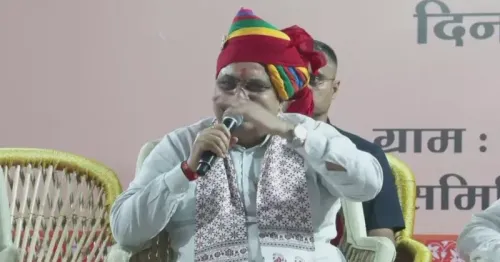
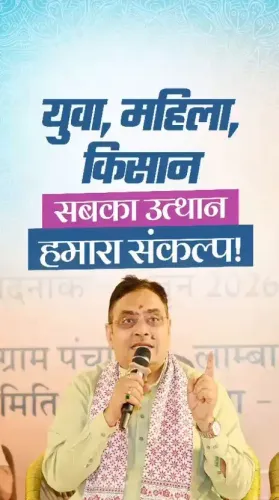
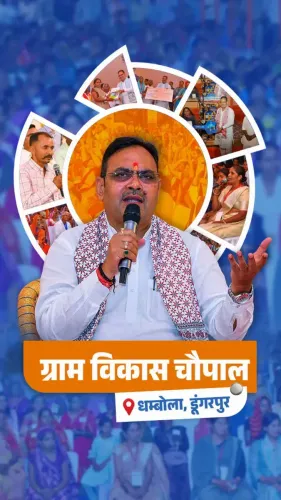
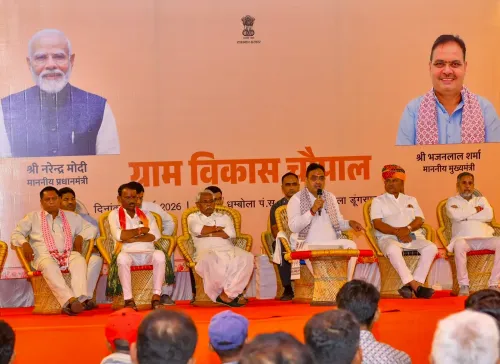
CM Bhajan Lal Sharma held a Gram Vikas Chaupal at Gram Panchayat Lamba on 5 June 2026 , interacting directly with rural women.
Deputy Chief Minister Prem Bairwa and other elected representatives attended the event.
Five central schemes were highlighted: Pradhan Mantri Ujjwala Yojana , Jal Jeevan Mission , PM Awas Yojana , Jan Dhan Yojana , and Lakhpati Didi .
The outreach is part of the structured #GRAM2026 campaign aimed at village-level scheme delivery review across Rajasthan.
The 'double engine government' model — coordinated central and state action — was cited as the driver of rural women's empowerment.
The stated goal is to ensure every rural woman in Rajasthan receives access to education, security, and economic self-reliance under the Viksit Bharat vision.
Rajasthan Chief Minister Bhajan Lal Sharma visited Gram Panchayat Lamba on Friday, 5 June 2026 to hold a Gram Vikas Chaupal (village development dialogue), engaging directly with women from the community in a grassroots outreach exercise under the #GRAM2026 initiative.
Context
Posting on X, CM Sharma described the interaction as an aatmiya samvaad (heartfelt dialogue) with matrishakti — a term used for women as a collective force. He framed the outreach in governance terms: 'True good governance is realised only when the government itself walks to the people's doorstep.' Deputy Chief Minister Prem Bairwa and other elected representatives were present at the event.
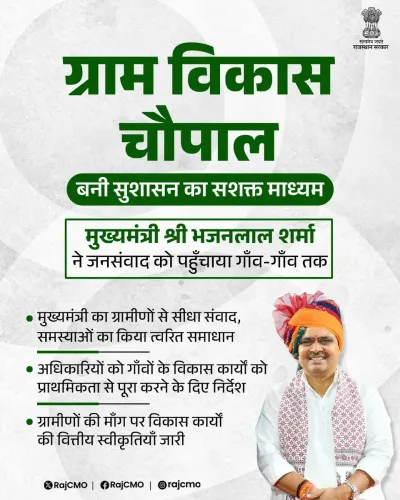
The visit is part of a broader village-level outreach drive that the Rajasthan government has been conducting under the Gram Vikas Chaupal format, taking ministers and officials directly to rural constituencies to review scheme delivery and hear public concerns.
Policy Backdrop
CM Sharma highlighted five central welfare programmes that he said had transformed the lives of rural women. Pradhan Mantri Ujjwala Yojana, launched in May 2016, provided LPG connections to below-poverty-line households, eliminating reliance on smoke-producing solid fuels. Jal Jeevan Mission, announced in 2019, aims to deliver functional tap-water connections to every rural home.
Pradhan Mantri Awas Yojana, rolled out in 2015, targets pucca housing for the rural and urban poor, while Pradhan Mantri Jan Dhan Yojana — launched in August 2014 — brought unbanked households into the formal financial system. The Lakhpati Didi scheme, which supports women self-help groups in crossing an annual income threshold of Rs 1 lakh, was cited as giving women's self-reliance 'a new identity.'
Sharma attributed the momentum behind these schemes to what the BJP calls the 'double engine government' model — coordinated implementation between the Narendra Modi-led central government and the state administration in Rajasthan.
Stakeholders and Impact
The primary beneficiaries highlighted are rural women — particularly those in villages and dhanis (hamlets) — who have historically had limited access to clean fuel, piped water, formal banking, and quality housing. Women's self-help groups linked to the Lakhpati Didi programme represent an organised constituency that both central and state governments have increasingly engaged.
CM Sharma stated that the government's resolve is to ensure every 'sister and daughter' receives new opportunities in education, dignity, security, and self-reliance, framing this as essential to building a 'Viksit Rajasthan' (Developed Rajasthan) and contributing to the national vision of Viksit Bharat (Developed India).
What's Next
The #GRAM2026 hashtag signals that the Gram Vikas Chaupal series is a structured, ongoing campaign rather than a one-off event. Future visits to other gram panchayats across Rajasthan are expected as the government seeks to demonstrate scheme saturation at the village level ahead of potential administrative reviews.
Progress on tap-water connections, LPG coverage, and self-help group enrolment in Rajasthan's rural districts will be the concrete metrics by which the outreach's impact is ultimately measured.
Point of View
The BJP reinforces its 'last-mile delivery' narrative ahead of any electoral cycle. Highlighting five flagship central schemes in a single village interaction is consistent with the party's strategy of bundling welfare achievements under the 'double engine' brand, making scheme credit attribution explicit at the grassroots. The #GRAM2026 tag suggests a coordinated, calendar-driven rollout rather than ad hoc outreach, pointing to a state-level campaign infrastructure designed to generate sustained visibility. Whether scheme saturation in rural Rajasthan matches the political messaging will be the real test of this initiative's credibility.
NationPress
25 Sept 2026
Frequently Asked Questions
What is Gram Vikas Chaupal in Rajasthan?
Gram Vikas Chaupal is a village-level public outreach programme in Rajasthan where ministers and officials travel directly to gram panchayats to engage residents, review welfare scheme delivery, and hear local concerns. CM Bhajan Lal Sharma held one such chaupal at Gram Panchayat Lamba on 5 June 2026.
What is the Lakhpati Didi scheme?
Lakhpati Didi is a central government initiative that supports women's self-help groups in achieving an annual household income of at least Rs 1 lakh through skill training, micro-enterprise support, and financial linkages, with the goal of promoting women's economic self-reliance in rural areas.
What is the double engine government model the BJP refers to?
The 'double engine government' is a BJP phrase describing the coordinated implementation of welfare schemes when both the central government and a state government are led by the BJP, arguing that aligned political leadership accelerates scheme delivery to beneficiaries.
What is the #GRAM2026 initiative?
Based on CM Sharma's post, #GRAM2026 appears to be a structured campaign tag associated with the Gram Vikas Chaupal outreach series being conducted by the Rajasthan government in 2026. The full scope of the initiative has not been officially detailed in publicly available sources.
Which welfare schemes for women did CM Bhajan Lal Sharma highlight at Lamba?
CM Sharma highlighted five schemes: Pradhan Mantri Ujjwala Yojana (clean cooking fuel), Jal Jeevan Mission (tap water to rural homes), PM Awas Yojana (pucca housing), PM Jan Dhan Yojana (financial inclusion), and Lakhpati Didi (women's economic empowerment through self-help groups).