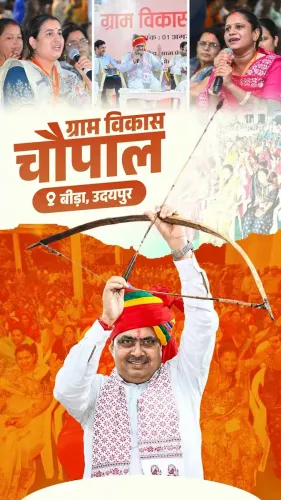
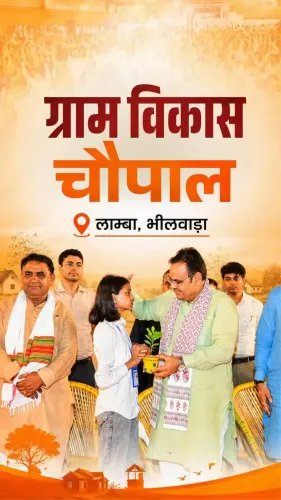
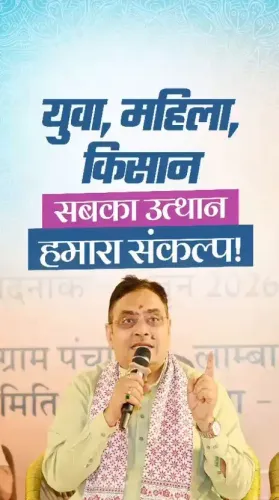
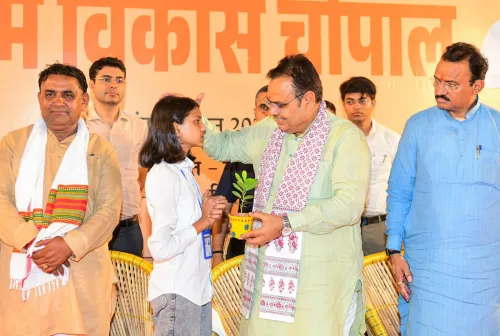
CM Bhajan Lal chairs Gram Vikas Chaupal in Dungarpur
Synopsis
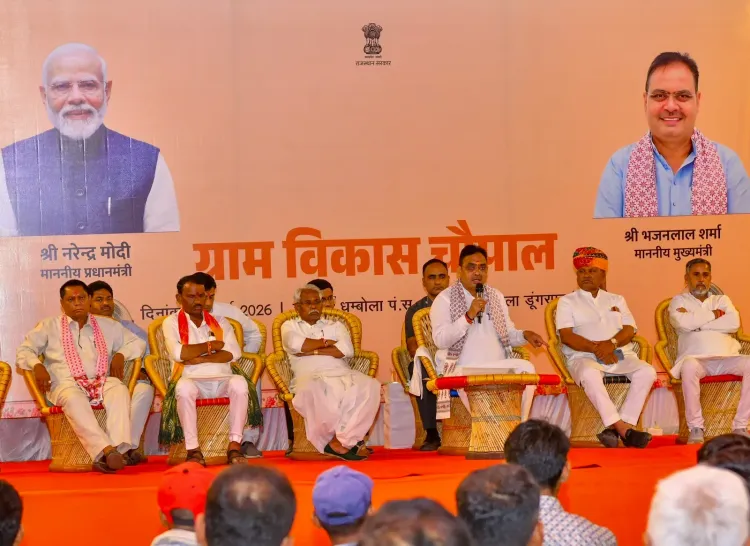
Rajasthan CM Bhajan Lal Sharma attended a Gram Vikas Chaupal at Dhambola in Dungarpur on 22 May 2026, interacting with youth, farmers and senior citizens while distributing scheme cheques, and reaffirming the state's commitment to last-mile welfare delivery under central programmes.
Key Takeaways
Bhajan Lal Sharma attended a Gram Vikas Chaupal at Dhambola Gram Panchayat , Dungarpur district , on 22 May 2026 .
Cheques were distributed under multiple government schemes to beneficiaries from rural, farming and elderly communities.
The CM cited Skill India , Digital India , Startup India and Pradhan Mantri Mudra Yojana as key drivers of youth self-reliance in the region.
Farmers in the district are being encouraged to adopt micro-irrigation and natural farming techniques under ongoing state and central programmes.
The government reiterated its goal of reaching the 'last person in line' in building a developed Rajasthan .
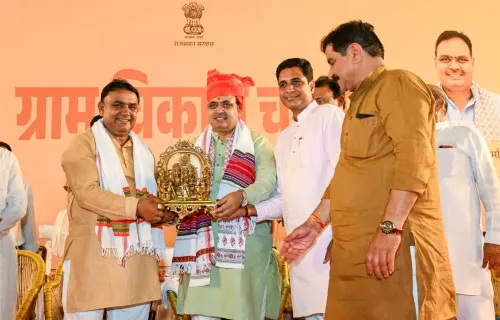
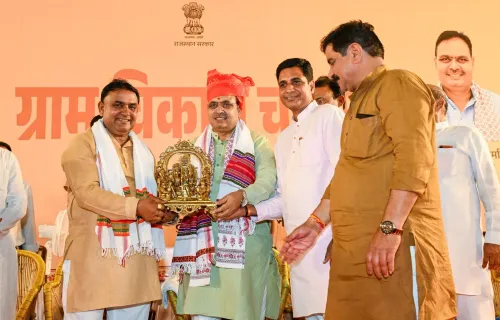
Rajasthan Chief Minister Bhajan Lal Sharma on Friday, 22 May 2026, participated in a Gram Vikas Chaupal (village development consultation) held at Dhambola Gram Panchayat in Dungarpur district, where he interacted with youth, farmers, and senior citizens and distributed benefit cheques under various government schemes.
Context
The Chief Minister attended the grassroots gathering to hear first-hand experiences and suggestions from different segments of the rural community. In his post, Sharma noted: 'I got the opportunity to learn about the experiences and suggestions of youth, farmers and elders at the Gram Vikas Chaupal held in Dhambola Gram Panchayat of Dungarpur district. Along with this, cheques were distributed under various schemes.'
Dungarpur is a southern Rajasthan district with a significant tribal population, where panchayat-level outreach programmes have been used to publicise welfare delivery and gather community feedback. The chaupal format — an open village assembly — is a traditional mechanism that the state government has revived to bridge the gap between policy and beneficiary.
Policy Backdrop
Sharma credited Prime Minister Narendra Modi's guidance for initiatives including Skill India, Digital India, Startup India, and the Pradhan Mantri Mudra Yojana, stating these are making youth self-reliant. 'Today's youth is moving towards becoming a job creator,' he wrote, reflecting the Centre's stated shift from job-seeking to entrepreneurship.
The Pradhan Mantri Mudra Yojana, launched in April 2015, provides collateral-free micro-loans to small entrepreneurs. The Digital India programme, inaugurated on 1 July 2015, expanded broadband and e-governance in rural areas, while Startup India, announced in January 2016, offered tax incentives and simplified registration for new ventures. Skill India, rolled out in July 2015, aligned vocational training with industry requirements.
On agriculture, the Chief Minister highlighted that farmers are adopting modern technology, micro-irrigation, and natural farming to make agriculture more prosperous — a reference to state and central programmes promoting sustainable and technology-driven farm practices.
Stakeholders and Impact
Three distinct groups were addressed at the chaupal: rural youth, farming communities, and senior citizens. For the elderly, Sharma underscored that 'many welfare schemes for the respect, health, and social security of elders are being effectively implemented' — pointing to pension and healthcare entitlements under both state and central programmes.
The distribution of cheques at the event signals on-the-spot benefit delivery, a format the BJP-led state government has used across Rajasthan to demonstrate saturation of beneficiary lists in rural constituencies. Dungarpur's tribal communities stand among the primary intended beneficiaries of micro-credit and digital-access schemes in the region.
What's Next
Sharma concluded with a statement of intent: 'Our resolve is to ensure the participation of every section in building a developed Rajasthan and to take the benefits of development to the last person in line' — echoing the long-standing policy language of inclusive, last-mile delivery.
Progress on Mudra loan disbursements and Digital India connectivity targets for Rajasthan districts is expected to feature in the state's next budget session, which will serve as a key measure of whether grassroots consultations like the Dhambola chaupal translate into accelerated scheme implementation across tribal and rural belts.
Point of View
On-ground benefit delivery in tribal and rural constituencies ahead of and between electoral cycles. By personally attending and distributing cheques, Sharma reinforces the party's claim of direct governance outreach in a district that has historically leaned toward opposition parties. The explicit linkage to PM Modi's flagship schemes — Mudra, Digital India, Startup India — frames state delivery as an extension of central vision, a narrative that serves both levels of the party. The 'last person in line' formulation, repeated across BJP governments, will be tested against measurable outcomes such as Mudra disbursement data and Digital India connectivity figures when the next state budget is presented.
NationPress
20 Sept 2026
Frequently Asked Questions
What is a Gram Vikas Chaupal in Rajasthan?
A Gram Vikas Chaupal is an open village-level consultation organised by the Rajasthan government where officials and ministers interact directly with residents — including farmers, youth and senior citizens — to hear feedback and distribute welfare scheme benefits on the spot.
Why did CM Bhajan Lal Sharma visit Dungarpur?
Bhajan Lal Sharma visited Dungarpur on 22 May 2026 to attend the Gram Vikas Chaupal at Dhambola Gram Panchayat , where he engaged with local communities and distributed cheques under various central and state government schemes.
What schemes were highlighted at the Dungarpur chaupal?
The Chief Minister highlighted Skill India , Digital India , Startup India , and Pradhan Mantri Mudra Yojana as programmes benefiting rural youth, alongside micro-irrigation and natural farming initiatives for farmers and social security schemes for senior citizens.
What is Pradhan Mantri Mudra Yojana?
Pradhan Mantri Mudra Yojana, launched in April 2015 , is a central government scheme that provides collateral-free micro-loans to small entrepreneurs and self-employed individuals to support income generation and self-reliance.
What is the significance of Dungarpur district in Rajasthan?
Dungarpur is a southern Rajasthan district with a large tribal population. It is a focus area for welfare and development programmes, making it a significant venue for government outreach on schemes targeting rural youth, farmers and marginalised communities.