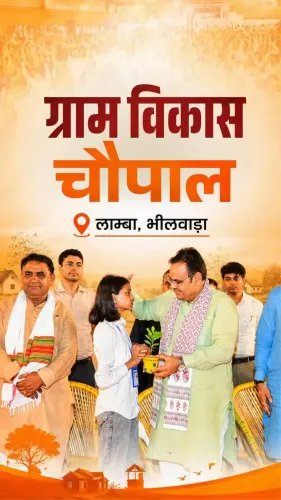
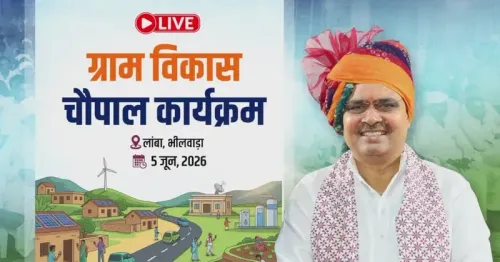
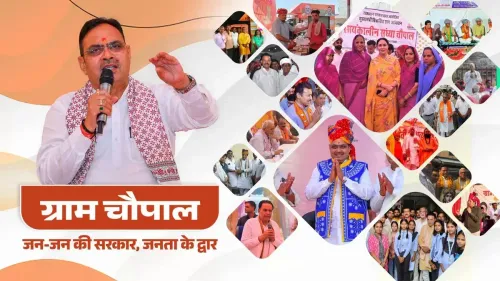
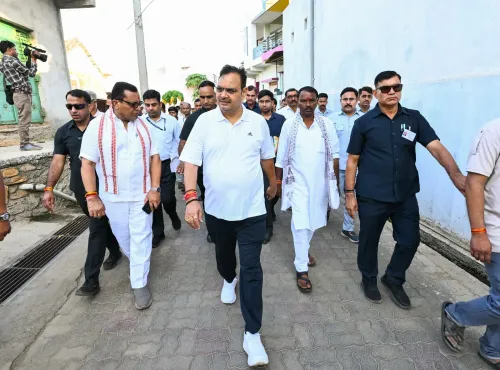
CM Bhajan Lal uses Gram Vikas Choupal for rural outreach
Synopsis
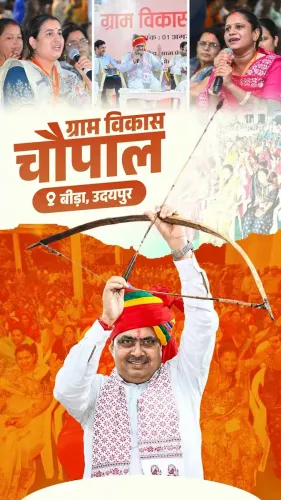
Rajasthan Chief Minister Bhajan Lal Sharma has reaffirmed his government's use of Gram Vikas Choupal forums to engage rural residents, gather grassroots feedback, and ensure transparent delivery of development schemes as part of the Vikasit Rajasthan vision.
Key Takeaways
CM Bhajan Lal Sharma posted on 22 May 2026 about the ongoing Gram Vikas Choupal rural outreach programme in Rajasthan.
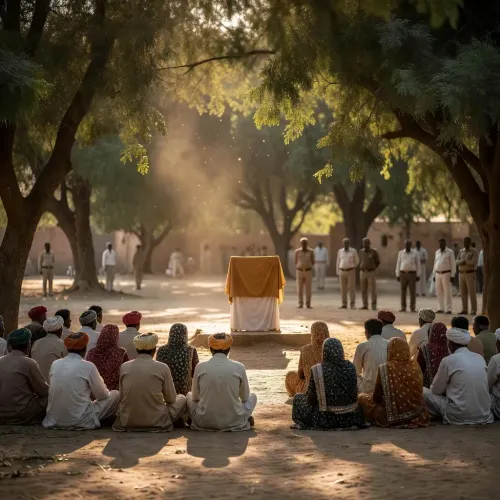
The programme holds village-level forums to establish direct dialogue between the government and rural residents across the state.
The government's stated goal is to ensure every development scheme reaches every village with full transparency.
Public suggestions gathered at the choupals are described by CM Sharma as the foundation of the Vikasit Rajasthan development vision.
The initiative has been a priority of the BJP government since it took office in December 2023 following the Rajasthan assembly elections.
Future phases of the programme are expected to continue, with feedback potentially informing new scheme guidelines and budget provisions.
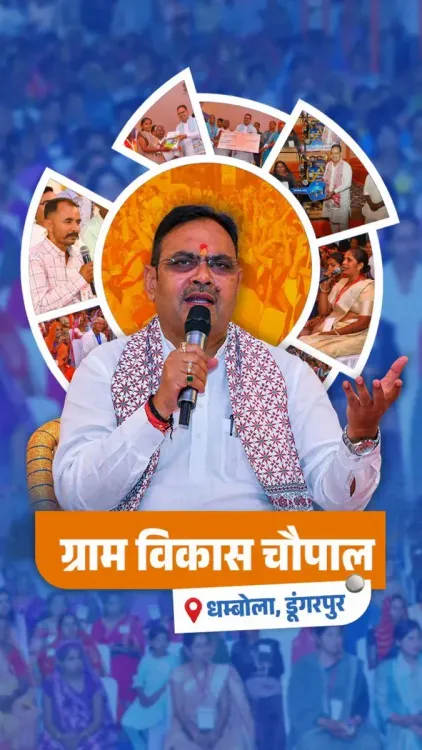
Rajasthan Chief Minister Bhajan Lal Sharma on Friday, 22 May 2026, reaffirmed his government's commitment to sustained rural engagement through the Gram Vikas Choupal programme, stating that the initiative is being used to understand the aspirations of villagers and ensure transparent delivery of development schemes across every village in the state.
Context
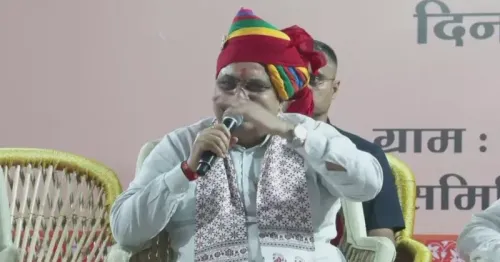
In the post, CM Sharma wrote: 'ग्राम विकास चौपाल' के माध्यम से हमारी सरकार लगातार ग्रामीण भाई-बहनों से संवाद स्थापित कर उनकी आकांक्षाओं को करीब से जानने का प्रयास कर रही है — 'Through the Gram Vikas Choupal, our government is continuously establishing dialogue with rural brothers and sisters and trying to understand their aspirations closely.' He added that affection and valuable suggestions received at the choupal would form the foundation of a 'Vikasit Rajasthan' (Developed Rajasthan).
The Gram Vikas Choupal programme consists of village-level public interaction forums where government representatives meet rural residents directly to gather feedback on development schemes and address local concerns. The initiative has been a key plank of the BJP government's outreach strategy since it assumed office in December 2023 following the Rajasthan assembly elections.
Policy Backdrop
Rajasthan has a long tradition of village-level platforms — choupals and jan sunwais — used by successive administrations for grievance redressal and development planning. The current government has sought to institutionalise this practice with a sharper focus on scheme transparency and last-mile delivery.
The Vikasit Rajasthan vision, which CM Sharma referenced in his post, is the state-level articulation of comprehensive development goals spanning infrastructure, welfare, and governance — broadly aligned with the national push for grassroots beneficiary connect. The central government's own outreach model has similarly emphasised direct engagement with rural populations to reduce leakages in welfare delivery and tailor policy to local needs.
The BJP's emphasis on direct rural contact has been a consistent feature of state governments it leads, positioning village meetings not merely as symbolic exercises but as structured feedback mechanisms meant to inform scheme design and budget priorities.
Stakeholders and Impact
Rural residents and village panchayats across Rajasthan are the primary stakeholders of the Gram Vikas Choupal exercise. For villagers, the forums represent a direct channel to communicate unmet needs and flag gaps in scheme implementation to senior government functionaries.
For the state government, the choupals serve a dual purpose: gathering actionable intelligence on ground-level delivery failures, and reinforcing the administration's visible presence in rural constituencies. Rajasthan, with a large agrarian population spread across geographically dispersed districts, has historically seen uneven penetration of centrally and state-sponsored welfare schemes.
Panchayat bodies are expected to play a facilitative role in organising these forums and channelling collected suggestions upward through the administrative hierarchy, making them both participants and implementers in the feedback loop.
What's Next
Future phases of the Gram Vikas Choupal programme are expected to continue across Rajasthan's rural districts, with the government signalling that suggestions gathered at these forums will directly inform policy decisions and scheme guidelines going forward.
The key question for observers will be whether the feedback collected translates into measurable changes in scheme delivery, new budget provisions, or revised administrative protocols — the concrete outcomes that would distinguish the choupal exercise from routine political outreach. CM Sharma's framing of public suggestions as the 'foundation' of Vikasit Rajasthan places an implicit benchmark on the programme's ability to drive visible, ground-level change in rural Rajasthan.
Point of View
The government is tying its development narrative directly to grassroots participation — a politically useful posture that also carries a delivery obligation. The approach mirrors the central government's Viksit Bharat outreach model, suggesting a deliberate alignment of state and national messaging ahead of future electoral cycles. Whether the choupals produce tangible policy shifts or remain primarily a visibility exercise will determine their long-term credibility with rural constituencies.
NationPress
7 Oct 2026
Frequently Asked Questions
What is Gram Vikas Choupal in Rajasthan?
Gram Vikas Choupal is a village-level public interaction programme run by the Rajasthan government where officials meet rural residents to gather feedback on development schemes and understand local needs. The BJP government has prioritised the initiative since taking office in December 2023.
What is Vikasit Rajasthan?
Vikasit Rajasthan is the Rajasthan government's state-level development vision focused on comprehensive progress in infrastructure, welfare, and governance, broadly aligned with national goals for grassroots development.
What did CM Bhajan Lal Sharma say about rural development?
CM Bhajan Lal Sharma said his government is continuously using the Gram Vikas Choupal to establish dialogue with rural residents and understand their aspirations, with a firm resolve to deliver every development scheme to every village transparently.
How does Gram Vikas Choupal work?
The programme organises village-level forums across Rajasthan where government representatives interact directly with rural residents, collect suggestions, and receive feedback on how welfare schemes are being implemented at the grassroots level.
What is the BJP government's rural outreach strategy in Rajasthan?
Since winning the December 2023 assembly elections, the Rajasthan BJP government has focused on direct rural engagement through platforms like Gram Vikas Choupal to improve scheme delivery, reduce leakages, and maintain a visible administrative presence in rural constituencies.