CM Bhajan Lal Visits Dungarpur Village, Pushes Vikasit Rajasthan
Synopsis
Rajasthan Chief Minister Bhajan Lal Sharma made a morning visit to Dhambola Gram Panchayat in Dungarpur on 22 May 2026, engaging with villagers and praying at the Govardhan Ji temple, while reaffirming the 'Double Engine Government's' commitment to the Vikasit Rajasthan vision of connecting every village with basic amenities and self-reliance.
Key Takeaways
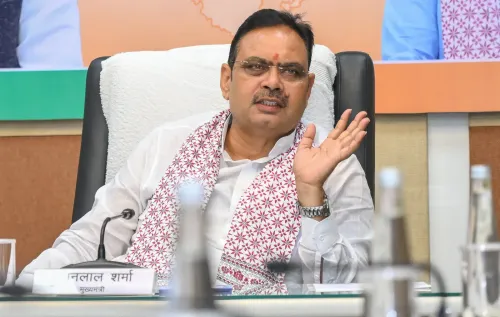
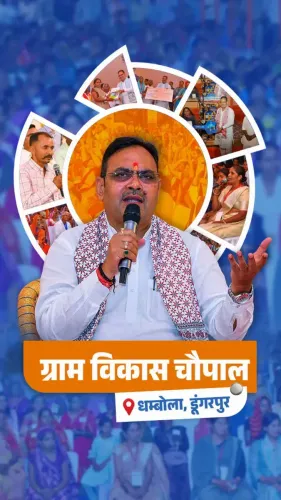
CM Bhajan Lal Sharma conducted an early-morning visit to Dhambola Gram Panchayat, Dungarpur district on 22 May 2026 .
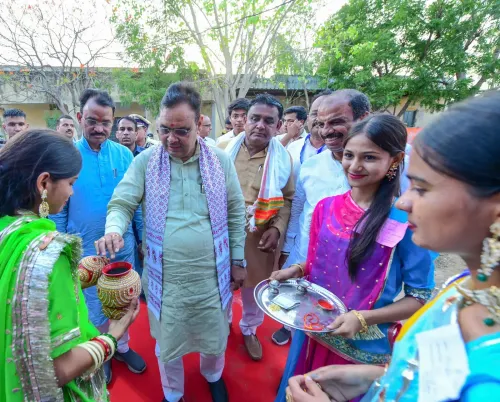
He held direct conversations with mothers, sisters, youth, and elders to understand their experiences and suggestions.
Sharma offered prayers at the Govardhan Ji temple for the prosperity of Rajasthan's residents.
The visit was framed under the Vikasit Rajasthan vision, aligned with the national Viksit Bharat 2047 goal.
The Chief Minister invoked the 'Double Engine Government' concept, pledging to connect every village with basic infrastructure and self-reliance.
Dungarpur , a tribal-majority district in southern Rajasthan, is a focus area for rural infrastructure delivery.
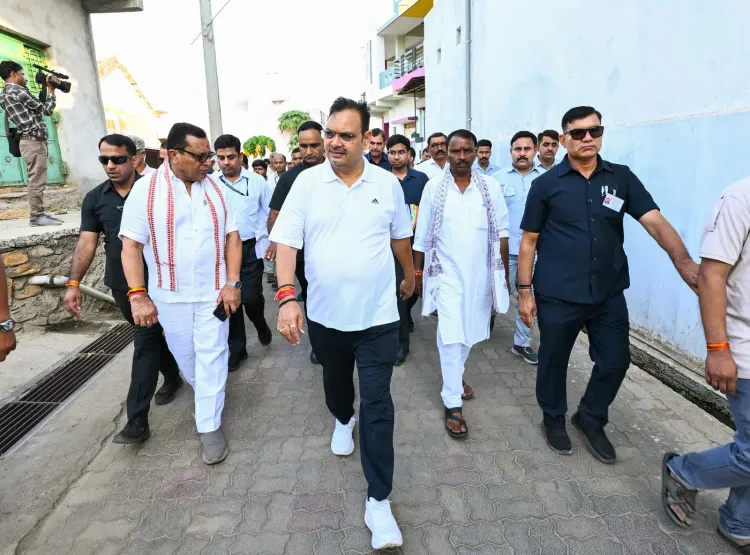
Rajasthan Chief Minister Bhajan Lal Sharma visited Dhambola Gram Panchayat in Dungarpur district on the morning of 22 May 2026, interacting with villagers, offering prayers at a local temple, and reaffirming his government's commitment to rural development under the Vikasit Rajasthan vision.
Context
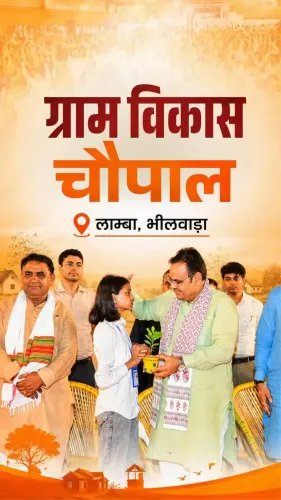
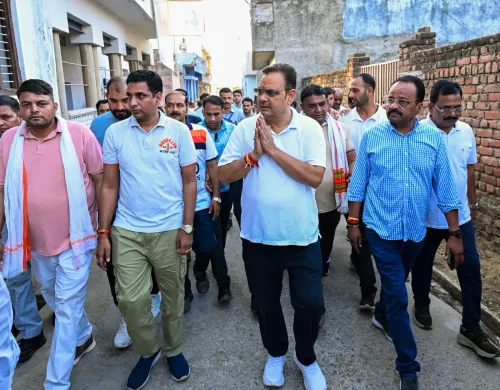
Sharma described the early-morning walk through Dhambola as an experience of 'gramin jeevan ki sahajta' — the simplicity of rural life — alongside the natural beauty and warmth of the village. He engaged in direct conversation with mothers, sisters, youth, and elders, listening to their experiences, suggestions, and sentiments. The Chief Minister also visited the Govardhan Ji temple to pray for the prosperity and well-being of the people of Rajasthan.
In his post, Sharma noted that the affection and trust of villagers inspires him to work with greater dedication toward the 'sarvangeen vikas' — all-round development — of the state.
Policy Backdrop
The visit fits within the broader Vikasit Rajasthan framework, the state-level development vision aligned with the national Viksit Bharat 2047 goal of self-reliant villages equipped with basic amenities. Since the BJP government took office in December 2023, the administration has emphasised grassroots outreach as a tool for both feedback collection and scheme delivery monitoring.
Sharma invoked the concept of the 'Double Engine Government' — BJP's term for aligned central and state administrations — asserting that it is working continuously to connect every village in Rajasthan with foundational infrastructure, self-reliance, and development. Central programmes such as Pradhan Mantri Awas Yojana-Gramin and Jal Jeevan Mission form the delivery backbone reinforced by such state-level outreach visits.
Stakeholders and Impact
Dungarpur district, located in southern Rajasthan, has a significant tribal population and has been a focus area for rural infrastructure schemes. Gram panchayat-level visits by the Chief Minister signal direct administrative attention to communities that are often among the last to receive the benefits of centrally sponsored programmes.
For local residents — farmers, women's self-help groups, and youth — such visits provide a rare direct channel to state leadership. Village elders and mothers who participated in the conversation represent constituencies whose feedback can influence district-level budget prioritisation and scheme implementation timelines.
What's Next
The Rajasthan government's stated resolve to link every village with basic facilities, self-reliance, and development under Vikasit Rajasthan will be tested in forthcoming state budget allocations and district-level rollout updates — particularly for rural water supply, roads, and housing in southern Rajasthan districts like Dungarpur. Observers will watch whether this grassroots outreach translates into measurable acceleration of scheme delivery in tribal-majority areas.
Point of View
Such as a temple visit, with administrative feedback loops at the gram panchayat level. By personally visiting a tribal-majority district in southern Rajasthan, Sharma is signalling that the Vikasit Rajasthan agenda extends beyond urban centres to historically underserved communities. The invocation of the 'Double Engine Government' serves a dual purpose: it credits central scheme funding while reinforcing state-level political ownership of delivery outcomes. The real measure of such visits will come when district-level data on housing, water, and road coverage in Dungarpur is next published.
NationPress
22 Sept 2026
Frequently Asked Questions
Why did CM Bhajan Lal Sharma visit Dungarpur?
CM Bhajan Lal Sharma visited Dhambola Gram Panchayat in Dungarpur on 22 May 2026 to interact directly with villagers, gather feedback on development needs, and reaffirm the state government's commitment to the Vikasit Rajasthan rural development vision.
What is Vikasit Rajasthan?
Vikasit Rajasthan is the Rajasthan government's state-level development vision, aligned with the national Viksit Bharat 2047 goal, aimed at connecting every village with basic amenities, self-reliance, and infrastructure.
What is the 'Double Engine Government' that CM Sharma mentioned?
The 'Double Engine Government' is a BJP term referring to aligned BJP governments at both the central and state levels, which the party argues allows faster and more coordinated delivery of welfare and development programmes.
Where is Dungarpur district located?
Dungarpur is a district in southern Rajasthan with a significant tribal population. It has been a priority area for rural infrastructure schemes under both central and state government programmes.
What schemes are being implemented in Rajasthan's villages?
Central programmes such as Pradhan Mantri Awas Yojana-Gramin and Jal Jeevan Mission form the primary delivery backbone for rural housing and water supply in Rajasthan, supplemented by state-level initiatives under the Vikasit Rajasthan framework.