CM Bhajan Lal Sharma Rallies Rajasthan Villages for BJP in Panchayat Polls
Synopsis
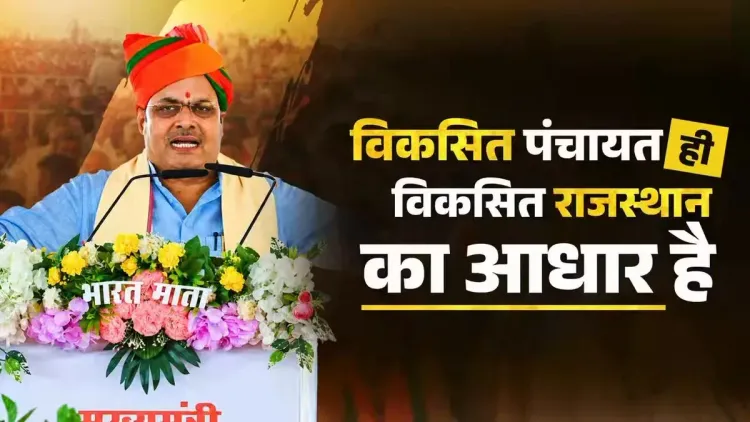
Rajasthan Chief Minister Bhajan Lal Sharma called on rural voters to support BJP in panchayat elections, framing the local ballot as the foundation of the state's Viksit Rajasthan 2047 development goal and a decision that will shape future generations.
Key Takeaways
Rajasthan CM Bhajan Lal Sharma posted a direct appeal on 30 September 2026 urging voters to back BJP in panchayat elections.
He framed a developed panchayat as the 'foundation of a developed Rajasthan,' tying local governance to the Viksit Bharat 2047 national vision.
The post positions the panchayat ballot as a generational decision affecting village development and future generations.
Panchayati Raj institutions under the 73rd Constitutional Amendment control local infrastructure and welfare delivery across Rajasthan's large rural population.
BJP won the Rajasthan assembly elections in December 2023 with rural development as a core plank; panchayat polls are the next tier of that mandate.
The messaging mirrors BJP's broader national pattern of linking grassroots elections to state and national development narratives.
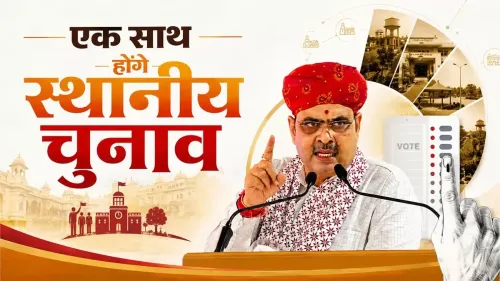
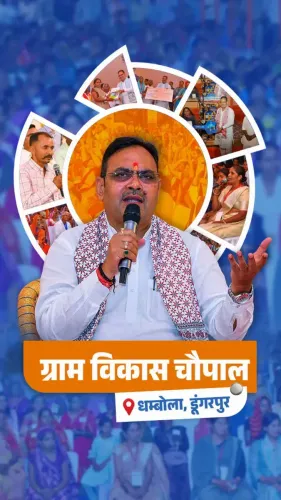
With panchayat elections on the horizon, Rajasthan Chief Minister Bhajan Lal Sharma has taken his campaign directly to the village square — urging rural voters to back BJP at the grassroots level and framing that single ballot as a generational decision for their communities.
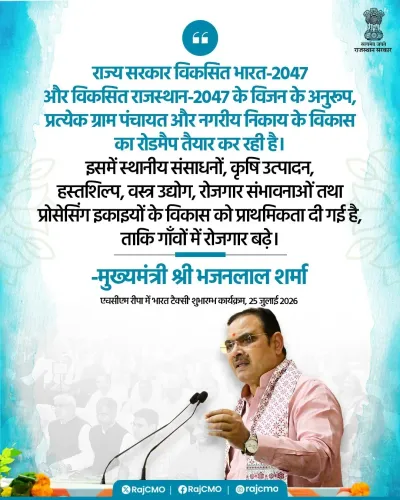
Posting on 30 September 2026, Sharma wrote in Hindi: 'Viksit panchayat hi viksit Rajasthan ka aadhar hai' — 'A developed panchayat is the foundation of a developed Rajasthan.' He asked voters to extend their 'blessings' to BJP at the panchayat level to fulfil what he called the resolve of a Viksit Rajasthan by 2047, adding that 'your one decision will determine the direction of your village's development and the future of generations to come.'
Tying the Village Ballot to a 2047 Vision
The Viksit Bharat 2047 framework — Prime Minister Narendra Modi's national vision for India to become a fully developed economy by the centenary of independence — has become a recurring anchor in BJP's multi-level campaign language. Sharma's post is a deliberate translation of that macro-ambition into the most micro unit of Indian democracy: the village panchayat. The logic is explicit — national targets, the message goes, can only be met if the last-mile institution of governance is in aligned hands.
Panchayati Raj institutions, constitutionally empowered under the 73rd Amendment, are responsible for local infrastructure, sanitation, water supply, and rural welfare schemes. Rajasthan, a state with a vast and predominantly rural population, has hundreds of gram panchayats whose composition directly shapes how central and state funds reach villages. The political stakes at this tier, though quieter than assembly contests, are substantial.
BJP's Grassroots Consolidation Play in Rajasthan
Sharma's BJP formed the Rajasthan government in December 2023 after a decisive assembly election victory, with rural development and panchayat strengthening among its stated priorities. Local body elections represent the next logical front — a chance to extend that mandate down to the gram sabha level and build a durable organisational network ahead of future state and national contests.
The messaging pattern is not new to BJP. Ahead of rural polls across multiple states, the party has consistently linked panchayat-level support to higher development narratives, turning what might otherwise be hyper-local contests about roads and water into referendums on the broader governance project. Sharma's post follows that playbook with precision.
For village voters across Rajasthan, the pitch is both aspirational and direct: the future your children inherit, the CM is saying, begins with the choice you make in your own panchayat. Whether that argument converts at the ballot box will be the real measure of how deep BJP's 2023 mandate actually runs.
Point of View
The party attempts to mobilise voters who might otherwise treat local polls as low-stakes. For BJP, winning panchayat seats in Rajasthan also means embedding a cadre network that can be activated in future assembly and Lok Sabha cycles. The real test is whether the 2023 assembly mandate has genuinely percolated to the gram sabha level or whether rural fatigue with incumbency creates unexpected resistance.
NationPress
30 Sept 2026
Frequently Asked Questions
Why is Rajasthan CM Bhajan Lal Sharma appealing for votes in panchayat elections?
Sharma is campaigning for BJP ahead of Rajasthan panchayat elections, arguing that village-level governance is the foundation of the state's broader development goals under the Viksit Rajasthan 2047 vision.
What is Viksit Rajasthan 2047?
Viksit Rajasthan 2047 is the state-level articulation of Prime Minister Modi's Viksit Bharat 2047 vision, which aims to make India a fully developed nation by the centenary of independence; Sharma has adopted this framework as a governing theme for Rajasthan.
What powers do panchayats have in Rajasthan?
Under the 73rd Constitutional Amendment, panchayati raj institutions in Rajasthan are responsible for local infrastructure, sanitation, water supply, and the delivery of rural welfare schemes, making their political composition directly relevant to how state and central funds reach villages.
When did BJP come to power in Rajasthan?
BJP formed the Rajasthan government in December 2023 after winning the state assembly elections, with rural development and panchayat strengthening among its stated priorities.
Why do panchayat elections matter for a state ruling party like BJP?
Winning panchayat seats allows a ruling party to extend its organisational network to the grassroots, ensure local delivery of government schemes, and build a cadre base that can be mobilised in future assembly and national elections.