CM Bhajan Lal Calls Rajasthan to Vote in Panchayat Phase 3
Synopsis
Rajasthan Chief Minister Bhajan Lal Sharma has urged all voters to exercise their franchise in Phase 3 of the state panchayat elections, with a special appeal to first-time young voters to participate enthusiastically and inspire others to vote.
Key Takeaways
Phase 3 of Rajasthan's panchayat elections is taking place on November 3, 2026 .
Chief Minister Bhajan Lal Sharma called every vote 'the cornerstone of a strong democracy.' First-time young voters received a dedicated appeal to vote with 'enthusiasm, awareness and responsibility.' Panchayat elections are governed by the 73rd Constitutional Amendment of 1992 , which established India's three-tier Panchayati Raj system.
Rajasthan's panchayat polls are conducted by the state election commission and determine local governance across gram, block and district levels.
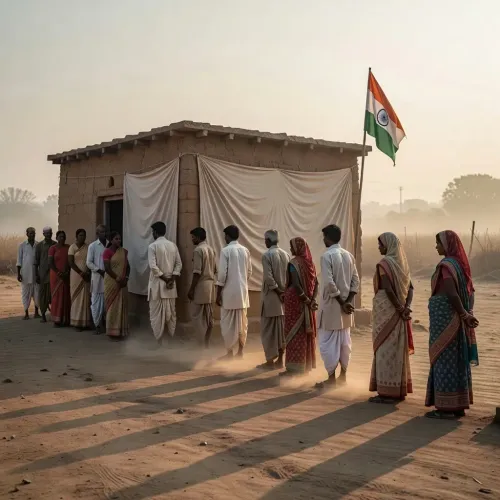
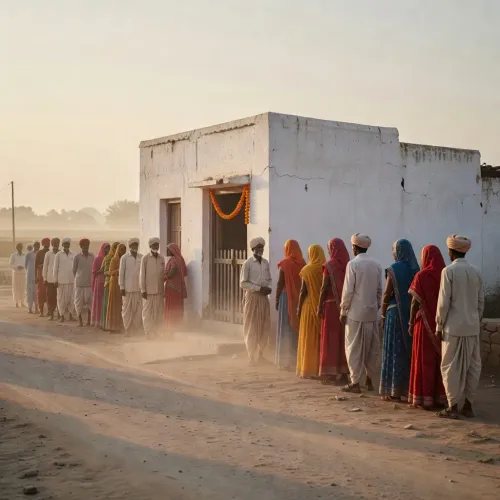
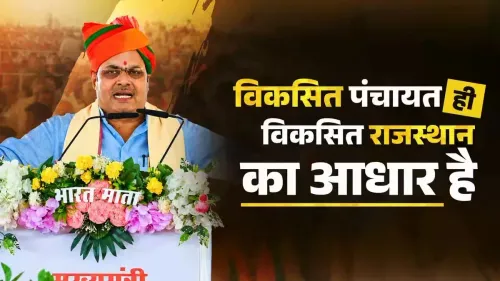
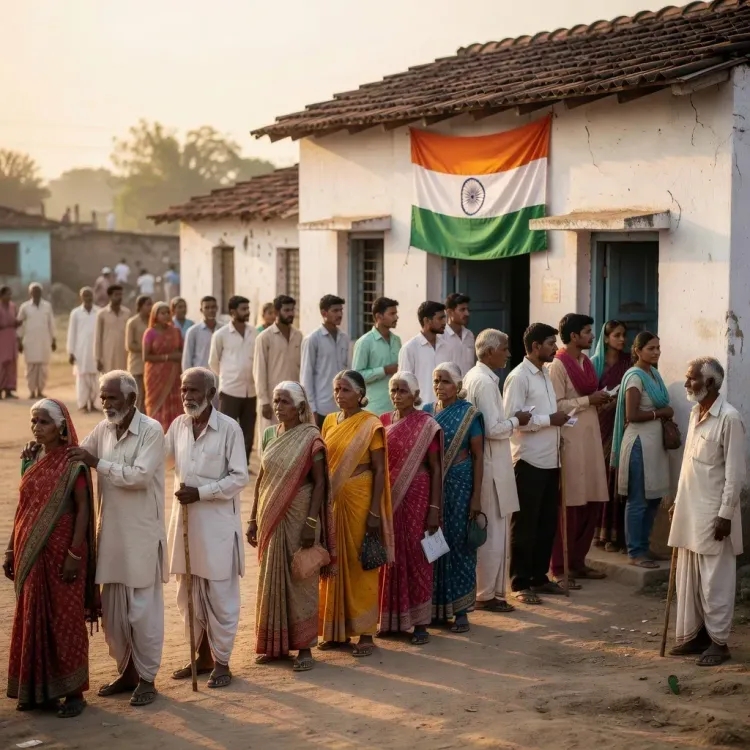
Every vote is a brick in democracy's foundation — and on Tuesday, November 3, 2026, Rajasthan Chief Minister Bhajan Lal Sharma wants every citizen of the state to lay theirs. With the third phase of Rajasthan's panchayat elections underway, the Chief Minister has issued a direct appeal to voters to step out, participate, and strengthen the architecture of rural self-governance.
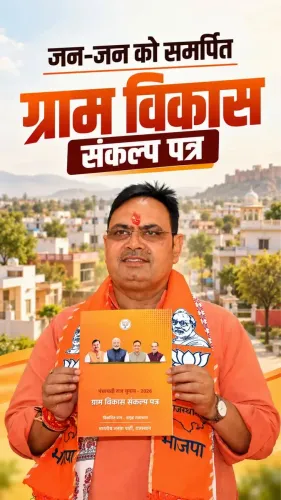
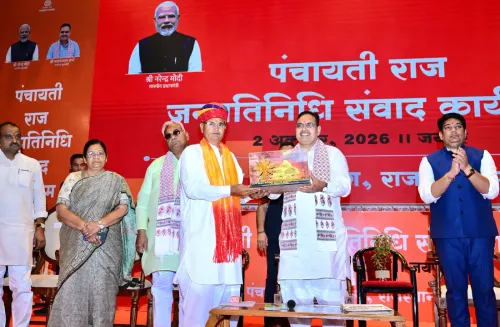
In a post on X, Sharma wrote: 'सशक्त लोकतंत्र की आधारशिला है प्रत्येक मत!' — 'Every vote is the cornerstone of a strong democracy!' He urged all voters in the state to exercise their franchise without fail, calling the occasion a 'लोकतंत्र का महापर्व' — a 'great festival of democracy.'
A Special Call to First-Time Voters
The Chief Minister reserved particular attention for first-time young voters, calling on them to cast their ballots 'with full enthusiasm, awareness and responsibility.' He also asked them to motivate family members and acquaintances to vote — turning individual participation into a community act.
This emphasis on youth turnout is not incidental. Panchayat elections, which operate closer to the ground than any other tier of Indian democracy, often see lower urban media attention despite their enormous local consequence — determining who governs roads, water, and welfare at the village level.
What Panchayat Elections Actually Decide
Rajasthan's panchayat polls elect representatives across the three-tier Panchayati Raj system — gram panchayat, panchayat samiti, and zila parishad — a structure rooted in the 73rd Constitutional Amendment of 1992, which mandated devolution of power to rural local bodies across India. These elected bodies hold sway over rural development funds, public infrastructure, and local dispute resolution.
The third phase is a critical leg in what has been a multi-phase exercise managed by the Rajasthan State Election Commission. Voter turnout in this phase will be watched closely as an indicator of public engagement with grassroots governance — and as a bellwether for the health of rural democracy in one of India's largest states.
Point of View
Strong participation in village-level polls also helps sustain organisational reach into rural constituencies ahead of future assembly cycles.
NationPress
3 Nov 2026
Frequently Asked Questions
When is Phase 3 of Rajasthan panchayat elections 2026?
Phase 3 of the Rajasthan panchayat elections is being held on November 3, 2026 , as confirmed by Chief Minister Bhajan Lal Sharma's appeal to voters.
What did Bhajan Lal Sharma say about panchayat elections?
Chief Minister Bhajan Lal Sharma called every vote 'the cornerstone of a strong democracy' and urged all Rajasthan voters — especially first-time young voters — to exercise their franchise and inspire others to do the same.
What is the Panchayati Raj system in India?
The Panchayati Raj system is India's three-tier rural local governance structure — gram panchayat, panchayat samiti, and zila parishad — established through the 73rd Constitutional Amendment of 1992 to devolve power to village-level bodies.
Who conducts panchayat elections in Rajasthan?
Panchayat elections in Rajasthan are conducted by the Rajasthan State Election Commission , which is independent of the national Election Commission of India.
Why are panchayat elections important for rural India?
Panchayat elections determine who governs rural roads, water supply, local welfare schemes, and public infrastructure at the village level — making them among the most consequential polls for everyday rural life.