CM Bhajan Lal Sharma Credits BJP Workers for Nikay Poll Win, Eyes Panchayat Polls
Synopsis
Rajasthan Chief Minister Bhajan Lal Sharma, at a reception in Kota, praised BJP workers for delivering a historic nikay election mandate through booth-level outreach and called on the party to channel the same energy into the upcoming panchayat elections.
Key Takeaways
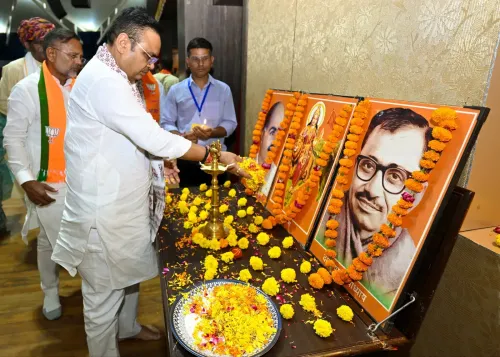
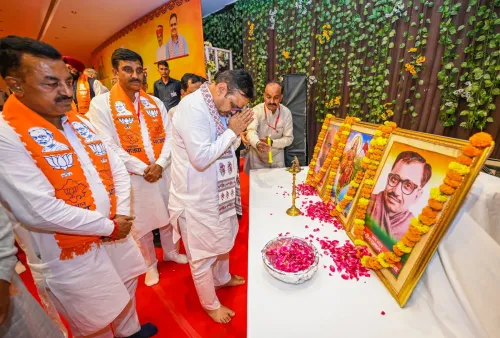
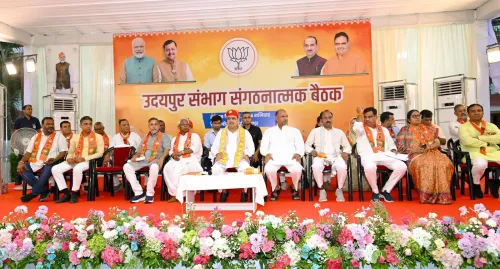
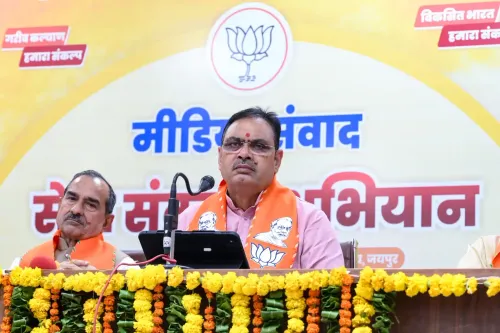
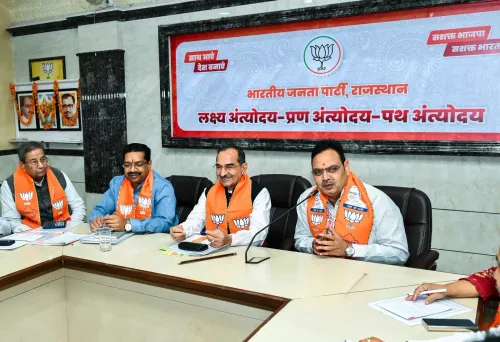
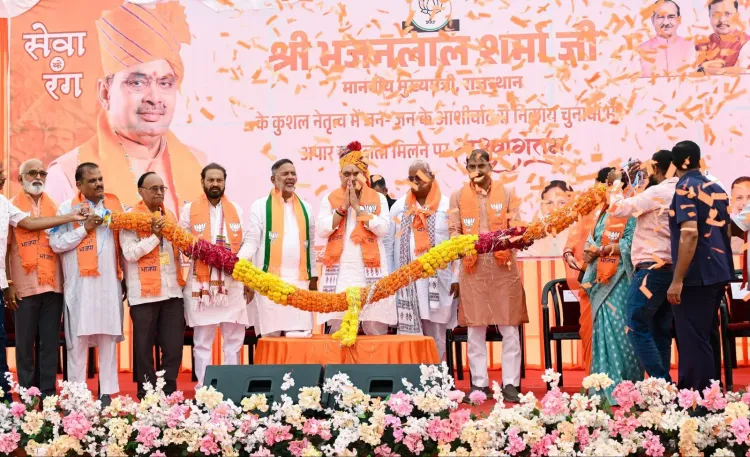
CM Bhajan Lal Sharma attended a reception at the Kota BJP office on 29 September 2026 and was welcomed by party workers.
He attributed the BJP's recent nikay (urban local body) election victory to booth-level worker outreach and sustained public contact drives.
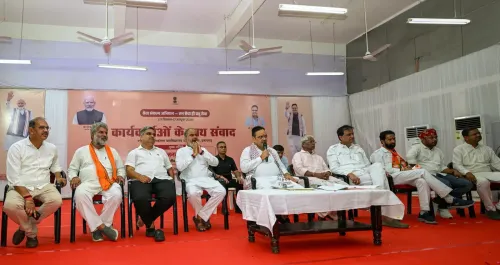
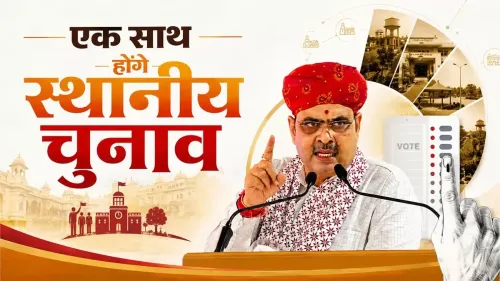
Sharma explicitly called on the party to mobilise with full strength for the upcoming panchayat elections in Rajasthan.
The post reinforces the BJP's booth-committee strategy, first deployed prominently in the December 2023 Rajasthan assembly election win.
Sharma framed the electoral push within a broader development and good governance agenda for Rajasthan.
Fresh from a rousing reception at the Kota BJP office, Rajasthan Chief Minister Bhajan Lal Sharma on Tuesday, 29 September 2026 publicly credited the party's grassroots machinery for what he called a historic mandate in the recent local body elections — and immediately pointed the organisation toward the next battle: the panchayat polls.
Sharma, visibly moved by the welcome from party workers, wrote on X: 'कार्यकर्ताओं का यह स्नेह, उत्साह और विश्वास ही हमारी सबसे बड़ी शक्ति है' — 'The affection, enthusiasm and trust of our workers is our greatest strength.' The message was equal parts gratitude and marching orders.
Booth-by-Booth: The Ground Game That Delivered
Sharma's post drew a direct line between the nikay (urban local body) election result and the BJP's signature booth-level outreach strategy. He credited workers who 'reached every booth and communicated with every citizen' — a formulation that mirrors the party's disciplined micro-mobilisation model that has been central to its electoral playbook in Rajasthan since the December 2023 assembly victory that brought him to power.
That 2023 win was itself attributed heavily to booth committee strengthening and sustained voter contact programmes. The nikay results, in the CM's framing, are confirmation that the same engine is still running hot.
Kota as a Launchpad for the Panchayat Push
The choice of Kota — one of Rajasthan's largest cities and an organisationally significant district for the BJP's Rajasthan unit (@BJP4Rajasthan) — as the venue for this public mobilisation is itself a signal. Sharma used the occasion not just to celebrate but to set the next target explicitly: 'Now, with this same energy, unity and enthusiasm, we must throw our full strength into the upcoming panchayat elections.'
Panchayat polls are the final tier of Rajasthan's electoral calendar after the urban body contests, and a strong showing there would cement BJP's dominance across all three levels of government in the state — assembly, urban local bodies, and rural panchayats.
Development and Good Governance as the Campaign Frame
Sharma closed his message with a governance pitch woven into the electoral call — 'with the resolve of public service, take Rajasthan to new heights of development and good governance.' This framing is consistent with the BJP's post-2023 approach of linking organisational wins to a broader delivery narrative, positioning worker mobilisation not merely as vote-getting but as the vehicle for the state's development agenda.
The victory, he said, 'is dedicated to the hard work and dedication of every worker' — a line that serves a dual purpose: rewarding the cadre emotionally while keeping them invested in the next electoral cycle.
With the panchayat elections on the horizon, the question is whether the booth-level machine that delivered two consecutive wins can sustain its intensity across Rajasthan's vast rural geography — and whether the development promise that underpins it will hold up to scrutiny at the village level.
Point of View
And the worker is simultaneously rewarded and re-enlisted. The booth-level emphasis is not incidental; it is the structural backbone of BJP's three-tier electoral dominance strategy in Rajasthan. By anchoring the governance narrative to organisational energy, Sharma is also pre-empting any complacency that typically follows a local body win. If the panchayat campaign matches the discipline seen in urban contests, it could give the BJP an unprecedented lock on all levels of elected governance in the state.
NationPress
29 Sept 2026
Frequently Asked Questions
What did CM Bhajan Lal Sharma say at the Kota BJP office?
Sharma said he was moved by the warm welcome from BJP workers and credited their booth-level outreach and dedication for the historic nikay election mandate. He called on workers to now mobilise with the same energy for the upcoming panchayat elections.
What are the nikay elections in Rajasthan?
Nikay elections refer to urban local body elections — covering municipal corporations, councils, and boards — that determine civic governance in Rajasthan's towns and cities. The BJP recently claimed a historic mandate in these polls.
When are the Rajasthan panchayat elections expected?
The exact schedule for Rajasthan's panchayat elections has not been officially announced, but CM Sharma's 29 September 2026 address signals that the BJP is beginning preparations immediately after the nikay results.
How did Bhajan Lal Sharma become Chief Minister of Rajasthan?
Bhajan Lal Sharma was sworn in as Rajasthan Chief Minister in December 2023 after the BJP won the state assembly elections, defeating the incumbent Congress government.
What is the BJP's booth-level strategy in Rajasthan?
The BJP's booth-level strategy involves assigning dedicated party workers to each polling booth to maintain voter contact, resolve local issues, and ensure high turnout. This micro-mobilisation model has been credited with the party's wins in both the 2023 assembly elections and the recent nikay polls.