MP CM's Office Promotes Smart Bus Surveillance Scheme

Synopsis
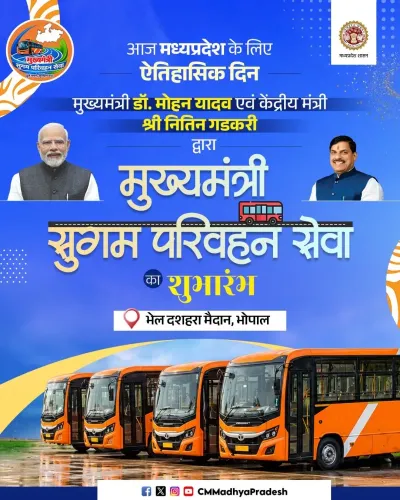
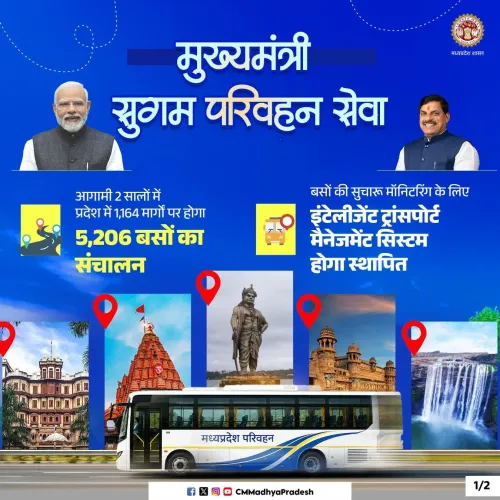
The Chief Minister's Office of Madhya Pradesh promoted the Mukhyamantri Sugam Parivahan Seva on November 3, 2026, highlighting smart surveillance on state buses to improve public transport safety and convenience for commuters across the state.
Key Takeaways
The Chief Minister's Office of Madhya Pradesh posted about the Mukhyamantri Sugam Parivahan Seva on November 3, 2026 .
The scheme aims to make state bus travel safer and more convenient through smart surveillance technology .
Mohan Yadav and the MP Transport Department are the key figures and implementing body.
The initiative is part of a wider trend of Indian states deploying CCTV and GPS on government buses for fleet management and passenger safety.
Exact launch date, technology specifications, and rollout scale of the scheme have not been officially confirmed in public records.
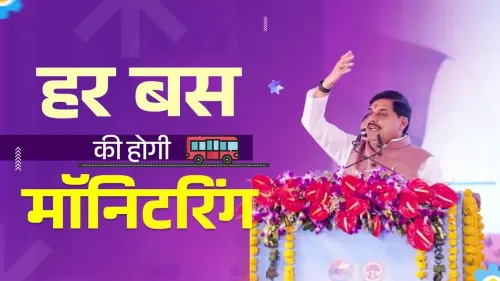
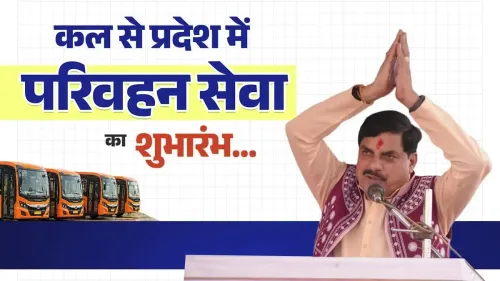
Every journey, every bus, under a watchful digital eye — Madhya Pradesh's public transport system is being reshaped by the Mukhyamantri Sugam Parivahan Seva, a state initiative that promises smarter surveillance and safer roads for millions of daily commuters. The Chief Minister's Office of Madhya Pradesh amplified the scheme on Tuesday, November 3, 2026, with a post tagging Chief Minister Dr. Mohan Yadav and the MP Transport Department.
The post, written in Hindi, declared: 'Har safar surakshit, har bus par smart nigrani' — 'Every journey safe, smart surveillance on every bus' — framing the scheme as a mission to make public transport 'more safe and seamless.'
What the Mukhyamantri Sugam Parivahan Seva Aims to Do
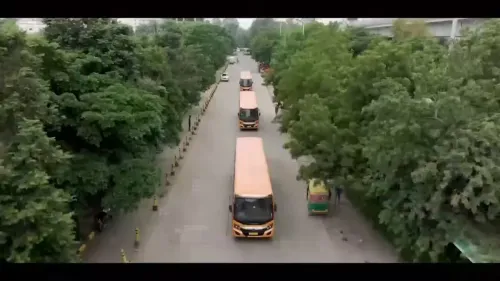
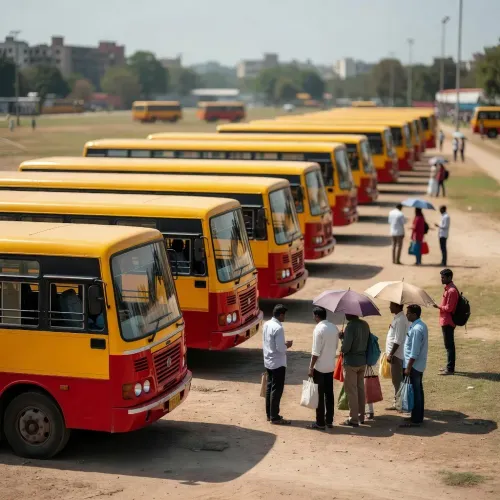
The Mukhyamantri Sugam Parivahan Seva is a state-level programme designed to modernise Madhya Pradesh's government bus fleet through technology-driven safety measures, including smart surveillance systems. The initiative sits squarely within a broader wave of digital upgrades that Indian states have been rolling out — CCTV installations, GPS fleet-tracking, and real-time monitoring tools — to address longstanding passenger safety concerns on public buses.
Madhya Pradesh has been incrementally modernising its transport sector, and this scheme represents one of the more visible planks of that effort under Chief Minister Dr. Mohan Yadav, who has held the position since December 2023. The Madhya Pradesh Transport Department — the nodal agency for road transport regulation and state bus operations — is the key implementing body.
Passenger Safety as a Political Priority
The push to equip government buses with smart surveillance is not unique to Madhya Pradesh. Neighbouring states have pursued similar technology deployments, but the political salience of women's safety and general commuter security on public transport has made such announcements resonant across the country. Surveillance infrastructure on buses directly addresses concerns that passengers — particularly women — raise about the absence of accountability on state-run routes.
What differentiates this programme, at least in its framing, is the emphasis on seamlessness alongside safety: the word 'sugam' (convenient, accessible) embedded in the scheme's name signals an intent to reduce friction for commuters, not merely install cameras.
The full scope of the rollout — how many buses are covered, which districts are prioritised, and what technology is deployed — will be the real measure of the scheme's ambition. Those details, and any budget allocations or assembly discussions on transport safety metrics, remain the story to watch.
Point of View
Voter-legible proof of administrative modernisation, particularly on women's safety in public spaces. For the Mohan Yadav government, publicising surveillance on buses ahead of potential budget cycles keeps transport safety on the political agenda. The real test will be independent verification of fleet coverage — states have historically announced such schemes with ambitious framing before implementation catches up. If Madhya Pradesh can demonstrate scale and sustained monitoring, it could become a credible benchmark for other central Indian states.
NationPress
3 Nov 2026
Frequently Asked Questions
What is the Mukhyamantri Sugam Parivahan Seva in Madhya Pradesh?
The Mukhyamantri Sugam Parivahan Seva is a Madhya Pradesh state initiative to improve safety and convenience on government buses through smart surveillance systems such as CCTV and GPS-based monitoring.
Who is responsible for implementing the Mukhyamantri Sugam Parivahan Seva?
The Madhya Pradesh Transport Department is the nodal implementing body for the scheme, operating under the direction of Chief Minister Dr. Mohan Yadav's government.
When was the Mukhyamantri Sugam Parivahan Seva announced?
The exact launch date of the scheme is not confirmed in official public records, though the Chief Minister's Office of Madhya Pradesh promoted it on November 3, 2026.
How does smart surveillance on MP buses improve passenger safety?
Smart surveillance typically involves CCTV cameras and GPS tracking on buses, enabling real-time monitoring, faster incident response, and greater accountability for bus operators and passengers alike.
Is Madhya Pradesh the only state with smart surveillance on government buses?
No — several Indian states have deployed CCTV and GPS technology on government buses, but Madhya Pradesh's Mukhyamantri Sugam Parivahan Seva packages these measures under a dedicated named scheme.