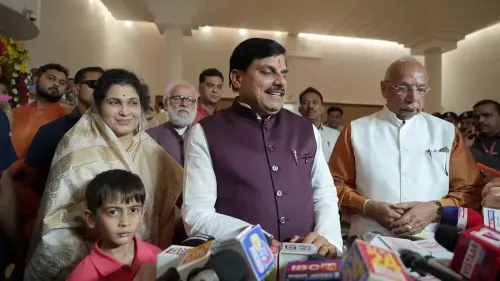
MP CM Yadav: Sugam Parivahan buses to get CCTV, panic buttons, GPS

Synopsis
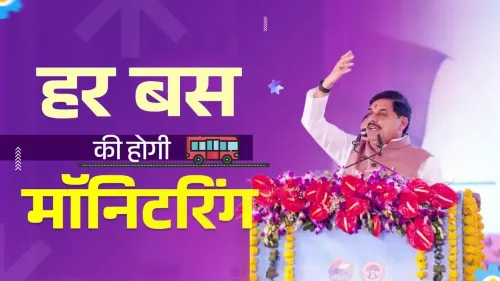
Chief Minister Dr. Mohan Yadav announced that Madhya Pradesh's Mukhyamantri Sugam Parivahan Seva buses will feature CCTV cameras, emergency panic buttons, live GPS tracking, online ticketing, and fast-track grievance redressal, with driver training also mandated under the scheme.
Key Takeaways
CCTV cameras and emergency panic buttons will be installed in all Mukhyamantri Sugam Parivahan Seva buses in Madhya Pradesh.
Live GPS tracking will enable real-time monitoring of bus locations across the fleet.
Online ticketing and a fast-track passenger grievance redressal system are integral to the scheme.
Structured driver training and safety provisions for bus operators have been included in the design.
The Madhya Pradesh Transport Department is the nodal agency overseeing implementation and fleet monitoring.
The announcement follows over a decade of national advisories urging Indian states to upgrade public bus safety with technology.
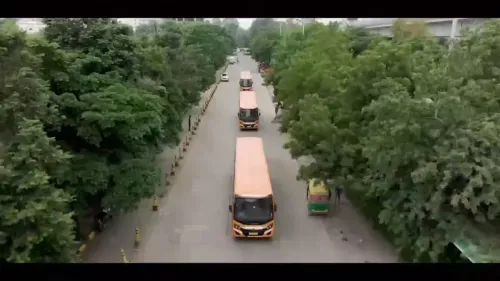
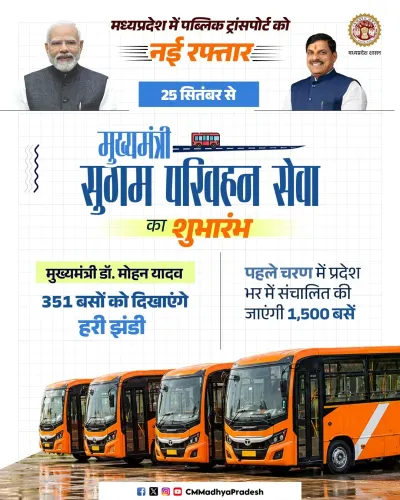
Every passenger boarding a Mukhyamantri Sugam Parivahan Seva bus in Madhya Pradesh will soon travel under the watch of CCTV cameras, within reach of an emergency panic button, and trackable in real time via GPS — a stack of safety measures that Chief Minister Dr. Mohan Yadav outlined on Friday, 25 September 2026, signalling the scheme's technology-first approach to public transport.
What the Sugam Parivahan safety package includes
Speaking through the Chief Minister's Office on X, CM Dr. Yadav confirmed that the state's Sugam Parivahan buses will be fitted with CCTV cameras and emergency panic buttons as standard. Live GPS tracking will allow authorities — and, potentially, passengers — to monitor bus locations in real time. The scheme also promises online ticketing and a fast-track grievance redressal mechanism so complaints do not disappear into bureaucratic silence.
Drivers are not an afterthought either. CM Yadav specifically noted that structured training programmes and safety provisions for bus operators have been built into the scheme — recognising that passenger safety and driver welfare are two sides of the same coin.
Why this matters: a decade of national push on bus safety
India's shift toward tech-enabled public bus safety accelerated sharply after 2012, when national advisories began urging states to install CCTV and distress systems — particularly to protect women travelling alone. Several states rolled out similar packages in the years that followed, with varying degrees of implementation rigour. Madhya Pradesh's announcement under the Mukhyamantri Sugam Parivahan Seva banner places it within that ongoing national current, while the scheme's branded identity signals a deliberate political and administrative push at the state level.
The Madhya Pradesh Transport Department, the nodal agency for the rollout, will be responsible for fleet monitoring and grievance systems. The real test will come in the district-by-district deployment — specifically, how quickly equipped buses reach smaller towns and rural routes where alternative transport options are scarce.
Grievance redressal and the accountability gap
Online ticketing is familiar territory for urban commuters, but its combination with a fast-track complaint resolution channel is the more consequential piece. Complaint systems in state transport have historically suffered from poor response times. If the Sugam Parivahan framework delivers measurable turnaround metrics, it could set a benchmark other state fleets are pushed to match. The numbers, when published, will tell the real story.
Point of View
If made public, will be the clearest accountability test.
NationPress
25 Sept 2026
Frequently Asked Questions
What is Mukhyamantri Sugam Parivahan Seva in Madhya Pradesh?
It is a Madhya Pradesh government public bus service initiative launched under Chief Minister Dr. Mohan Yadav, focused on providing safe and convenient inter-district travel with technology-backed safety features.
What safety features will Sugam Parivahan buses have?
The buses will be equipped with CCTV cameras, emergency panic buttons, and live GPS tracking, alongside online ticketing and a fast-track passenger grievance redressal system.
Can passengers track Sugam Parivahan bus locations in real time?
Yes, GPS-based live location monitoring is part of the scheme, enabling real-time tracking of buses across the Madhya Pradesh fleet.
What provisions has Madhya Pradesh made for bus drivers under this scheme?
CM Dr. Mohan Yadav confirmed that structured training programmes and safety measures specifically for bus drivers have been built into the Sugam Parivahan Seva framework.
Which department is implementing the Sugam Parivahan Seva bus scheme?
The Madhya Pradesh Transport Department is the nodal agency responsible for the rollout, fleet monitoring, and grievance redressal systems under the scheme.