CM Bhajan Lal Sharma Holds Gram Vikas Chaupal in Udaipur
Synopsis
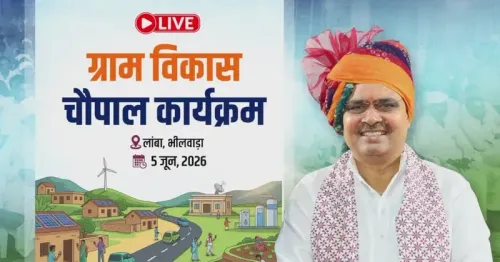
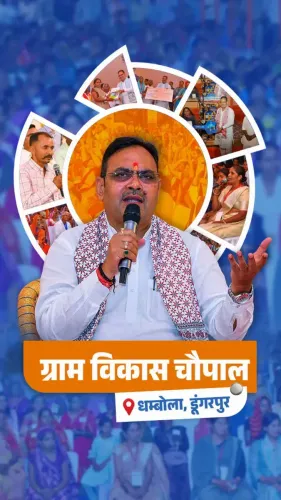
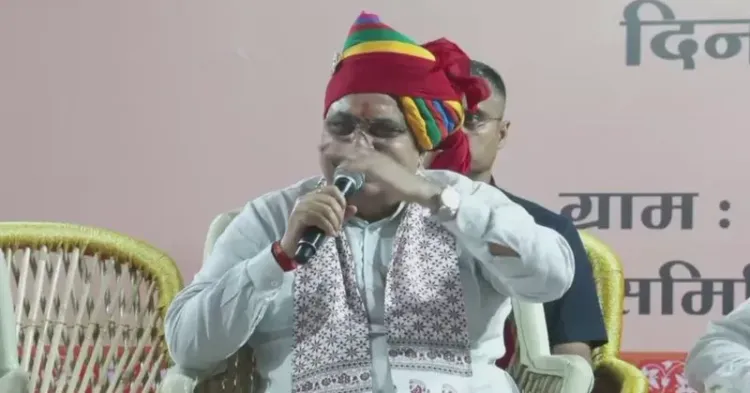
Rajasthan Chief Minister Bhajan Lal Sharma held a live Gram Vikas Chaupal in Udaipur on 1 August 2026, engaging rural communities and panchayat bodies in a structured village development dialogue — part of the state government's grassroots outreach drive.
Key Takeaways
Rajasthan Chief Minister Bhajan Lal Sharma conducted a live Gram Vikas Chaupal in Udaipur on 1 August 2026 .
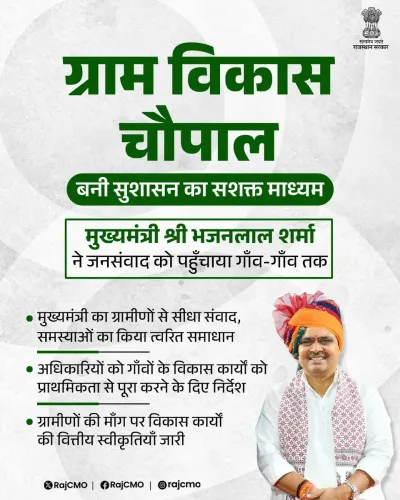
The chaupal format brings state leadership directly to rural communities for open development discussions.
Udaipur , in southern Rajasthan, has a significant rural and tribal hinterland, making it a key venue for grassroots outreach.
Village panchayats and rural communities are the primary participants and stakeholders in the programme.
Sharma, in office since December 2023 , has used such district-level events to build a visible governing record across the state.
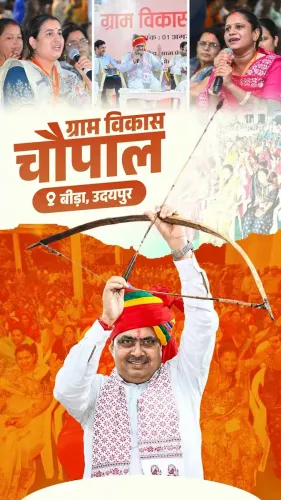
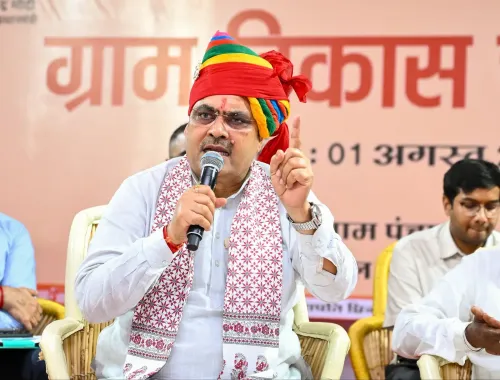
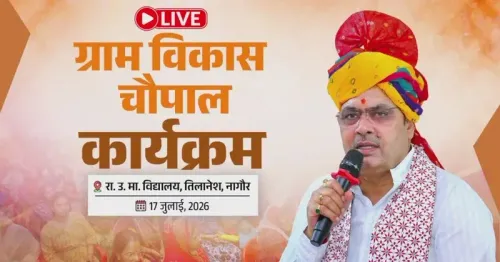
Rajasthan Chief Minister Bhajan Lal Sharma took his administration's rural outreach drive to Udaipur on Saturday, 1 August 2026, presiding over a live Gram Vikas Chaupal — a village-level development dialogue designed to put state leadership face-to-face with grassroots communities.
What a Gram Vikas Chaupal is — and why Udaipur
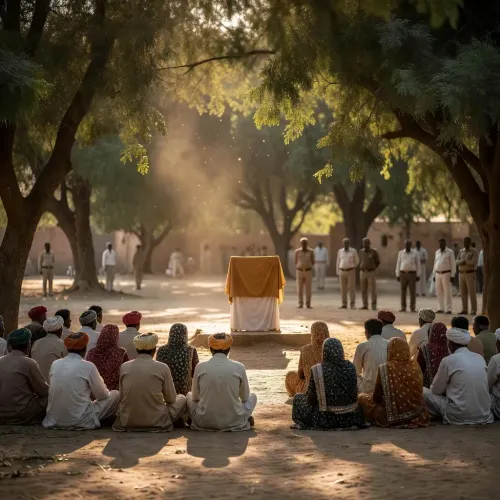
The chaupal format is one of the oldest instruments of direct governance in rural India: a public gathering where officials and elected representatives sit with villagers, hear grievances, and discuss local development priorities. Under Sharma, who assumed office in December 2023, the Rajasthan government has institutionalised these sessions as a structured outreach programme across the state's districts. Udaipur, situated in southern Rajasthan, is a district that blends urban heritage with a large tribal and rural hinterland — making it a meaningful venue for a programme explicitly aimed at village development. The participation of local panchayat bodies and rural communities places the event squarely in the domain of grassroots administrative accessibility.Grassroots governance as a political and administrative tool
Across BJP-governed states, direct public outreach events — chaupals, jan-samvads, and similar formats — have become a signature mode of demonstrating administrative responsiveness between election cycles. They serve a dual purpose: gathering ground-level feedback on scheme implementation and reinforcing the image of an accessible government. For Sharma, still in the early years of his tenure, these district-level events are also a way to build a visible governing record beyond the state capital Jaipur. Rural communities and village panchayats remain the primary stakeholders, and any follow-up on commitments made at the Udaipur session will be the real measure of the programme's impact. The conversation started in Udaipur now moves to implementation — and that is where the chaupal's promise will be tested.Point of View
Still consolidating his tenure after December 2023, district-level outreach events serve as both a governance tool and a political signal that the government is listening beyond Jaipur. The real test, however, lies in measurable follow-through on commitments made at such sessions — without which chaupals risk becoming symbolic exercises rather than catalysts for rural development.
NationPress
16 Sept 2026
Frequently Asked Questions
What is a Gram Vikas Chaupal in Rajasthan?
A Gram Vikas Chaupal is a structured village-level public meeting where state leadership and officials engage directly with rural communities to discuss local development issues, hear grievances, and review scheme implementation.
Where was the Gram Vikas Chaupal held on 1 August 2026?
The event was held in Udaipur , a district in southern Rajasthan with a large rural and tribal population.
Who is Bhajan Lal Sharma?
Bhajan Lal Sharma is the Chief Minister of Rajasthan and a BJP leader who assumed office in December 2023 .
Why does the Rajasthan government hold Gram Vikas Chaupals?
These events are part of the state government's grassroots outreach drive, aimed at improving administrative accessibility, gathering ground-level feedback, and connecting state leadership directly with village panchayats and rural communities.
What happens after a Gram Vikas Chaupal?
Follow-up typically involves district-level implementation of commitments discussed during the session, with panchayat bodies and local officials responsible for execution on the ground.