CM Bhajanlal Sharma Addresses Gram Vikas Chaupal in Udaipur's Jhadol
Synopsis
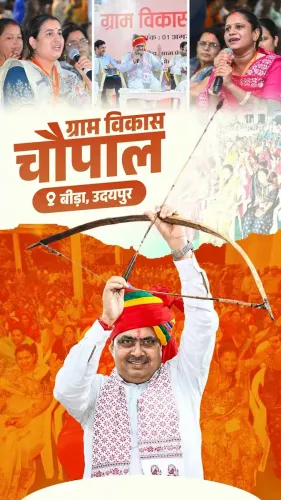
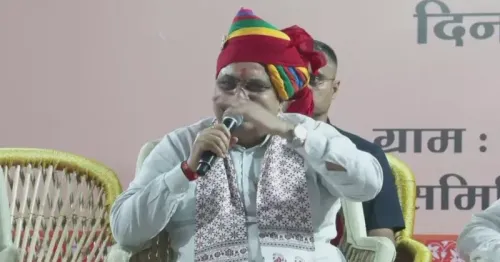
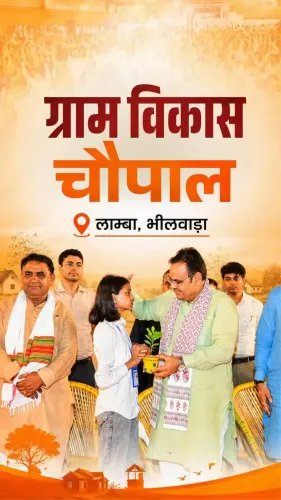
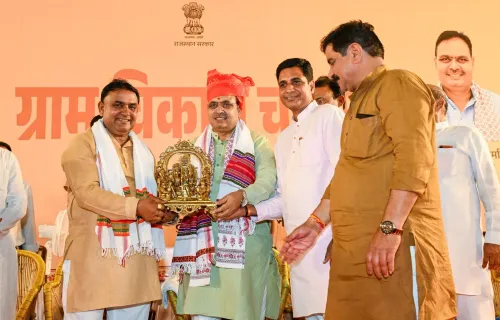
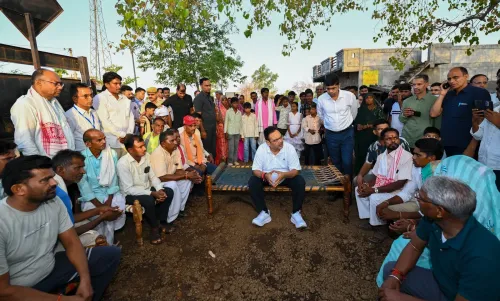
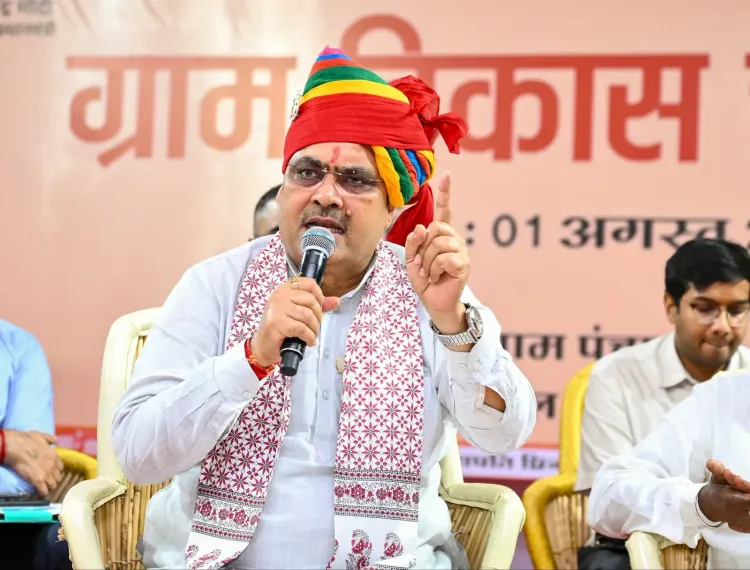
Chief Minister Bhajanlal Sharma addressed a Gram Vikas Chaupal at village Beeda in Udaipur's Jhadol tehsil on 2 August 2026, stating that villagers' suggestions on development have been incorporated into the Rajasthan state budget, as local artists welcomed him with traditional Valar and Gair dances.
Key Takeaways
CM Bhajanlal Sharma addressed a Gram Vikas Chaupal at village Beeda, Jhadol, Udaipur on 2 August 2026 .
The Chief Minister stated that suggestions from Chaupal programmes have been incorporated into the Rajasthan state budget .
Sharma framed state welfare efforts as being driven by PM Narendra Modi's vision for the poor, youth, farmers and women.
Local artists performed the traditional Valar dance and children performed the Gair dance to welcome the Chief Minister.
The event is part of a wider rollout of Gram Vikas Chaupal programmes across Rajasthan aimed at directing rural development through public participation.
Jhadol tehsil lies in the tribal belt of southern Rajasthan , making this Chaupal part of outreach to historically underserved communities.
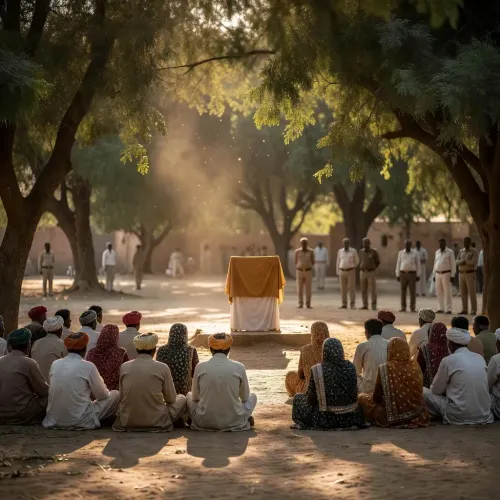
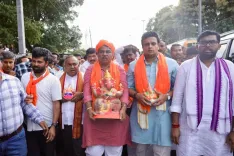
In the tribal heartland of Udaipur's Jhadol tehsil, Chief Minister Bhajanlal Sharma took the government's outreach to the grassroots on Sunday, 2 August 2026 — arriving at village Beeda to address a Gram Vikas Chaupal, a format designed to let ordinary villagers shape state policy. He was welcomed not with a formal guard of honour, but with local artists performing the Valar nritya (Valar dance) and children presenting the Gair nritya — a reminder that this was their stage first.
What the Chaupal Is — and Why It Matters
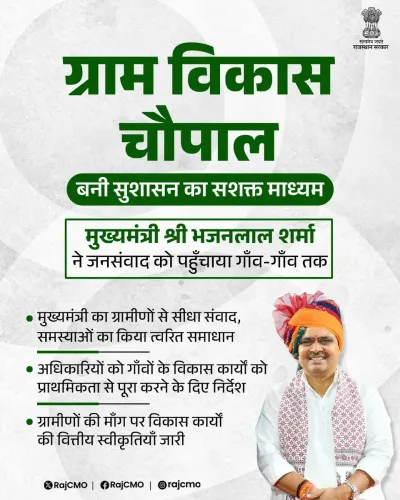
The Gram Vikas Chaupal is not a rally. It is a structured village-level consultation where residents — farmers, women, youth, the rural poor — put development priorities directly before the Chief Minister. Sharma told the gathering that suggestions gathered through these Chaupals have been incorporated into the state budget, giving the format real downstream weight rather than ceremonial optics.
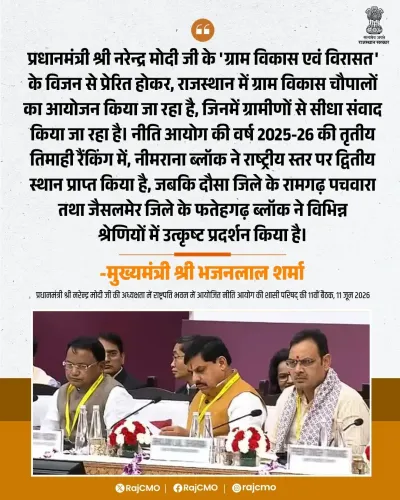
The Chief Minister framed the programme within the national welfare architecture, stating that the Rajasthan government is working for the upliftment of the poor, youth, farmers (annadata), and women — under the leadership of Prime Minister Narendra Modi. The alignment is deliberate: BJP-led state governments have consistently positioned state outreach as an extension of central welfare priorities, and Rajasthan is no exception.
Jhadol's Turn in a State-Wide Rollout
Jhadol tehsil sits in the tribal belt of southern Rajasthan, an area where rural development deficits have historically been pronounced. Holding a Chaupal here signals that the programme is reaching beyond urban and peri-urban constituencies. The Chief Minister personally encouraged the young performers who welcomed him — a small gesture, but one that feeds the 'youth' pillar the government repeatedly invokes.
The Rajasthan CMO's post, tagged #AapnoAgrani_Rajasthan ('Our Pioneering Rajasthan'), reflects the government's branding push to tie local events to a statewide narrative of forward momentum. With Chaupal events being rolled out across districts, each stop builds a data trail of public suggestions that the administration can point to during budget and policy debates.
From Village Suggestions to Budget Lines
The claim that Chaupal inputs feed the state budget is the most consequential assertion in Sharma's address. If the pipeline from village suggestion to budget allocation is functioning as described, it represents a meaningful participatory governance mechanism. What to watch: whether subsequent budget documents or scheme notifications carry traceable links to Chaupal-gathered priorities — that is the test of whether the format is policy or theatre.
For now, village Beeda in Jhadol had its moment. The Chief Minister listened, the dancers performed, and Rajasthan's rural development agenda moved one Chaupal further down the road.
Point of View
However, rests on whether Chaupal inputs leave a verifiable imprint on budget allocations — a test that remains open.
NationPress
16 Sept 2026
Frequently Asked Questions
What is Gram Vikas Chaupal in Rajasthan?
Gram Vikas Chaupal is a village-level public consultation programme run by the Rajasthan government where residents share development priorities directly with senior officials, including the Chief Minister. The government has stated that suggestions from these Chaupals are incorporated into the state budget.
Where did CM Bhajanlal Sharma hold the Chaupal on 2 August 2026?
CM Bhajanlal Sharma addressed the Gram Vikas Chaupal at village Beeda in Jhadol tehsil, Udaipur district, Rajasthan on 2 August 2026.
What dances were performed to welcome CM Bhajanlal Sharma at Beeda village?
Local artists performed the traditional Valar dance and children performed the Gair dance to welcome Chief Minister Bhajanlal Sharma at the Gram Vikas Chaupal venue in village Beeda.
What did CM Bhajanlal Sharma say at the Gram Vikas Chaupal?
CM Sharma said the Rajasthan state government is working for the upliftment of the poor, youth, farmers and women under Prime Minister Modi's leadership, and that suggestions gathered through Gram Vikas Chaupal programmes have been included in the state budget.
Who is Bhajanlal Sharma and which party does he belong to?
Bhajanlal Sharma is the Chief Minister of Rajasthan, representing the Bharatiya Janata Party (BJP). He was sworn in as Chief Minister in December 2023 following the state assembly elections.