Chhattisgarh CMO Marks Janjatiya Gaurav Diwas, Honours Birsa Munda
Synopsis
The Chief Minister's Office of Chhattisgarh marked Janjatiya Gaurav Diwas on 15 November 2026 by paying tribute to tribal icon Bhagwan Birsa Munda on his birth anniversary, honouring his role as a freedom fighter and symbol of Adivasi identity.
Key Takeaways
The Chief Minister's Office of Chhattisgarh posted a tribute to Bhagwan Birsa Munda on 15 November 2026 , his birth anniversary.
Birsa Munda , known as Dharti Aaba , led the Munda rebellion against British colonial rule in 1899–1900 and died in custody in 1900 , aged 25.
The Government of India declared 15 November as Janjatiya Gaurav Diwas in 2021 to honour tribal contributions to India's freedom struggle.
Chhattisgarh has one of India's largest Scheduled Tribe populations, making the observance especially significant for the state.
The day is marked nationally with cultural events and community programmes across tribal-majority districts.
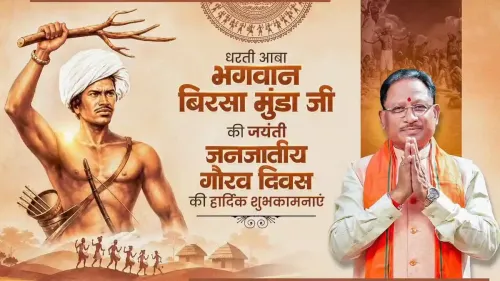
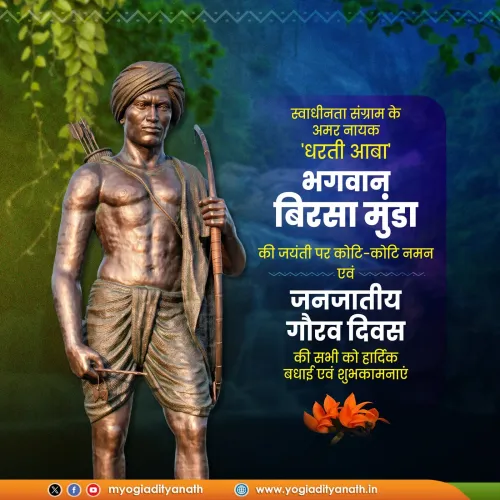
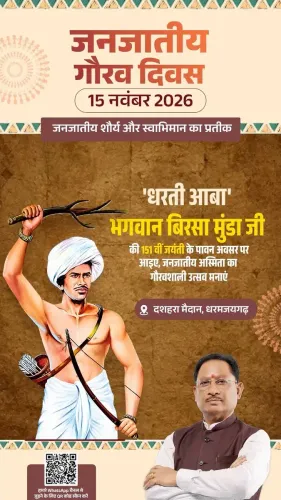
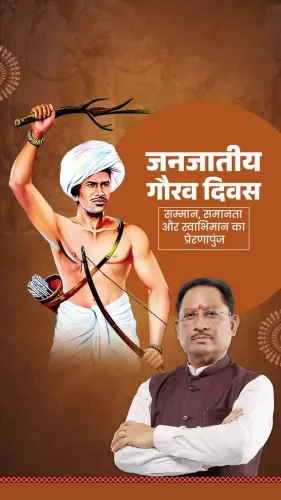
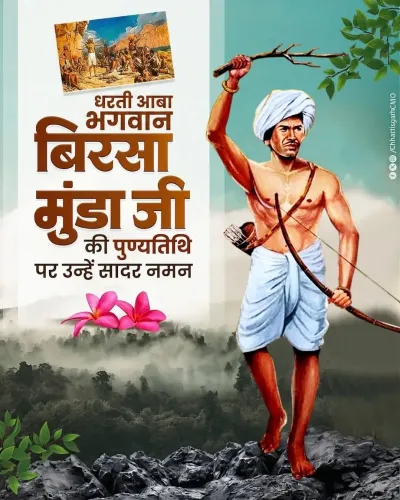
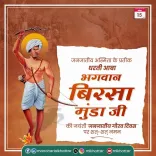
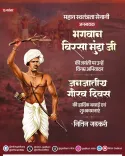
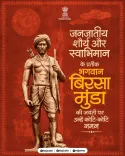
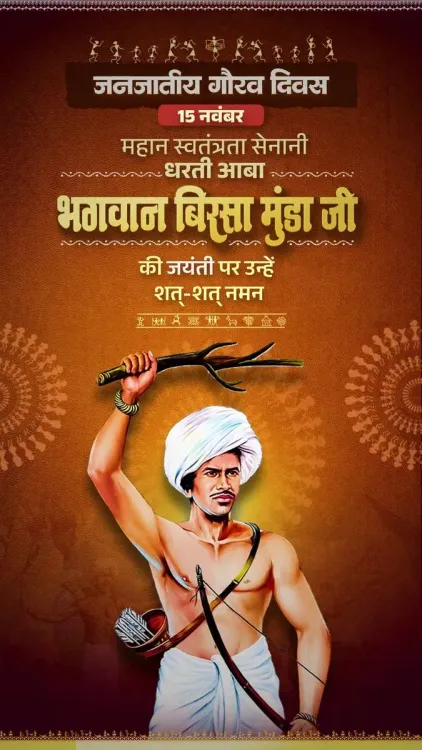
On the birth anniversary of Bhagwan Birsa Munda — the tribal icon who defied the British Empire with nothing but a bow, a battle cry, and an unbreakable will — the Chief Minister's Office of Chhattisgarh paid solemn tribute on Sunday, 15 November 2026, saluting the freedom fighter as the living symbol of tribal identity and Indian self-respect.
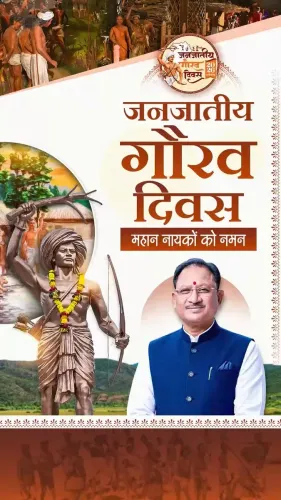
The CMO's post offered 'shata-shata naman' (a hundredfold salute) to Birsa Munda, widely revered by his people as 'Dharti Aaba' — Father of the Earth — and extended warm wishes to the people of Chhattisgarh on Janjatiya Gaurav Diwas (Tribal Pride Day).
Who Was 'Dharti Aaba' — and Why November 15 Matters
Birsa Munda was born on 15 November 1875 in the Chotanagpur plateau region, in what is now Jharkhand. He led the historic Ulgulan (Great Tumult) — the Munda rebellion of 1899–1900 — galvanising his community against both British colonial exploitation and the displacement of tribal land rights. He died in Ranchi jail in June 1900, aged just 25, but left behind a legacy so enduring that his face today adorns the walls of Parliament.
In 2021, the Government of India declared 15 November as Janjatiya Gaurav Diwas, institutionalising the birth anniversary of Birsa Munda as a national day of honour for tribal freedom fighters. The move acknowledged what historians had long argued: that Adivasi resistance to colonialism was foundational to India's independence movement, yet had remained largely absent from mainstream commemorative calendars.
Chhattisgarh's Tribal Stakes in This Observance
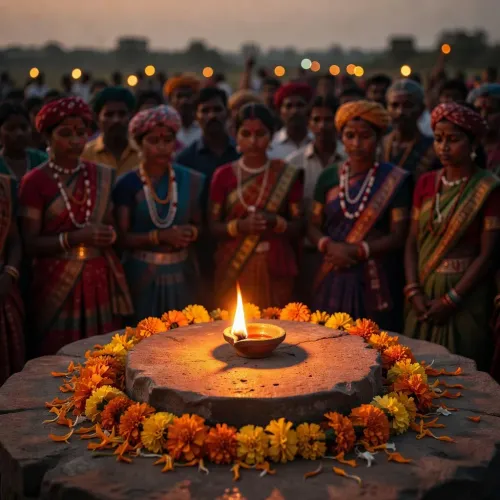
Chhattisgarh is home to one of the largest Scheduled Tribe populations in India, concentrated heavily in its Bastar, Surguja, and Raigarh belts. For the state, Janjatiya Gaurav Diwas is not merely a ceremonial calendar entry — it speaks directly to communities whose cultural identity, land rights, and political recognition remain live issues in public discourse.
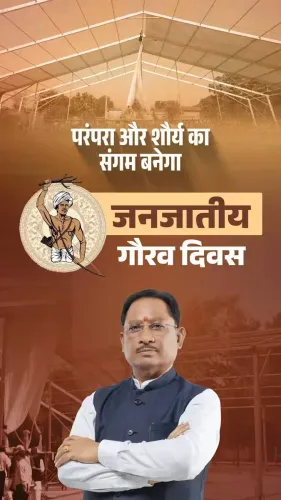
States with large Adivasi populations have consistently used the 15 November observance to align state programmes with the central government's broader push to integrate tribal history into official national memory. Across the country, cultural events, welfare reviews, and community gatherings mark the day in tribal-majority districts.
Birsa Munda's enduring resonance — across political lines and across generations — speaks to something deeper than policy: the demand that the people who first fought the empire be remembered at the front of the story, not the footnotes. That is precisely what Janjatiya Gaurav Diwas is designed to do, one year at a time.
Point of View
With large Scheduled Tribe constituencies, participating visibly in this observance carries both cultural weight and electoral logic. The institutionalisation of Birsa Munda's legacy into the official commemorative calendar signals a broader shift in how the Indian state frames the independence narrative — one that is still being contested, negotiated, and expanded. Whether the symbolic recognition translates into substantive policy gains for tribal communities remains the sharper, unanswered question.
NationPress
15 Nov 2026
Frequently Asked Questions
What is Janjatiya Gaurav Diwas and why is it celebrated on 15 November?
Janjatiya Gaurav Diwas is a national observance held on 15 November every year to honour tribal freedom fighters of India. The date marks the birth anniversary of Bhagwan Birsa Munda, the Munda tribal leader who led an armed rebellion against British rule. The Government of India declared this day in 2021.
Who was Bhagwan Birsa Munda?
Bhagwan Birsa Munda was a 19th-century tribal leader born on 15 November 1875 in the Chotanagpur region. Revered as 'Dharti Aaba' or Father of the Earth, he led the Munda rebellion (Ulgulan) of 1899-1900 against British colonial exploitation and the dispossession of tribal land rights. He died in Ranchi jail in 1900 at the age of 25.
When was Janjatiya Gaurav Diwas first declared?
The Government of India declared 15 November as Janjatiya Gaurav Diwas in 2021, institutionalising the birth anniversary of Birsa Munda as a national day to recognise tribal contributions to India's independence movement.
Why is Janjatiya Gaurav Diwas significant for Chhattisgarh?
Chhattisgarh has one of the largest Scheduled Tribe populations in India, with major concentrations in regions like Bastar and Surguja. The observance holds particular cultural and political significance for the state, whose tribal communities are directly connected to the heritage of Adivasi freedom fighters.
What does 'Dharti Aaba' mean in the context of Birsa Munda?
'Dharti Aaba' is a title meaning 'Father of the Earth' in the Mundari language, bestowed on Bhagwan Birsa Munda by his community. It reflects the deep reverence his people held for him as a protector of tribal land, identity, and rights against colonial encroachment.