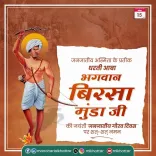
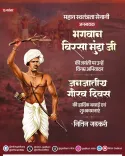
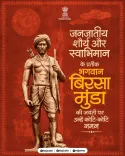
Rajasthan CMO honours Birsa Munda on his birth anniversary
Synopsis
The Chief Minister's Office of Rajasthan honoured Bhagwan Birsa Munda on his 151st birth anniversary on 15 November 2026, saluting the tribal leader's Ulgulan rebellion for jal, jungle aur zameen and calling his life a continuing inspiration for empowering India's most marginalised communities.
Key Takeaways
Bhagwan Birsa Munda was born on 15 November 1875 in the Chota Nagpur region, present-day Jharkhand .
His Ulgulan uprising of 1899-1900 challenged British land-alienation policies and demanded tribal rights over water, forests, and land.
Birsa Munda died in British custody in 1900 at the age of 25 , becoming a defining symbol of indigenous resistance.
The Government of India designated 15 November as Janjatiya Gaurav Diwas in 2021 in his honour.
The Rajasthan CMO paid tribute on 15 November 2026 , framing his legacy as a mandate to uplift those at the margins of society.
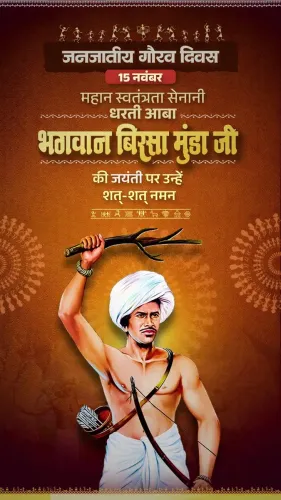
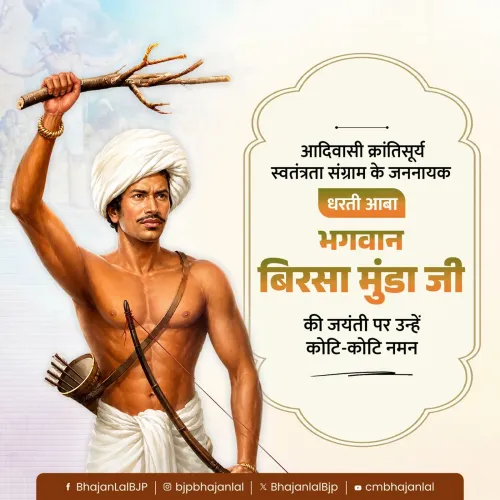
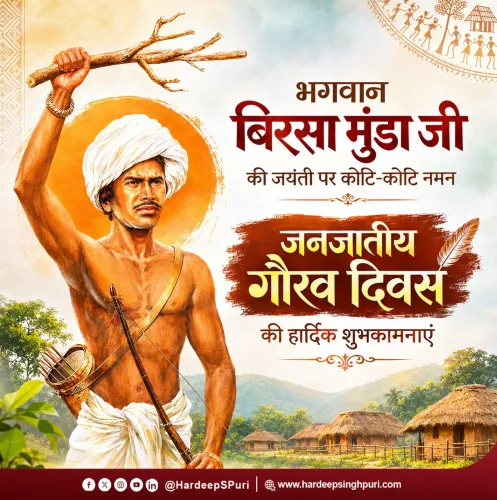
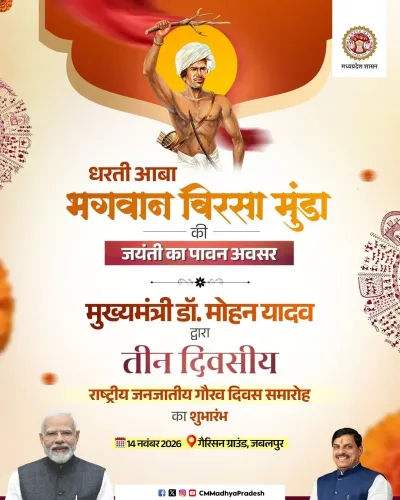
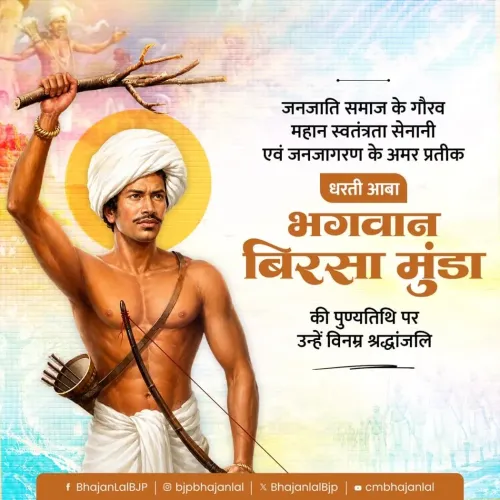
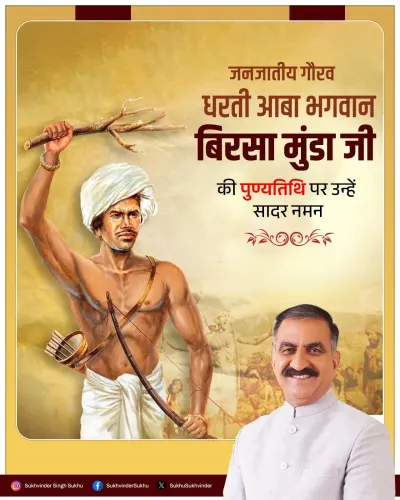
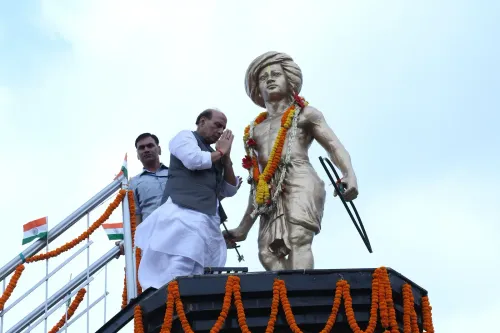
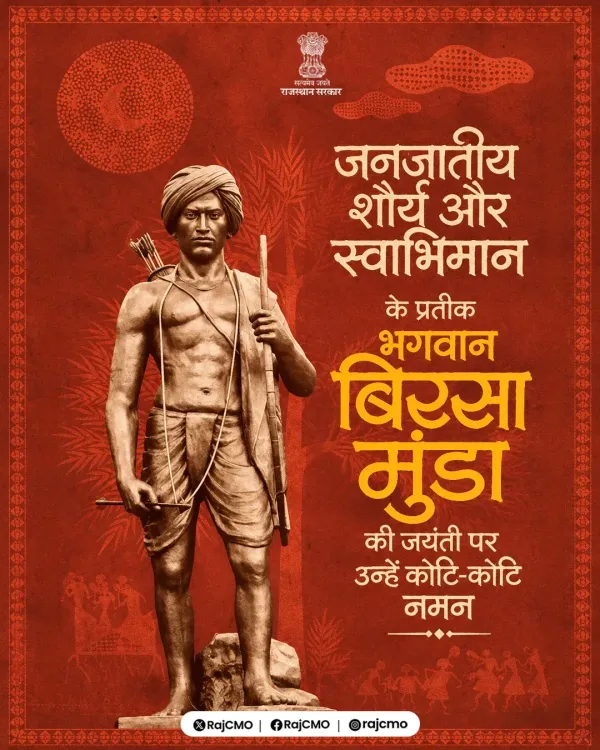
A freedom fighter who dared to challenge the British Empire armed with little more than a bow, a vision, and an unbreakable belief in his people's right to their land — Bhagwan Birsa Munda turns 151 today, and governments across India are pausing to remember him. The Chief Minister's Office of Rajasthan marked Janjatiya Gaurav Diwas on 15 November 2026 with a tribute on X, calling the tribal icon an eternal source of inspiration.
The post, written in Hindi, offered 'koti-koti naman' — crores of salutations — to the leader revered as Dharti Aaba, meaning 'Father of the Earth.' It declared: 'His sacrifice, courage, and love for the nation will always remain a source of inspiration. His struggle-filled life motivates us to continuously work for the upliftment, rights protection, and empowerment of the person standing in the last row of society.'
Who was Birsa Munda — and why does the date matter
Born on 15 November 1875 in the Chota Nagpur plateau in what is today Jharkhand, Birsa Munda grew up watching British colonial land-alienation policies systematically strip the Munda, Ho, and Oraon tribes of their ancestral forests, fields, and waterways. He responded not with resignation but with organised resistance. His Ulgulan — meaning 'the great tumult' — launched in 1899-1900, mobilised tribal communities across the region in a direct challenge to British authority and exploitative landlords.
The rebellion demanded nothing less than the restoration of tribal rights over jal, jungle aur zameen — water, forests, and land — a slogan that echoes powerfully in Indian politics to this day. Birsa was arrested in 1900 and died in Ranchi jail at just 25 years of age, but his movement permanently shaped colonial-era forest and land legislation and seeded the modern tribal-rights discourse.
Janjatiya Gaurav Diwas and the national frame
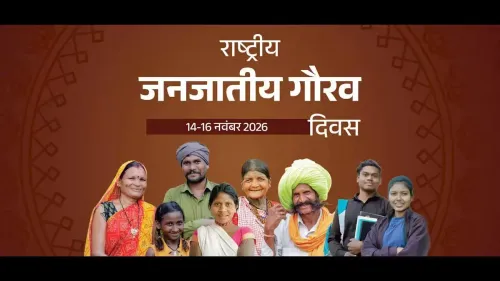
The Government of India designated 15 November as Janjatiya Gaurav Diwas in 2021, institutionalising the tribute to Birsa Munda and centering tribal contributions to the freedom struggle in the national calendar. State governments, including Rajasthan — home to significant Scheduled Tribe populations across districts such as Udaipur, Dungarpur, Banswara, and Pratapgarh — routinely mark the day with official statements and event programmes.
The Rajasthan CMO's tribute frames Birsa Munda's legacy explicitly as a mandate for the living: empowerment of those at the margins, defence of rights, and upliftment of the last person in line — language that sits at the intersection of historical memory and contemporary welfare politics.
One hundred and fifty-one years after his birth, 'Dharti Aaba' remains the most potent symbol of indigenous resistance in the Indian republic — proof that the loudest revolutions do not always begin in capital cities.
Point of View
Allowing state governments across party lines to signal solidarity with tribal communities — a constituency that is electorally significant in Rajasthan's southern belt. The Rajasthan CMO's framing of Birsa Munda's legacy as a call for 'empowerment of the last person in line' mirrors a broader rhetorical strategy of anchoring welfare governance in freedom-struggle symbolism. While this tribute carries no specific policy announcement, it sustains the political salience of tribal identity and rights at a time when land and forest-rights questions remain live in several Rajasthan districts. The annual institutionalisation of Janjatiya Gaurav Diwas has effectively made tribal heritage a year-round governance narrative rather than a periodic electoral footnote.
NationPress
15 Nov 2026
Frequently Asked Questions
When is Birsa Munda's birth anniversary celebrated?
Birsa Munda was born on 15 November 1875 , and his birth anniversary is now observed nationally as Janjatiya Gaurav Diwas every year on 15 November.
What was the Ulgulan movement?
The Ulgulan — meaning 'the great tumult' — was a tribal uprising led by Birsa Munda in 1899-1900 against British colonial land-alienation policies in the Chota Nagpur region, demanding restoration of tribal rights over water, forests, and land.
Why is Birsa Munda called Dharti Aaba?
Dharti Aaba translates from the Mundari language as 'Father of the Earth.' The title was bestowed on Birsa Munda by his followers in recognition of his role as a protector of tribal land, forest, and cultural identity.
What is Janjatiya Gaurav Diwas?
Janjatiya Gaurav Diwas is a national day designated by the Government of India in 2021 and observed on 15 November every year to honour the contributions of tribal communities and freedom fighters, particularly Bhagwan Birsa Munda, to India's independence movement.
Why does Rajasthan mark Janjatiya Gaurav Diwas?
Rajasthan has a substantial Scheduled Tribe population concentrated in districts such as Udaipur, Dungarpur, Banswara, and Pratapgarh , making tribal welfare and heritage politically and socially significant for the state government.