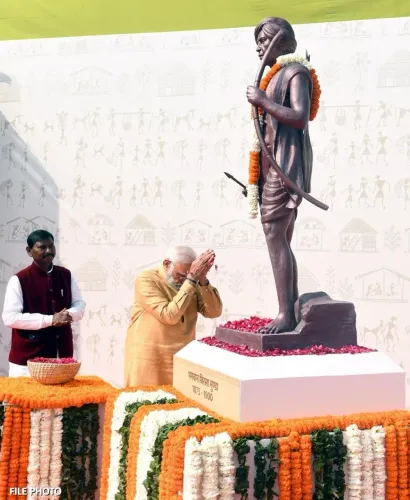
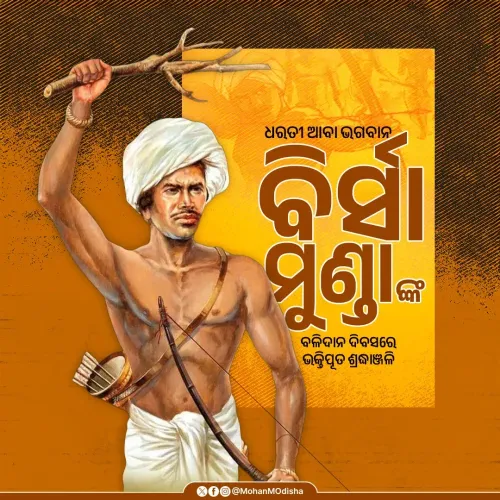
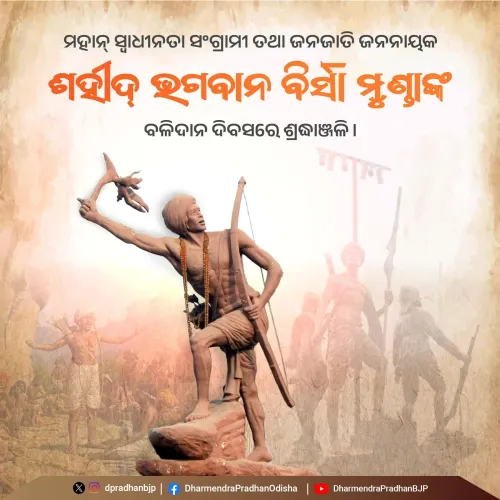
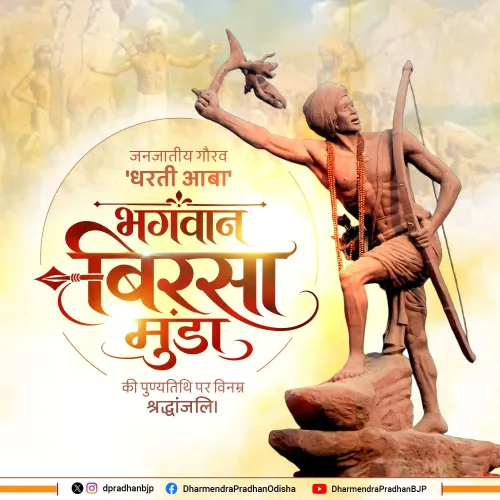
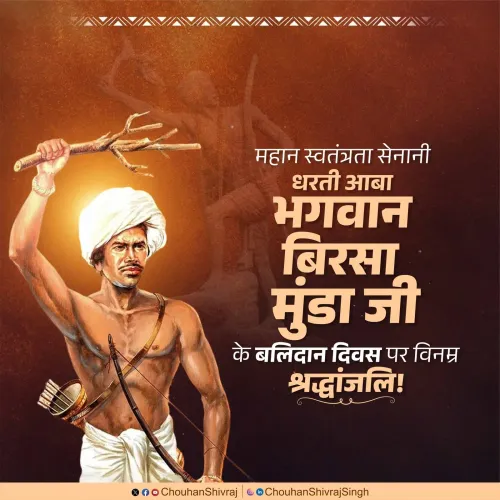
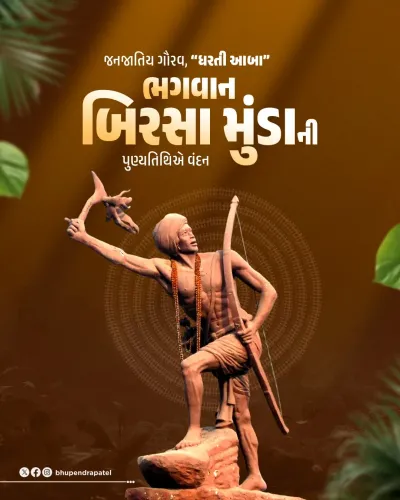
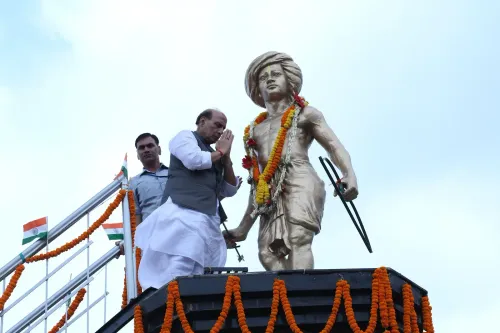
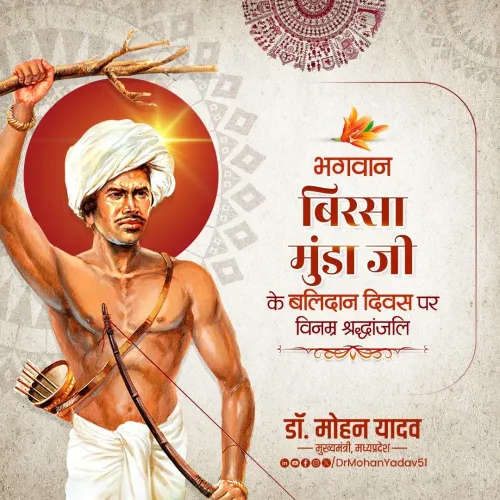
CM Bhajan Lal pays tribute to Birsa Munda on death anniversary
Synopsis
Rajasthan Chief Minister Bhajan Lal Sharma paid tribute to tribal freedom fighter Bhagwan Birsa Munda on his death anniversary on 9 June 2026, honouring the 'Dharati Aaba' for his struggle for water, forest and land rights and his legacy for future generations.
Key Takeaways
Bhajan Lal Sharma , Chief Minister of Rajasthan , paid tribute to Bhagwan Birsa Munda on his death anniversary, 9 June 2026 .
Birsa Munda , known as Dharati Aaba ('Father of the Earth'), died on 9 June 1900 in Ranchi jail after leading the Ulgulan rebellion against British land-alienation policies.
Sharma invoked Munda 's struggle for jal, jungle aur zameen (water, forest and land) and his commitment to social justice as an enduring inspiration.
The Government of India instituted Janjatiya Gaurav Diwas in 2021 to commemorate Birsa Munda 's birth anniversary on 15 November each year.
Rajasthan has significant Bhil, Garasia and Meena tribal populations, making tribal outreach a key political and administrative priority for the state government.
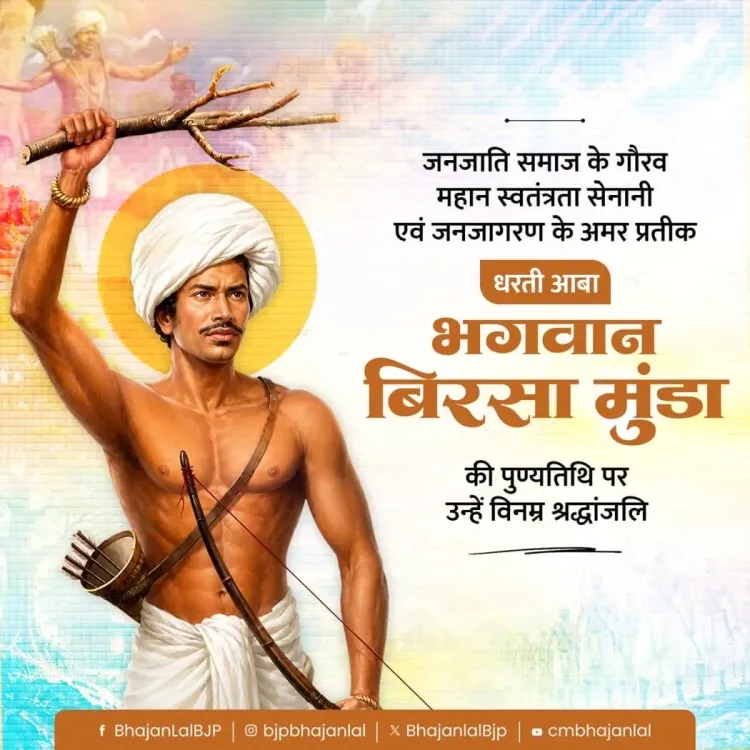
Rajasthan Chief Minister Bhajan Lal Sharma on Tuesday, 9 June 2026 paid tribute to tribal freedom fighter Bhagwan Birsa Munda on his death anniversary, honouring the 19th-century Munda leader as an 'immortal symbol of mass awakening' and the pride of tribal society.
Context
In his post, Sharma offered what he called a 'humble tribute' (vinamra shraddhanjali) to Birsa Munda, reverently addressed as 'Dharati Aaba' — meaning 'Father of the Earth' — a title the Munda community bestowed upon him. The Chief Minister wrote that Munda's struggle for the protection of 'water, forest and land' (jal, jungle aur zameen), his dedication to social justice, and his 'indomitable loyalty' to the motherland would serve as a perennial source of inspiration.
Birsa Munda died on 9 June 1900 inside the Ranchi jail at the age of approximately 25, having led the Ulgulan (Great Tumult) rebellion against British colonial land-alienation policies in the Chotanagpur plateau region of present-day Jharkhand. He remains one of the most venerated figures in India's tribal and freedom-movement history.
Policy Backdrop
The tribute echoes a broader national commemoration framework. The Government of India in 2021 instituted Janjatiya Gaurav Diwas on 15 November — Birsa Munda's birth anniversary — formally embedding his legacy into the state's ceremonial calendar. The Scheduled Tribes and Other Traditional Forest Dwellers (Recognition of Forest Rights) Act, 2006, meanwhile, gave statutory backing to the very principle Munda fought for, recognising individual and community rights over forests and land for the first time in independent India.
Rajasthan itself has a substantial tribal population, with Bhil, Garasia and Meena communities concentrated in the southern and eastern districts of the state. Implementation of pending forest-rights claims under the 2006 Act remains a live administrative and political issue in these regions.
Stakeholders and Impact
Tributes of this nature carry direct political and social weight for Scheduled Tribe communities, who constitute a significant voter bloc in Rajasthan as well as in national politics. Since 2014, BJP-led governments at the Centre and in states have consistently paired symbolic commemorations of tribal icons with targeted welfare delivery, framing jal-jungle-zameen protection as central to their social-justice outreach.
For Adivasi communities, public acknowledgement by a sitting Chief Minister on the death anniversary of Birsa Munda reinforces the state's stated commitment to tribal rights and dignity, even as activists and community groups continue to press for faster resolution of forest-rights claims on the ground.
What's Next
Observers will watch whether Chief Minister Sharma's tribute is followed by concrete administrative action — particularly any notifications from the Rajasthan government on clearing the backlog of individual and community forest-rights claims, or announcements of new district-level tribal development schemes ahead of the next assembly session. The broader pattern in Indian politics suggests that symbolic commemoration and policy delivery are increasingly expected to move in tandem by tribal electorates.
Point of View
Such public acknowledgements serve both as cultural affirmation and electoral signalling. The invocation of 'jal, jungle aur zameen' — a phrase historically associated with Adivasi land-rights movements — by a ruling-party Chief Minister reflects how mainstream parties have sought to absorb the vocabulary of tribal assertion. The real test, as analysts and community groups note, lies in whether symbolic tributes translate into faster resolution of pending forest-rights claims under the 2006 Act.
NationPress
23 Oct 2026
Frequently Asked Questions
Who was Birsa Munda and why is he called Dharati Aaba?
Birsa Munda was a 19th-century Munda tribal leader from the Chotanagpur region who led the Ulgulan rebellion against British colonial land-alienation policies. He is called 'Dharati Aaba', meaning 'Father of the Earth', a title bestowed by the Munda community in recognition of his fight for tribal land, forest and water rights. He died in Ranchi jail on 9 June 1900.
When did Birsa Munda die?
Birsa Munda died on 9 June 1900 inside Ranchi jail at approximately 25 years of age, while in British custody following the Ulgulan uprising.
What is Janjatiya Gaurav Diwas?
Janjatiya Gaurav Diwas is a national commemoration day instituted by the Government of India in 2021, observed every year on 15 November — the birth anniversary of Birsa Munda — to honour the contributions of tribal freedom fighters and communities.
Why did Rajasthan CM Bhajan Lal Sharma pay tribute to Birsa Munda?
Chief Minister Bhajan Lal Sharma paid tribute on the occasion of Birsa Munda's death anniversary on 9 June 2026, honouring his legacy as a tribal freedom fighter and symbol of social justice, in line with the BJP's broader outreach to Scheduled Tribe communities.
What is the significance of jal jungle zameen in tribal politics?
'Jal, jungle aur zameen' — water, forest and land — is a phrase that encapsulates the core demands of tribal and Adivasi communities for rights over their traditional natural resources. It was central to Birsa Munda's rebellion and remains a rallying call in tribal rights movements across India, also given legal backing by the Forest Rights Act of 2006.