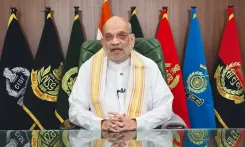
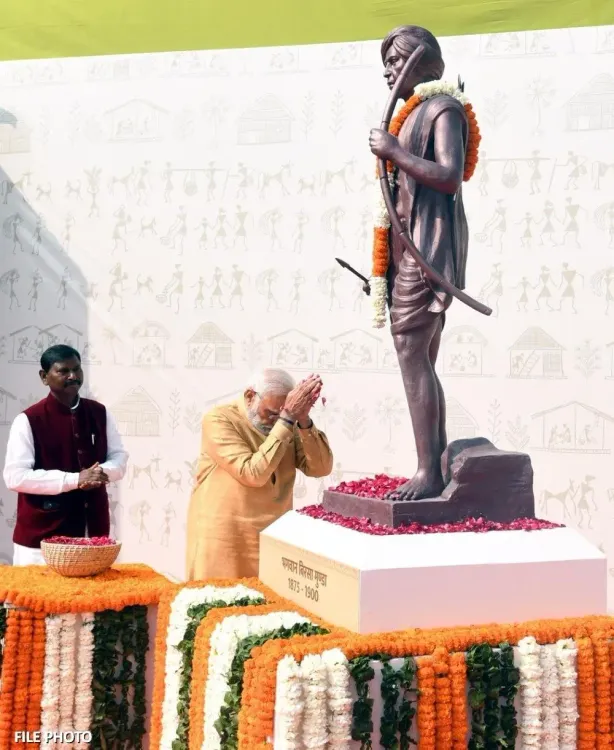
PM Modi pays tribute to Birsa Munda on martyrdom anniversary
Synopsis
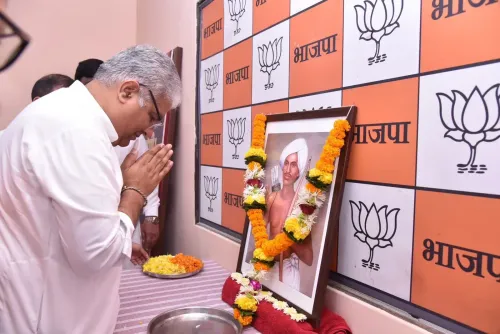
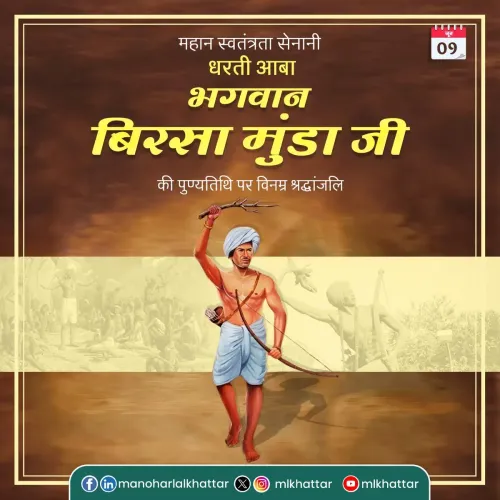
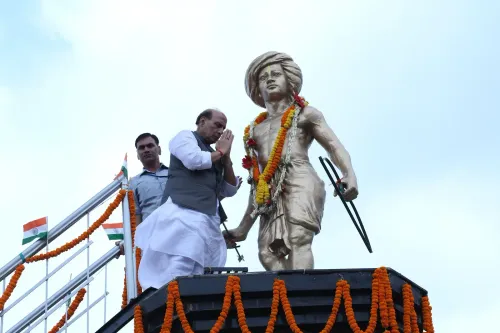
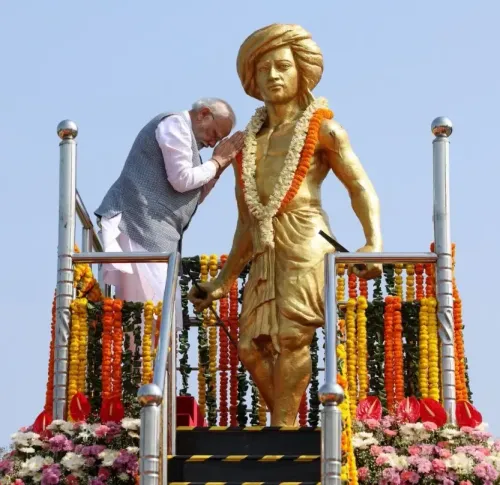
Prime Minister Narendra Modi on 9 June 2026 paid tribute to Bhagwan Birsa Munda on the 126th anniversary of the tribal freedom fighter's death in British custody, saluting his Ulgulan uprising for water, forest and land rights and his dedication to tribal dignity and culture.
Key Takeaways
Bhagwan Birsa Munda died on 9 June 1900 in British custody in Ranchi , aged approximately 25, after leading the Ulgulan uprising of 1899–1900.
His movement centred on protecting tribal rights over jal, jungle aur zameen — water, forest and land — against colonial land-alienation policies.
Prime Minister Narendra Modi offered tribute on 9 June 2026 , calling Munda's life 'dedicated to the self-respect, culture and rights of tribal society.' The central government instituted Janjatiya Gaurav Divas on 15 November in 2021 to honour tribal contributions to India's freedom struggle.
The Forest Rights Act, 2006 formally recognised individual and community rights over forest land, echoing the core demands of Munda's movement.
Tribal communities across Jharkhand , Odisha , Chhattisgarh and neighbouring states observe the martyrdom anniversary with cultural and political gatherings.
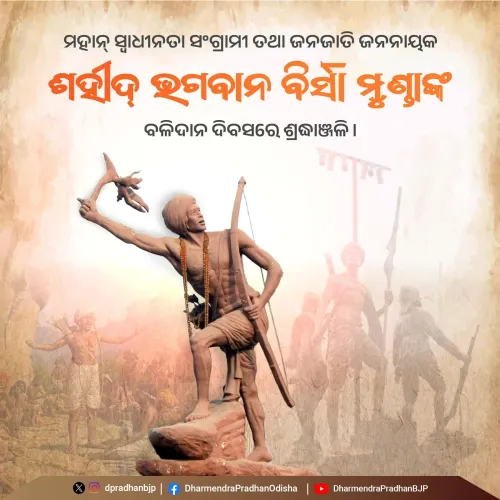
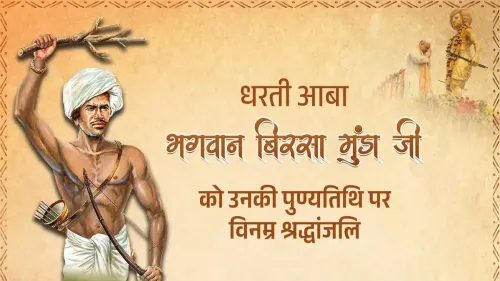
Prime Minister Narendra Modi on Tuesday, 9 June 2026 paid homage to tribal freedom fighter Bhagwan Birsa Munda on his martyrdom anniversary, honouring the leader's lifelong struggle for the rights and dignity of India's tribal communities against British colonial rule.
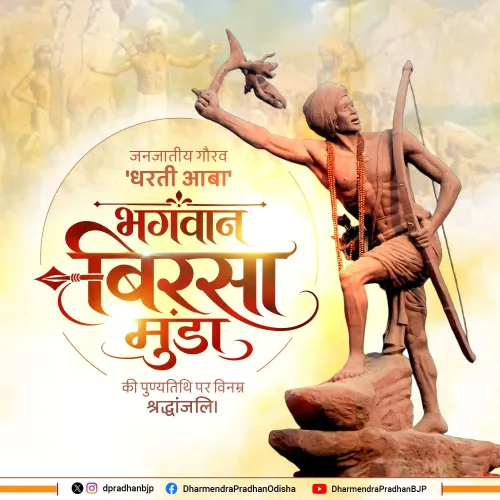
Posting in Hindi, the Prime Minister wrote: 'Dharti Aaba Bhagwan Birsa Munda ji ke balidaan divas par unhe koti-koti naman' — offering 'countless salutations on the martyrdom day of Dharti Aaba Bhagwan Birsa Munda.' He described how Munda had 'fought with indomitable courage against foreign rule to protect jal, jungle aur zameen [water, forest and land],' and that his entire life was 'dedicated to protecting the self-respect, culture and rights of tribal society.'
Context
Bhagwan Birsa Munda died on 9 June 1900 in British custody at Ranchi Jail, aged approximately 25, following his arrest during the Ulgulan ('Great Tumult') uprising of 1899–1900. The movement, centred in present-day Jharkhand, was a direct challenge to colonial land-alienation policies that had displaced tribal communities from ancestral forests and farmlands. Munda is venerated across tribal belts of Jharkhand, Odisha, Chhattisgarh and West Bengal as a messianic leader who fused spiritual authority with political resistance.
His rallying cry of jal, jungle aur zameen — water, forest and land — has remained central to Adivasi rights discourse for over a century and continues to frame contemporary debates on forest rights, displacement and tribal autonomy.
Policy Backdrop
The Scheduled Tribes and Other Traditional Forest Dwellers (Recognition of Forest Rights) Act, 2006, formally codified individual and community rights over forest land, drawing a direct legislative line from the demands Munda articulated in 1900. Successive governments have cited this framework as a fulfilment of the Ulgulan's core demands.
In 2021, the central government instituted Janjatiya Gaurav Divas on 15 November — Birsa Munda's birth anniversary — as a national observance to honour tribal contributions to India's freedom struggle and cultural heritage. The move signalled a deliberate effort to embed tribal icons more prominently into the mainstream national narrative alongside figures from other independence movements.
Stakeholders and Impact
Birsa Munda's martyrdom anniversary holds deep significance for Adivasi populations across central and eastern India. Tribal communities in Jharkhand, Odisha, Chhattisgarh, Madhya Pradesh and neighbouring states observe the day with cultural programmes and political gatherings. For these communities, state-level recognition from the Prime Minister reinforces the constitutional and moral weight attached to their historical grievances.
Broader stakeholders include civil-society groups working on forest-rights implementation, which remains uneven across states, and tribal political parties for whom Munda's legacy is a mobilising force. The Prime Minister's tribute aligns with a wider pattern of the central government expanding targeted welfare and cultural-recognition architecture for Scheduled Tribes, including dedicated ministry portfolios and scholarship programmes.
What's Next
Attention will turn to the rollout status of ongoing tribal welfare schemes and any legislative or administrative action on pending forest-rights claims in the months ahead. The next Janjatiya Gaurav Divas on 15 November 2026 is expected to serve as a focal point for the government to announce or review tribal-welfare milestones. Advocates for Adivasi land rights continue to press for fuller implementation of the 2006 Forest Rights Act, making the gap between symbolic tribute and policy delivery a live political question.
Point of View
Years-long effort by the central government to elevate tribal icons to the front rank of India's national freedom narrative — a project institutionalised through Janjatiya Gaurav Divas in 2021. The invocation of jal, jungle aur zameen is politically significant: it frames the BJP's tribal outreach in the language of Adivasi self-determination rather than mere welfare delivery. With tribal-majority constituencies competitive in Jharkhand, Odisha and Chhattisgarh, symbolic gestures of this kind carry electoral as well as cultural weight. The sharper test, however, remains whether ceremonial reverence translates into accelerated implementation of the Forest Rights Act and resolution of pending land-title claims.
NationPress
21 Sept 2026
Frequently Asked Questions
Who was Bhagwan Birsa Munda and why is he called 'Dharti Aaba'?
Bhagwan Birsa Munda was a tribal freedom fighter from present-day Jharkhand who led the Ulgulan uprising against British colonial rule in 1899–1900 to defend tribal rights over water, forests and land. He is called 'Dharti Aaba' — meaning 'Father of the Earth' — by tribal communities who venerate him as a spiritual and political leader.
When did Birsa Munda die and how?
Birsa Munda died on 9 June 1900 in British custody at Ranchi Jail, aged approximately 25, after being arrested during the Ulgulan movement. Official records cited cholera; the circumstances of his death have long been a subject of historical scrutiny.
What is Janjatiya Gaurav Divas and when is it observed?
Janjatiya Gaurav Divas is a national observance instituted by the central government in 2021 and held every year on 15 November, which is Birsa Munda's birth anniversary, to honour the contributions of tribal communities to India's freedom struggle and cultural heritage.
What was the Ulgulan movement led by Birsa Munda?
The Ulgulan, meaning 'Great Tumult,' was an armed uprising led by Birsa Munda in 1899–1900 in the Chota Nagpur plateau region of present-day Jharkhand. It demanded the restoration of tribal rights over ancestral forest land and an end to British land-alienation policies that had displaced Adivasi communities.
What is the Forest Rights Act and how does it relate to Birsa Munda's legacy?
The Scheduled Tribes and Other Traditional Forest Dwellers (Recognition of Forest Rights) Act, 2006, formally recognised the rights of tribal and forest-dwelling communities over land and resources — directly addressing the jal, jungle aur zameen demands at the heart of Birsa Munda's Ulgulan uprising more than a century earlier.