Trump Warns He Will Enforce Border Policy if Texas Dems Don't
Synopsis
President Trump warned that if Texas Democrats remove manpower from the US-Mexico border, he will personally enforce his border policy — a sharp escalation in the federal-state standoff over immigration enforcement authority.
Key Takeaways
President Trump issued a direct warning on November 5, 2026 : 'If they don't continue my policy, I will.' The statement targets Texas Democrats who may reduce state personnel at the US-Mexico border .
The US-Mexico border stretches 1,954 miles and has been a central flashpoint in American immigration policy for decades.
Trump's first term saw landmark border measures including a 2017 border security executive order and the 2019 Migrant Protection Protocols.
Federal override options include CBP redeployments, National Guard federalisation, and DHS personnel surges.
The standoff reflects a broader pattern of alternating federal-state cooperation and conflict on immigration enforcement.
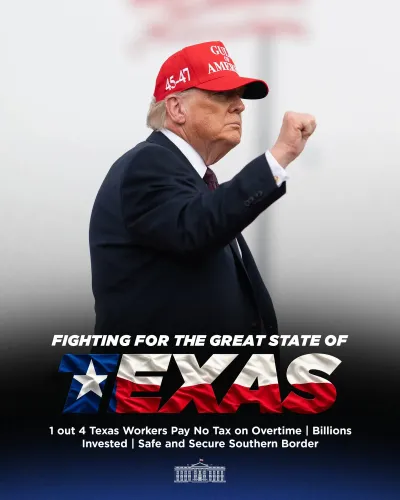
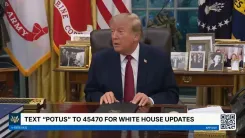
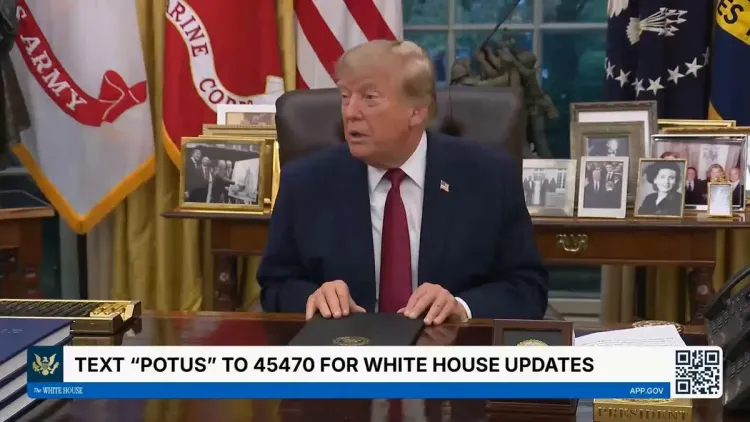
A six-word warning from President Donald Trump landed with unmistakable force on Thursday, November 5, 2026: if Texas Democrats pull manpower from the southern border, the federal government will step in and do it themselves. The statement, shared by the White House on X, marks a sharp escalation in the ongoing friction between the Trump administration and state-level Democratic officials over who controls the security apparatus along the US-Mexico border.
The Warning in Plain Terms
The White House posted a direct quote from the President: 'If they don't continue my policy, I will.' The context — Democrats in Texas potentially removing personnel from border operations — frames the statement as both a political threat and a governance ultimatum. It is a compact sentence, but its implications stretch across nearly 1,954 miles of international boundary and directly into the fault lines of American federalism.
Texas, the Border, and the Fight Over Who Deploys Whom
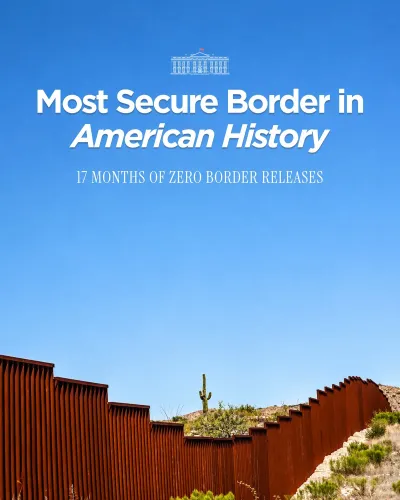
Texas has been ground zero for the immigration debate since Trump's first term, when his 2017 executive orders directed a surge in border security resources and initiated the construction of a border wall. The Migrant Protection Protocols — the so-called 'Remain in Mexico' policy — followed in 2019, requiring asylum seekers to wait on the Mexican side while their US hearings were processed. Both measures were fiercely contested, reversed under the subsequent administration, and then revived as Trump returned to office.
The current dispute follows a well-worn pattern: presidential administrations from both parties have cycled between expanding and contracting federal-state cooperation on enforcement, producing rounds of lawsuits, withheld funding, and public standoffs. What is new here is the directness of the threat — the President is effectively telling state officials that federal authority will not wait for state compliance.
What Federal Override Would Actually Mean
If Washington moves to fill any gap left by reduced state manpower, the tools available include US Customs and Border Protection redeployments, National Guard federalisation under Title 10 authority, or additional Department of Homeland Security personnel surges. Each option carries its own legal, logistical, and political weight. Border security personnel and Texas state officials are now watching whether the warning is followed by concrete executive action — or whether it remains a political signal ahead of any budgetary moves in Austin.
For India and the broader global audience, this matters as a live demonstration of how the world's largest democracy manages internal sovereignty disputes over one of its most charged policy areas. When Washington and a major US state clash over who guards the border, the reverberations touch immigration queues, diplomatic corridors, and security partnerships far beyond Texas.
The next move belongs to Austin — and the world is watching whether a six-word quote becomes a six-figure federal deployment.
Point of View
Regardless of which party controls state resources. This fits a consistent arc from his first term: use sharp, public ultimatums to box in state opponents before any formal legal or budgetary process begins. For Texas Democrats, the political calculus is delicate: resisting federal pressure plays well with their base but risks being blamed for any security incident that follows. The broader pattern — Washington versus a major state over border manpower — will likely intensify as the 2026 political cycle deepens.
NationPress
6 Nov 2026
Frequently Asked Questions
What did Trump say about Texas Democrats and the border?
President Trump warned that if Texas Democrats do not continue his border policy, he will enforce it himself — a direct threat to intervene federally if state manpower is reduced at the US-Mexico border.
Can the US President override Texas on border security?
Yes. The federal government has several tools, including federalising the National Guard under Title 10, redeploying CBP officers, and surging DHS personnel — all without requiring state cooperation.
What is Trump's border policy?
Trump's border policy centres on strict enforcement, including border wall construction (initiated by executive order in 2017) and the Migrant Protection Protocols ('Remain in Mexico') introduced in 2019, which required asylum seekers to wait in Mexico during US proceedings.
Why are Texas Democrats in conflict with Trump over the border?
Texas Democratic officials have at times pushed back against large state resource commitments to federal border enforcement priorities, creating friction over who directs — and funds — border security operations on the ground.
How does the US federal-state border dispute affect India?
The standoff affects global immigration dynamics, including US visa and asylum processing timelines, and signals how the Trump administration will respond to state resistance — relevant context for Indian nationals navigating US immigration pathways.