Khattar pays tribute to Birsa Munda on death anniversary
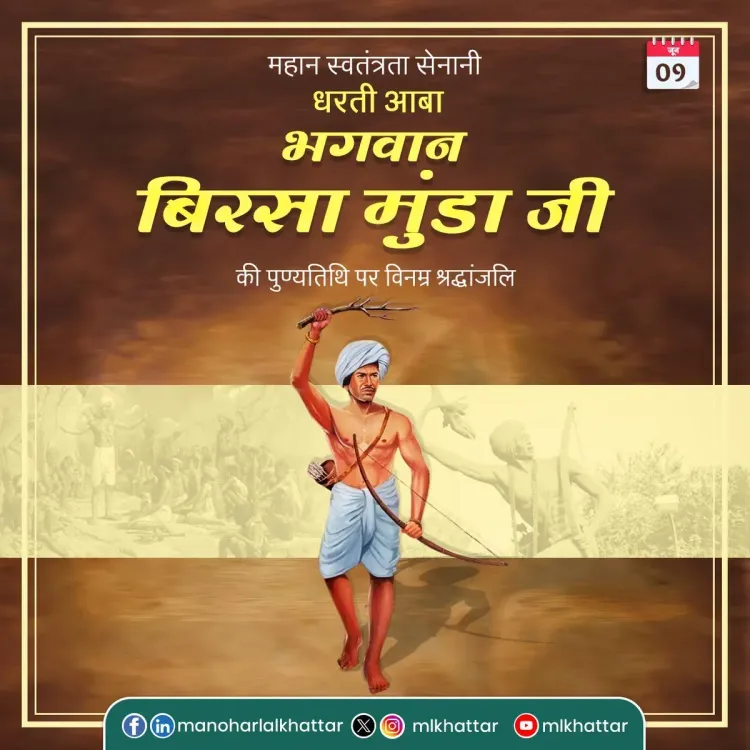
Synopsis
Union Power Minister Manohar Lal Khattar paid homage to Bhagwan Birsa Munda on his death anniversary on 9 June 2026, saluting the Munda tribal leader's sacrifice in the Ulgulan uprising against British rule and his role in awakening national consciousness among tribal communities.
Key Takeaways
Manohar Lal Khattar , Union Minister of Power and Housing & Urban Affairs, posted a tribute to Bhagwan Birsa Munda on 9 June 2026 , his death anniversary.
Birsa Munda died on 9 June 1900 in Ranchi Jail at the age of 25 , after leading the Ulgulan uprising against British land policies.
Khattar described Birsa Munda's sacrifice as an eternal inspiration for future generations in the service of the nation.
The Government of India declared 15 November as Janjatiya Gaurav Diwas in 2021 to institutionally honour Birsa Munda and other tribal freedom fighters.
Tributes to Birsa Munda are part of a broader government effort to integrate tribal icons into the national freedom struggle narrative across central and eastern India.
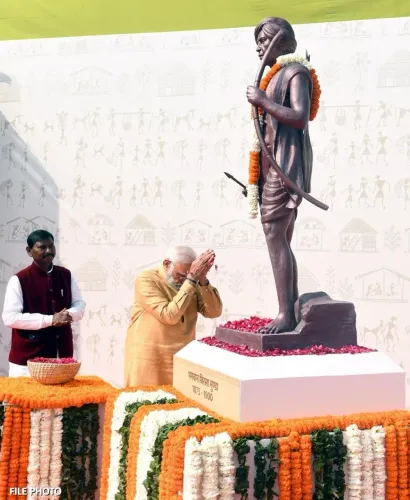
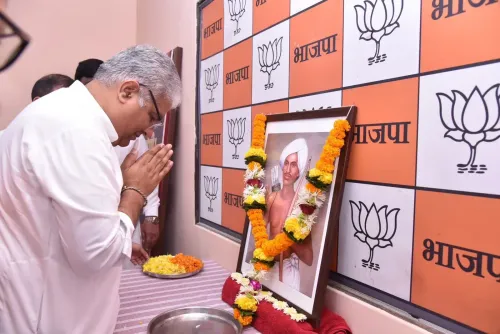
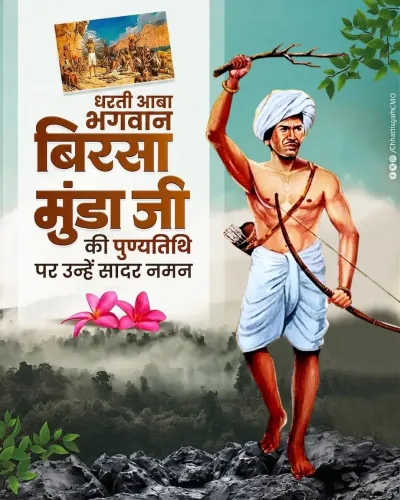
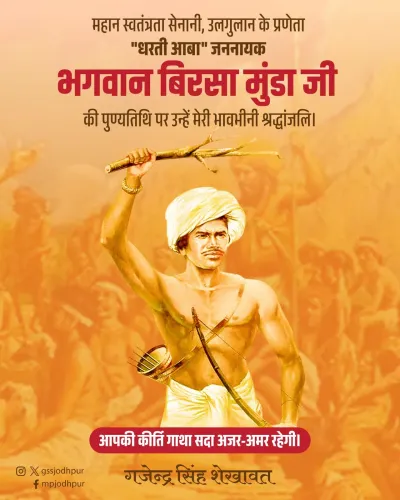
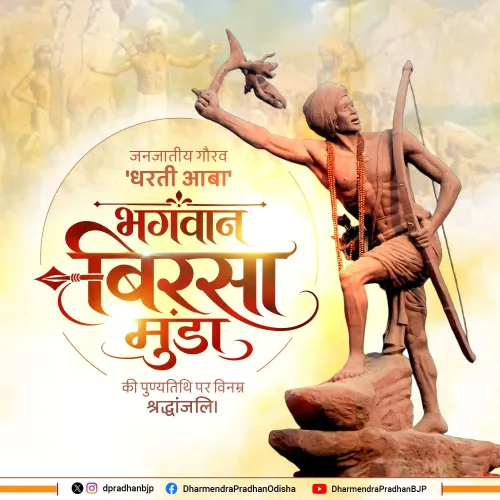
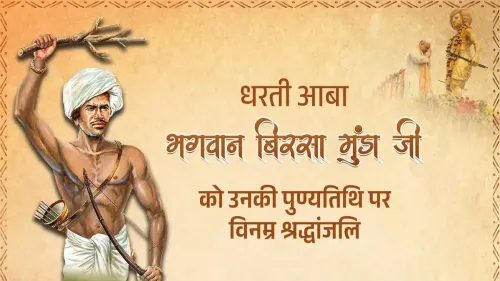
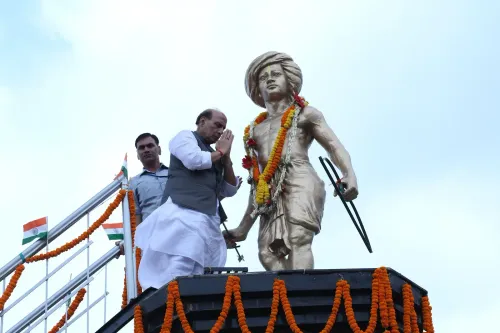
Union Power Minister Manohar Lal Khattar on Tuesday, 9 June 2026, paid homage to tribal freedom fighter Bhagwan Birsa Munda on his death anniversary, honouring the 19th-century Munda leader's sacrifice for tribal identity and the protection of the motherland.
Khattar's post, written in Hindi, offered a humble tribute — 'जनजातीय अस्मिता और मातृभूमि की रक्षा के लिए अपना सर्वस्व अर्पण करने वाले धरती आबा भगवान बिरसा मुंडा जी को उनकी पुण्यतिथि पर विनम्र श्रद्धांजलि' ('Humble tribute to Dharti Aaba Bhagwan Birsa Munda, who gave everything for the protection of tribal identity and the motherland, on his death anniversary'). The minister added that Birsa Munda's indomitable courage and sacrifice awakened the spirit of nationalism and organised tribal society against injustice.
Context
Birsa Munda was born on 15 November 1875 in the Ulihatu village of present-day Jharkhand. Revered as 'Dharti Aaba' (Father of the Earth) by the Munda tribal community, he led the Ulgulan ('Great Tumult') movement — an armed uprising against British land-grab policies and the oppressive diku (outsider landlord) system that had displaced tribal communities from their ancestral forests and farmlands. He was arrested by British authorities and died in Ranchi Jail on 9 June 1900, aged just 25, under circumstances that remain a subject of historical inquiry.
Policy Backdrop
The Government of India institutionalised the commemoration of Birsa Munda's legacy in 2021, declaring 15 November — his birth anniversary — as Janjatiya Gaurav Diwas (Tribal Pride Day) to honour him and other tribal freedom fighters. The move was part of a broader effort to integrate tribal icons more prominently into the national freedom struggle narrative, including through school curricula and cultural programmes.
Central and state governments have increasingly elevated such figures in official commemorations, particularly in Scheduled Tribe-majority regions across central and eastern India — states such as Jharkhand, Chhattisgarh, Odisha, and Madhya Pradesh — where tribal welfare and identity carry significant political and social weight.
Stakeholders and Impact
Birsa Munda remains a towering symbol of resistance and dignity for tribal communities across India, particularly the Munda, Ho, and other Adivasi groups of the Chota Nagpur Plateau. His image adorns the Jharkhand Legislative Assembly and he is depicted on the Rs 10 coin issued by the Reserve Bank of India. Annual tributes from senior government figures reinforce the state's recognition of tribal contributions to India's independence movement.
For the BJP-led central government, commemorating Birsa Munda on his death anniversary is also part of sustained political outreach to tribal voters, a constituency that spans dozens of parliamentary and assembly constituencies across the country's tribal heartland.
What's Next
With Janjatiya Gaurav Diwas observed every 15 November, the death anniversary on 9 June typically sees tributes from political leaders across party lines but fewer formal state events. Observers of tribal welfare policy will watch for any announcements around housing, forest rights, or livelihood schemes in the coming weeks that may be timed to reinforce the government's outreach to Scheduled Tribe communities. Khattar's tribute, in his capacity as a senior Union minister, signals continued institutional emphasis on honouring tribal freedom fighters as part of the national heritage.
Point of View
Particularly around key anniversaries, as part of sustained political outreach to Scheduled Tribe communities in central and eastern India. The institutionalisation of Janjatiya Gaurav Diwas in 2021 gave this outreach a formal state architecture, and individual ministerial tributes on the death anniversary reinforce that framework between the two annual milestones. For a minister whose current portfolio — power and urban affairs — has limited direct tribal-welfare linkage, such posts also serve to signal broad national consciousness beyond sectoral responsibilities. The broader arc points to the tribal vote bank remaining a strategic priority for the ruling dispensation ahead of assembly elections in tribal-heavy states.
NationPress
21 Sept 2026
Frequently Asked Questions
When did Birsa Munda die and why is the date significant?
Birsa Munda died on 9 June 1900 in Ranchi Jail at the age of 25. The date is observed as his death anniversary, with tributes paid by political leaders and tribal communities across India.
Who is called Dharti Aaba and what does it mean?
Bhagwan Birsa Munda is called Dharti Aaba , meaning 'Father of the Earth' in the Munda language. The title was given to him by his community in recognition of his spiritual authority and leadership.
What was the Ulgulan movement led by Birsa Munda?
The Ulgulan , meaning 'Great Tumult', was an armed uprising led by Birsa Munda in the late 1890s against British land-acquisition policies and the exploitation of tribal communities by outsider landlords in the Chota Nagpur Plateau region of present-day Jharkhand .
What is Janjatiya Gaurav Diwas and when is it observed?
Janjatiya Gaurav Diwas (Tribal Pride Day) is observed on 15 November every year, coinciding with Birsa Munda's birth anniversary. The Government of India instituted it in 2021 to honour tribal freedom fighters and their contribution to the national movement.
Why did Manohar Lal Khattar pay tribute to Birsa Munda?
Manohar Lal Khattar , Union Minister of Power and Housing & Urban Affairs, paid tribute on 9 June 2026 — Birsa Munda's death anniversary — honouring the tribal leader's sacrifice for tribal identity and the motherland, in line with the government's practice of commemorating tribal freedom fighters.