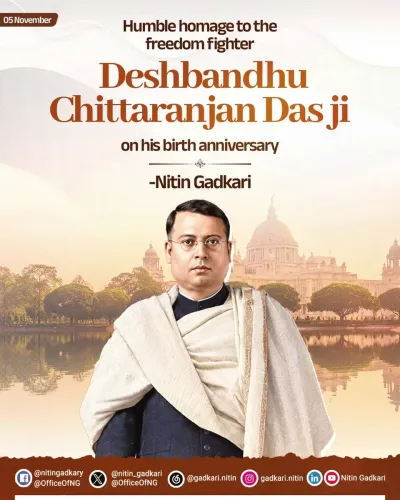
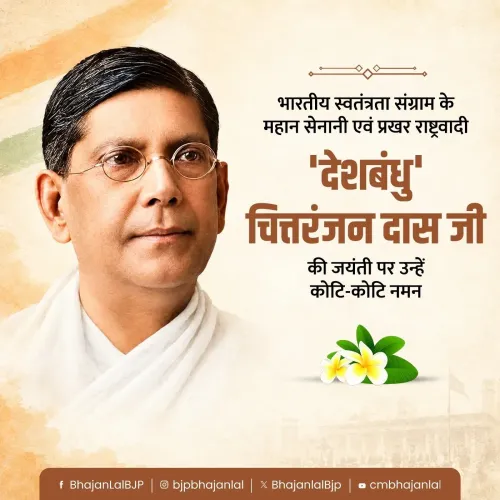
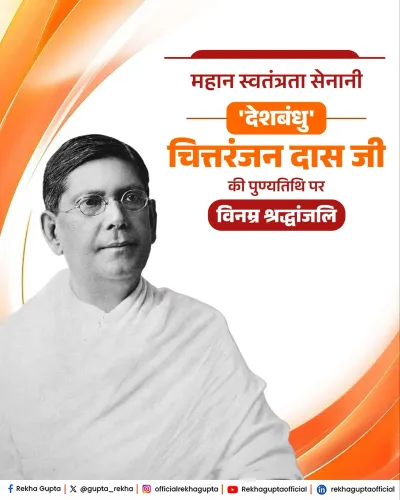
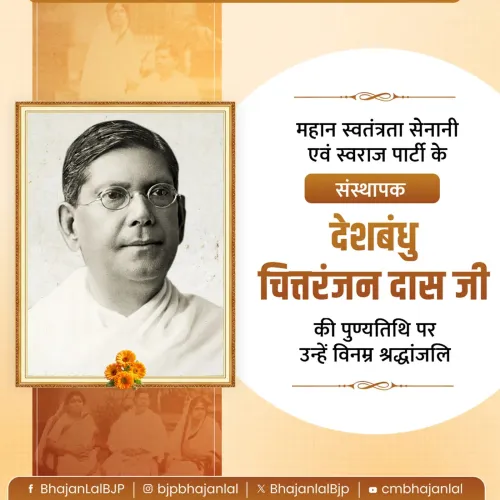
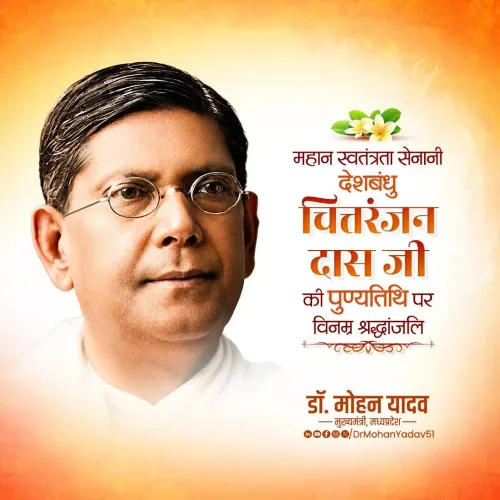
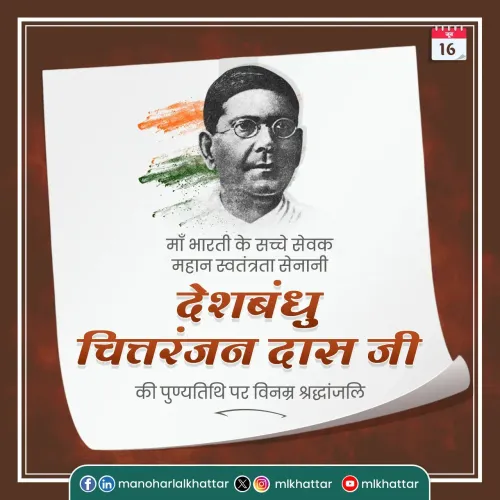
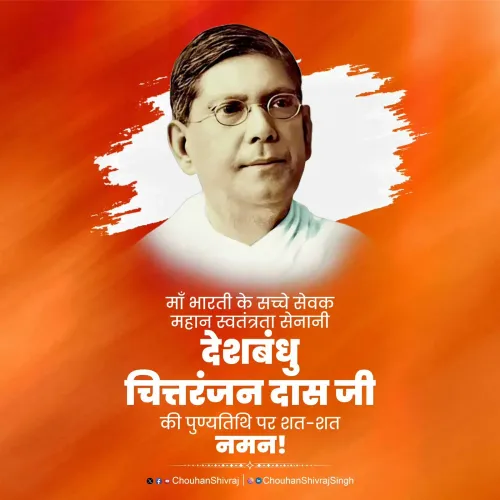
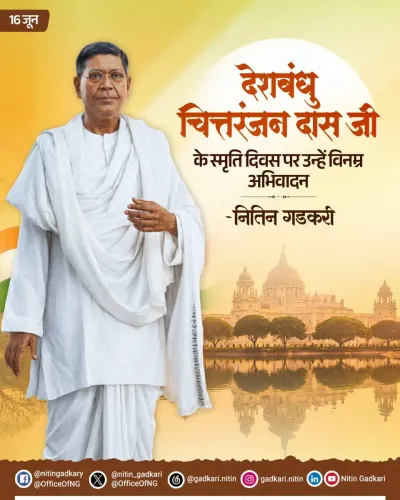
Khattar pays tribute to Deshbandhu Chittaranjan Das on birth anniversary
Synopsis
Union Power Minister Manohar Lal Khattar honoured 'Deshbandhu' Chittaranjan Das on his birth anniversary, calling the Congress president-turned-Swaraj Party co-founder an enduring inspiration for his selfless commitment to India's independence.
Key Takeaways
Manohar Lal Khattar posted a birth-anniversary tribute to Chittaranjan Das on 5 November 2026 .
Das, known as 'Deshbandhu' (Friend of the Nation), lived from 1870 to 1925 .
He served as President of the Indian National Congress in 1921 during the Non-Cooperation Movement.
He co-founded the Swaraj Party alongside Motilal Nehru to contest colonial councils from within.
Khattar praised Das's 'unwavering commitment to Swaraj ' as an inspiration for all Indians.
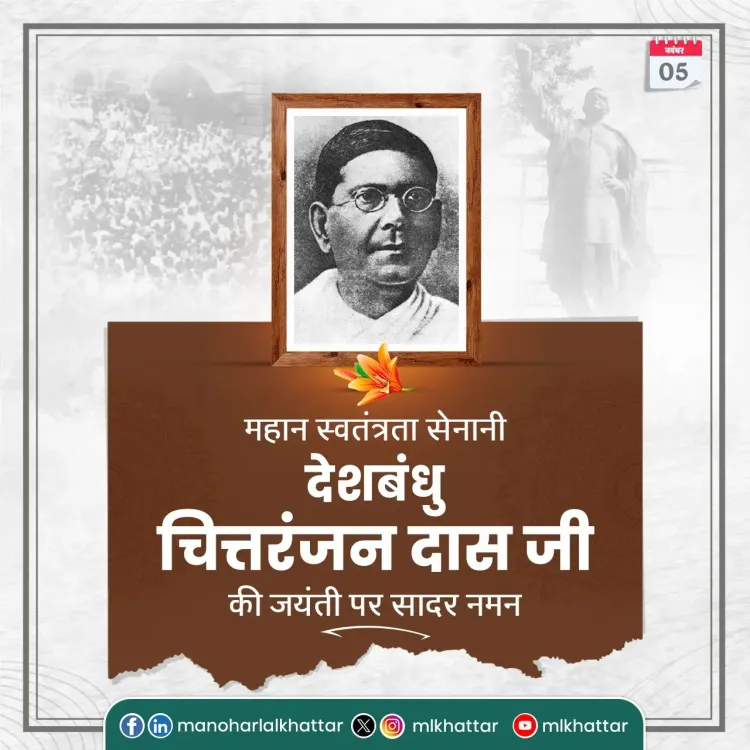
A freedom fighter who surrendered a flourishing legal career to chase an independent India — Union Power Minister Manohar Lal Khattar marked the birth anniversary of 'Deshbandhu' Chittaranjan Das on Thursday, 5 November 2026, saluting the leader as a true servant of Maa Bharati (Mother India).
Posting on X in Hindi, Khattar wrote: 'On the birth anniversary of a great freedom fighter and true servant of Mother India, 'Deshbandhu' Chittaranjan Das ji, I bow to him with reverence. He dedicated his entire life to the freedom and reconstruction of the nation. His unwavering commitment to Swaraj and his resolve for national service remain an inspiration for all of us.'
Who was Deshbandhu Chittaranjan Das?
Chittaranjan Das (1870–1925) was one of the towering figures of India's independence movement. A celebrated lawyer in Calcutta, he famously argued in the defence of Bal Gangadhar Tilak during his sedition trial — and later walked away from a highly lucrative practice to plunge full-time into the freedom struggle. The title 'Deshbandhu' — meaning 'Friend of the Nation' — was bestowed by a grateful public, not claimed.
He served as President of the Indian National Congress in 1921, steering the organisation through the turbulent Non-Cooperation Movement. When the movement was called off after the Chauri Chaura incident of 1922, Das, alongside Motilal Nehru, took a different path — co-founding the Swaraj Party to contest legislative councils from within and obstruct colonial governance. It was a bold, contrarian strategy that kept constitutional pressure on the British even as mass agitation paused.
A legacy built on sacrifice, not just sentiment
Das died young, at 55, in June 1925 — but left behind a Bengal transformed in its political consciousness. His insistence on Swaraj — self-rule — was not merely rhetorical; he poured personal wealth into the cause and championed Hindu-Muslim unity at a time of communal strain. His influence shaped a generation of Bengali leaders who carried the torch through to 1947.
Khattar's tribute follows the well-established practice among Indian political leaders of marking the birth anniversaries of pre-independence figures, a tradition that cuts across party lines and keeps the memory of the freedom struggle alive in public discourse.
The 'Friend of the Nation' never lived to see the nation he fought for become free — but his blueprint for principled dissent inside and outside the system still echoes in every debate about how to hold power accountable.
Point of View
Projecting a pan-national historical continuity. Das's legacy of institutional engagement through the Swaraj Party also carries a subtle contemporary resonance: the idea that working within systems, not just against them, can be a form of principled resistance.
NationPress
5 Nov 2026
Frequently Asked Questions
Who was Chittaranjan Das and why is he called Deshbandhu?
'Deshbandhu' means 'Friend of the Nation' in Bengali — a title bestowed on Chittaranjan Das (1870–1925) by the public in recognition of his selfless dedication to India's freedom struggle. He gave up a thriving legal career to join the independence movement full-time.
What was Chittaranjan Das's role in the Indian National Congress?
Chittaranjan Das served as President of the Indian National Congress in 1921 , leading the organisation during the Non-Cooperation Movement launched by Mahatma Gandhi.
What was the Swaraj Party and who founded it?
The Swaraj Party was co-founded by Chittaranjan Das and Motilal Nehru in 1922 after the suspension of the Non-Cooperation Movement. It aimed to contest elections to colonial legislative councils and obstruct British governance from within.
Why did Manohar Lal Khattar post a tribute to Chittaranjan Das?
Union Power Minister Manohar Lal Khattar posted the tribute on 5 November , the birth anniversary of Chittaranjan Das , as part of the established practice among Indian political leaders of publicly honouring freedom fighters on their birth anniversaries.
When did Chittaranjan Das die?
Chittaranjan Das died in June 1925 at the age of 55 , more than two decades before India achieved independence in 1947.