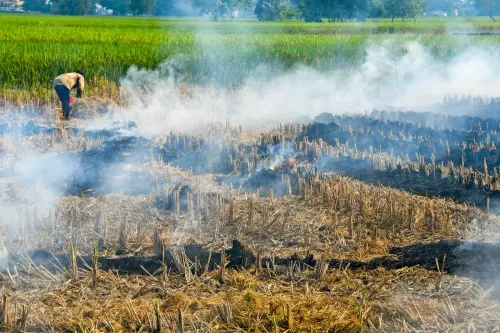
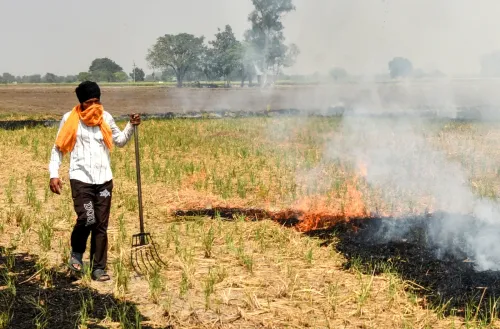
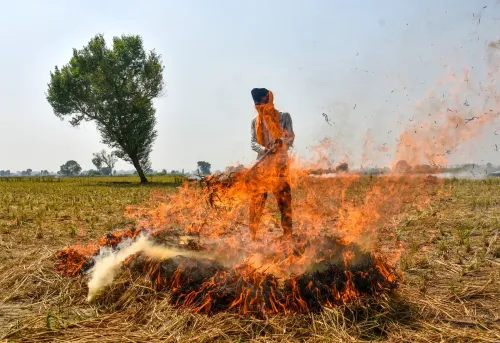
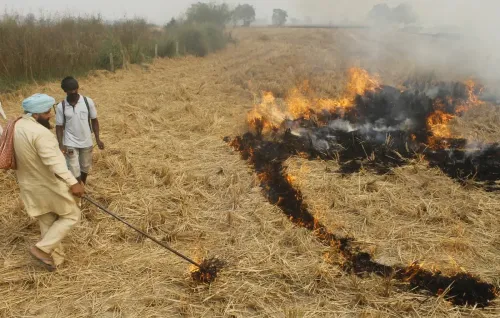
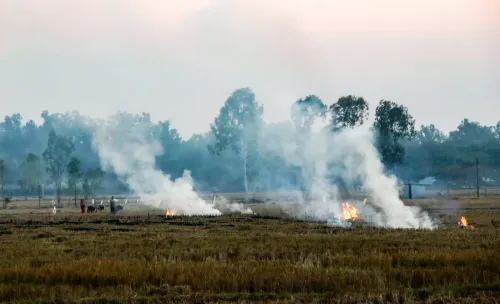
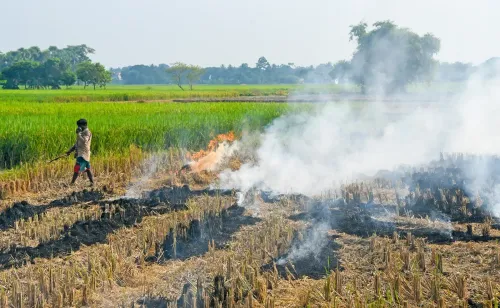
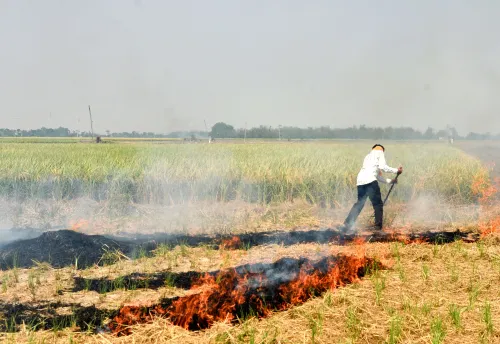
Punjab stubble burning: 2,347 cases recorded, Tarn Taran leads with 558
Synopsis
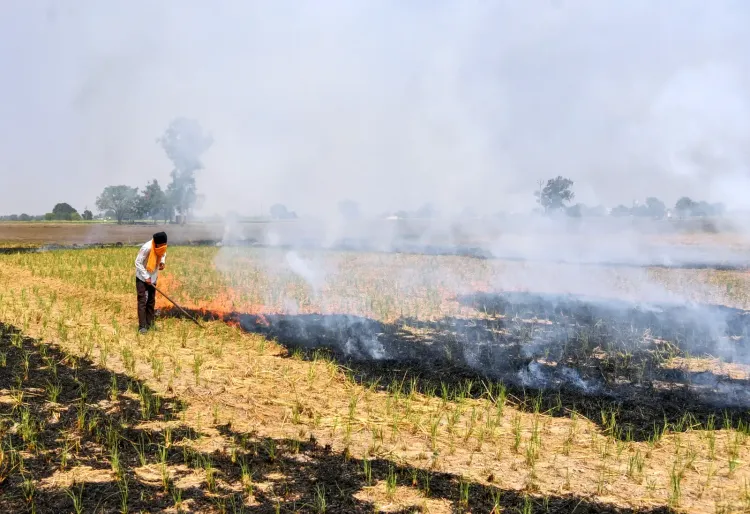
Punjab has logged 2,347 stubble burning cases with over 85% of its paddy harvest already done — and the fires keep coming. Despite 647 FIRs, ₹40.37 lakh in fines, and hundreds of red entries in land records, Tarn Taran alone accounts for 558 incidents, exposing the limits of punitive enforcement when farmers face an impossible turnaround window between crops.
Key Takeaways
Punjab recorded 2,347 stubble burning incidents as of 4 November 2026 , per the Punjab Pollution Control Board (PPCB) .
Tarn Taran leads with 558 cases ; Ferozepur (316), Amritsar (207), Bathinda (167), and Sangrur (163) follow.
Environmental fines totalling ₹40.37 lakh have been imposed; ₹23.05 lakh recovered so far.
647 FIRs registered and red entries made in revenue records for 723 cases .
Paddy harvesting completed on 85.10% of 32.87 lakh hectares in Punjab, yet fires continue to be reported.
Punjab has recorded a total of 2,347 incidents of stubble burning as of 4 November 2026, with Tarn Taran district topping the list at 558 cases, according to data released by the Punjab Pollution Control Board (PPCB). The figures come as North India continues to battle deteriorating air quality during the paddy harvesting season.
Scale of Enforcement Action
The PPCB report shows that authorities have imposed environmental fines totalling ₹40.37 lakh across these cases, of which ₹23.05 lakh has been recovered so far. Of the 1,942 fields inspected, fires were confirmed at 868 locations, and environmental compensation has been imposed in 801 cases.
Administrative action has been sweeping in scale: 647 FIRs have been registered, 'red entries' have been made in revenue records for 723 cases, and 689 warning notices have been issued by concerned authorities, officials confirmed.
District-Wise Breakdown
Tarn Taran leads with 558 cases, followed by Ferozepur at 316, Amritsar at 207, Bathinda at 167, and Sangrur at 163. 'This shows that the problem of stubble burning persists across several districts in the state,' officials noted.
In Patiala, 110 incidents have been recorded so far. Authorities inspected 67 locations and confirmed fires at 24 of them. Environmental compensation was imposed in 15 instances, with a fine of ₹80,000 levied, of which ₹35,000 has been recovered. Additionally, 21 FIRs have been registered and red entries made in 10 cases, alongside 25 warning notices.
Harvesting Progress and the Enforcement Gap
According to the PPCB, paddy harvesting has been completed on 85.10% of Punjab's total 32.87 lakh hectares of paddy area. Despite the advanced stage of the harvest, stubble burning incidents continue to be reported — pointing to a persistent gap between enforcement intent and on-ground compliance.
'Departmental data indicates that the administration is taking various measures — including conducting inspections, imposing fines, registering FIRs, and initiating other enforcement actions — yet completely curbing the practice of setting fire to fields remains a significant challenge,' officials said.
Why the Problem Persists
Stubble burning remains entrenched in Punjab's agricultural cycle because farmers face a narrow window between paddy harvest and the sowing of the next wheat crop. The cost and logistics of mechanised stubble management — using Happy Seeders and other equipment — are beyond the immediate reach of many small and marginal farmers. This is not a new crisis: Punjab has recorded thousands of fire incidents annually for over a decade, with enforcement drives yielding only partial compliance each season. Notably, the high share of active fires in districts like Tarn Taran and Ferozepur, which border the Majha and Malwa regions, historically correlates with elevated pollution in the Delhi-NCR airshed downstream.
Point of View
FIRs filed, red entries made, and yet the fires keep burning. The numbers from the PPCB are not evidence of a crackdown working; they are evidence of scale the crackdown cannot match. With 85% of the harvest done and fires still widespread, the enforcement window is nearly closed for this season. The harder question is structural: until the economics of mechanised residue management improve dramatically for small farmers, next year's numbers will look similar. Downstream Delhi's air quality is not a Punjab problem to solve alone — it demands a funded, Centre-state solution, not just FIRs.
NationPress
5 Nov 2026
Frequently Asked Questions
How many stubble burning cases have been recorded in Punjab in 2026?
Punjab has recorded 2,347 stubble burning incidents as of 4 November 2026 , according to the Punjab Pollution Control Board (PPCB). The cases span multiple districts, with enforcement action ongoing throughout the paddy harvesting season.
Which district in Punjab has the most stubble burning cases?
Tarn Taran has the highest number of stubble burning incidents in Punjab, with 558 cases recorded so far. It is followed by Ferozepur (316), Amritsar (207), Bathinda (167), and Sangrur (163).
What action has the Punjab government taken against stubble burning?
Authorities have imposed environmental fines totalling ₹40.37 lakh , registered 647 FIRs , and made 'red entries' in revenue records for 723 cases . Additionally, 689 warning notices have been issued and 1,942 fields inspected.
Why do farmers in Punjab continue to burn stubble despite penalties?
Farmers face a narrow window between paddy harvest and the sowing of the wheat crop, leaving little time for mechanised residue management. The cost of alternatives like Happy Seeders is often prohibitive for small and marginal farmers, making fire the fastest and cheapest option despite the legal risks.
How much of Punjab's paddy harvest has been completed?
According to the PPCB, paddy harvesting has been completed on 85.10% of Punjab's total 32.87 lakh hectares of paddy area as of the latest report. Despite the advanced harvest stage, stubble burning incidents continue to be reported across the state.