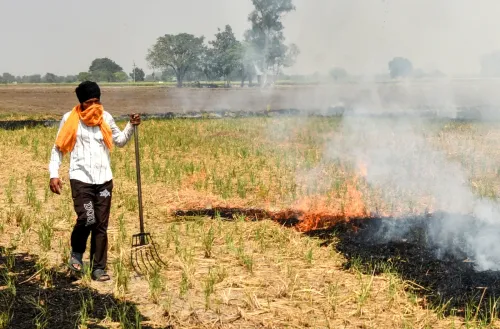
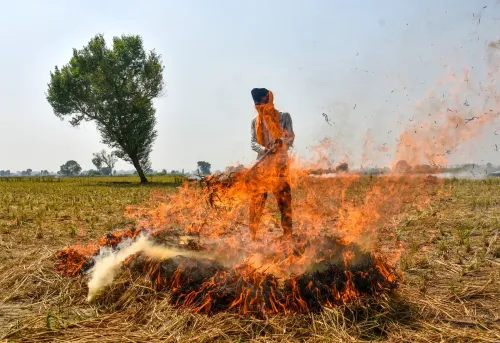
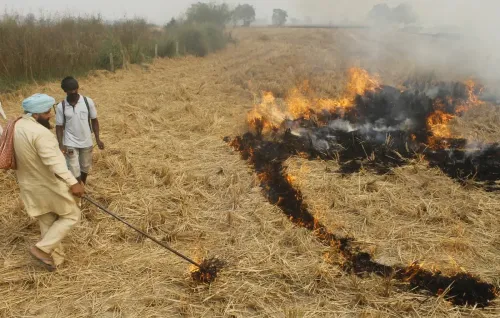
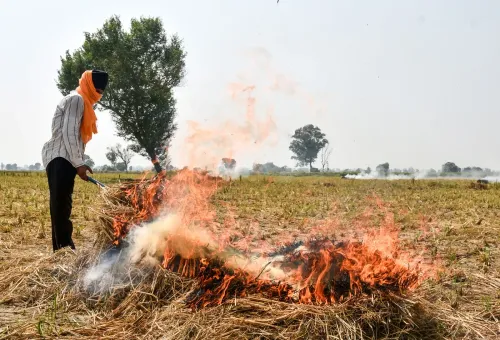
Punjab stubble burning: 2,196 incidents recorded, 494 FIRs filed
Synopsis
Punjab has logged 2,196 stubble burning cases this season, yet no charge sheets have been filed and no officer suspended despite 494 FIRs and ₹32.05 lakh in fines. With Tarn Taran alone accounting for 545 fires and the season yet to peak, the data lays bare an enforcement gap that keeps North India's annual air quality crisis on repeat.
Key Takeaways
2,196 stubble burning incidents recorded in Punjab as of 3 November 2026 , per the PPCB report.
494 FIRs registered; 636 cases attract Environmental Compensation totalling ₹32.05 lakh , of which ₹20.60 lakh recovered.
Tarn Taran leads with 545 cases , followed by Ferozepur ( 305 ) and Amritsar ( 198 ).
527 fields have red entries in revenue records; prosecution initiated in 16 cases .
No charge sheets filed and no suspension orders issued against any nodal or supervisory officer despite 609 warning notices for negligence.
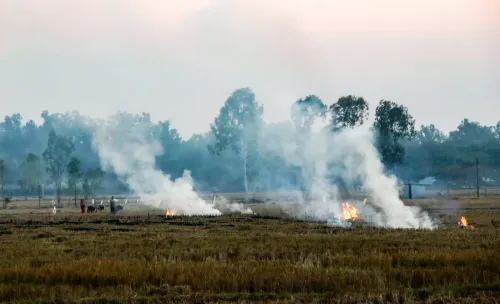
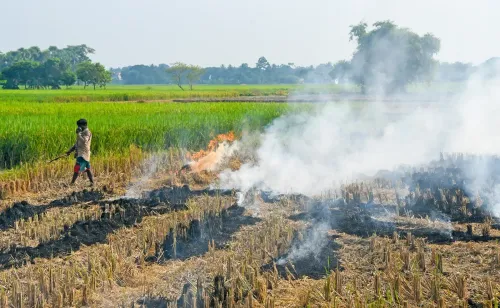
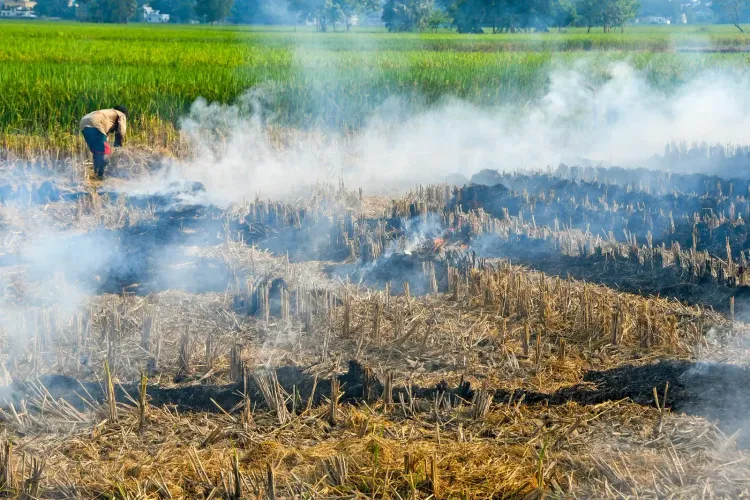
A total of 2,196 stubble burning incidents have been recorded across Punjab as of 3 November 2026, with the Punjab Pollution Control Board (PPCB) registering 494 FIRs in connection with the violations, officials confirmed on Wednesday. The figures come as air quality in North India continues to deteriorate with the onset of winter.
Scale of the Crisis
According to the PPCB report, 1,487 fields across the state have been inspected so far, with stubble burning confirmed at 701 locations. Authorities additionally identified 81 fields where evidence of burning was discovered. Red entries have been made in the revenue records of 527 fields, and prosecution proceedings have been initiated in 16 cases.
Environmental Compensation (EC) has been imposed in 636 cases. The total fine levied stands at ₹32.05 lakh, of which ₹20.60 lakh has already been recovered, according to officials.
District-wise Breakdown
Tarn Taran district has recorded the highest number of incidents in the state, with 545 cases. It is followed by Ferozepur with 305 cases, Amritsar with 198, Sangrur with 154, and Bathinda with 148. Additional incidents have been reported in Fazilka (52), Faridkot (66), and Gurdaspur (108).
In Patiala district, 93 incidents were recorded. Authorities inspected 39 fields and confirmed burning at 10 locations. Environmental Compensation was imposed in 7 cases, with a total fine of ₹40,000 levied, of which ₹20,000 has been recovered. FIRs have been filed in nine cases, red entries made for 10 fields, and warning notices issued to 10 farmers.
Enforcement Gaps and Official Response
Notably, no charge sheets have been filed to date, nor have any suspension orders been issued against nodal or supervisory officers found negligent — despite 609 warning notices having been served. Critics argue this points to a gap between enforcement on paper and accountability in practice.
'Government data indicates that despite actions taken against stubble-burning incidents, such fires continue to occur across the state. In this context, raising awareness among farmers, alongside vigilant monitoring and enforcement by the administration, remains crucial,' officials said.
Why This Matters
Stubble burning in Punjab and neighbouring Haryana is a primary driver of the annual air quality crisis in the Indo-Gangetic Plain, with Delhi and surrounding regions routinely breaching hazardous pollution thresholds each November. This comes amid recurring calls by courts and environmental regulators for stronger deterrence. The absence of charge sheets or officer-level suspensions, despite hundreds of FIRs, underscores a persistent enforcement deficit that experts say blunts the deterrent effect of penalty frameworks.
With the stubble-burning season typically peaking in mid-November, ground-level enforcement and farmer outreach in the coming weeks will be critical to limiting further deterioration of air quality across North India.
Point of View
FIRs registered, warning notices issued — yet no charge sheets filed and not one supervisory officer suspended. When enforcement stops at the farmer and never reaches the official chain accountable for prevention, the deterrent collapses. Punjab's stubble-burning figures have fluctuated year on year, but the structural accountability gap at the administrative level has remained constant. Until suspension orders and prosecutions reach nodal officers, the annual cycle of fire, smog, and headlines is unlikely to break.
NationPress
4 Nov 2026
Frequently Asked Questions
How many stubble burning incidents have been recorded in Punjab this season?
A total of 2,196 stubble burning incidents have been recorded in Punjab as of 3 November 2026, according to the Punjab Pollution Control Board. FIRs have been registered in 494 of these cases.
Which district in Punjab has the highest number of stubble burning cases?
Tarn Taran district has recorded the highest number of stubble burning incidents in Punjab, with 545 cases. It is followed by Ferozepur with 305 cases and Amritsar with 198 cases.
What fines have been imposed for stubble burning in Punjab?
Environmental Compensation has been imposed in 636 cases, with a total fine of ₹32.05 lakh levied. Of this, ₹20.60 lakh has already been recovered, officials said.
Have any government officers been punished for failing to prevent stubble burning?
No. As of the latest PPCB report, no charge sheets have been filed and no suspension orders have been issued against any nodal or supervisory officer, despite 609 warning notices being served for negligence.
Why does stubble burning in Punjab matter for air quality across North India?
Stubble burning in Punjab and Haryana is a major contributor to the annual air quality crisis across the Indo-Gangetic Plain, pushing pollution levels in Delhi and neighbouring regions to hazardous thresholds each November. The fires release particulate matter and toxic gases that can persist for days under winter atmospheric conditions.